Learn what every symbol on the card means.Full credits and sources at beakbrain.com/symbols
 MarineCavity nestMedium · 198 g


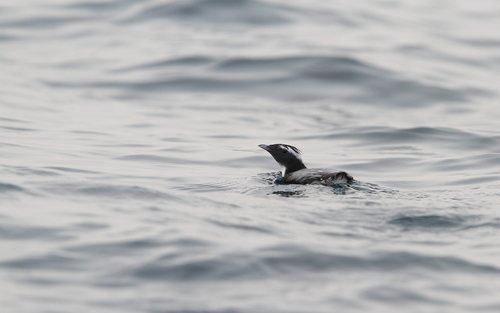
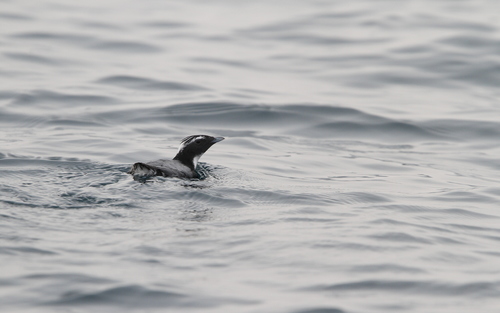
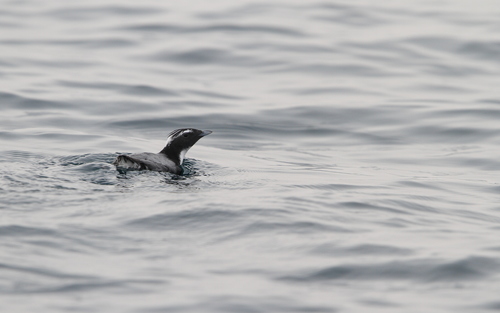
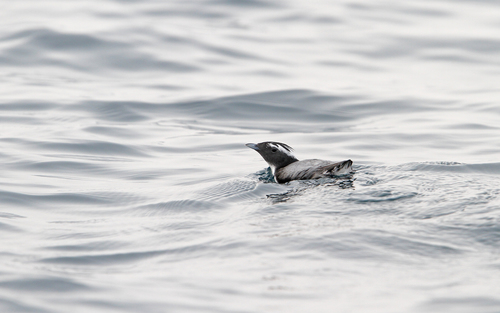
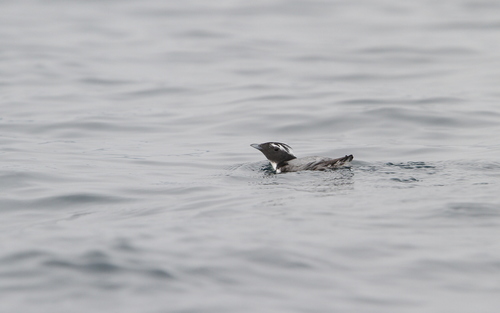
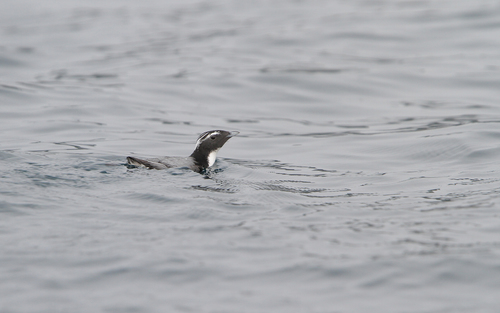
ID tip
The Japanese murrelet is a smallish seabird 24–26 cm (9.4–10.2 in) in length, with a wingspan of 43 cm (17 in), and weighing some 164–183 g (5.8–6.5 oz). Its upperparts are blackish and bluish grey, its throat and underparts white, legs and feet a yellowish grey, and short, thick bill a bluish grey, the culmen being darker; the iris is a dark brown. The black head features a white stripe from the top of each eye that meets on the nape, although this is less visible in winter.
Text from Wikipedia, licensed CC BY-SA 4.0.
When to see the Japanese Murrelet
One bar for each month. Filled bars are the 6 months with records; pale bars are months with none. The wide bar is February, the month with the most records.
Where to see the Japanese Murrelet
The map shades 3 countries with regular records, and 1 more in a lighter tone where the bird turns up only as a stray. Everything unshaded has no records. Countries are listed below the map.
Recorded as a rare visitor in Russia.
About the Japanese Murrelet
The Japanese murrelet or crested murrelet is a small seabird in the auk family that occurs along the remote rocky coasts and in the offshore waters of Japan, and may also be found after the breeding season as far as Sakhalin to the north and in particular off South Korea. With a small and declining population, estimated as of 2017 to total 2,500–10,000 individuals, it is the rarest alcid, and the most at risk of extinction.
Text adapted from Wikipedia, licensed CC BY-SA 4.0.
Easily confused with
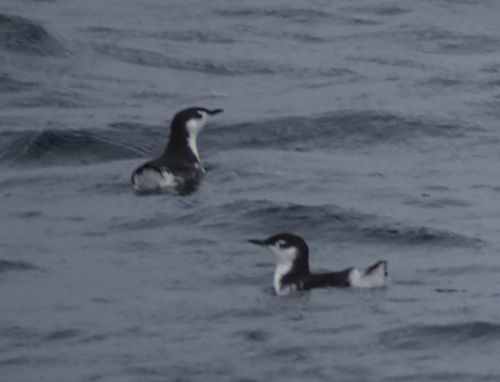 Guadalupe MurreletSynthliboramphus hypoleucusThe Guadalupe murrelet or Xantus's murrelet is a small seabird found in the California Current system in the Pacific Ocean.
 Craveri's MurreletSynthliboramphus craveriCraveri's murrelet is a small seabird which breeds on offshore islands in both the Pacific Ocean and the Gulf of California off the Baja peninsula of Mexico.
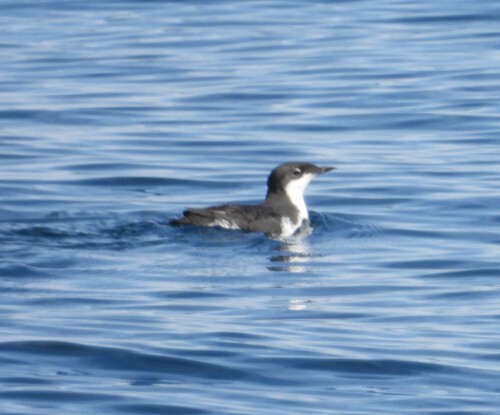 Scripps's MurreletSynthliboramphus scrippsiScripps's murrelet is a small seabird found in the California Current system in the Pacific Ocean.
Learn the Japanese Murrelet in the BeakBrain App
Photo and call practice. Coming soon to iPhone and Android.
Play today's Daily BirdEvery photo and recording on this page is credited to its author under the licence shown. Spotted a problem with this page, or have a better photo? Contribute.