Learn what every symbol on the card means.Full credits and sources at beakbrain.com/symbols
 MarineCavity nestMedium · 151 g
When to see the Craveri's Murrelet
One bar for each month. Filled bars are the 5 months with records; pale bars are months with none. The wide bar is August, the month with the most records.
Where to see the Craveri's Murrelet
The map shades 2 countries with regular records. Everything unshaded has no records. Countries are listed below the map.
About the Craveri's Murrelet
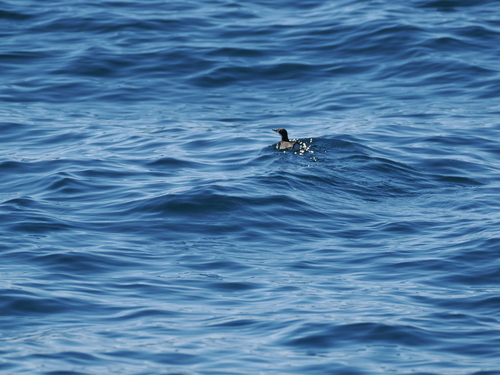
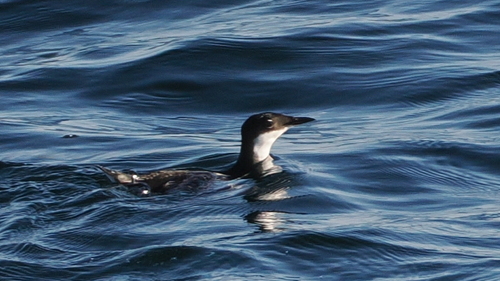
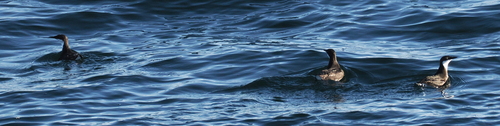
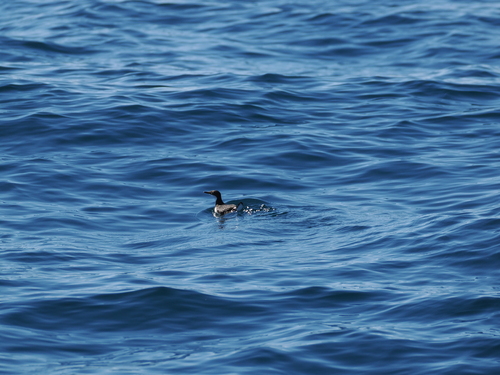
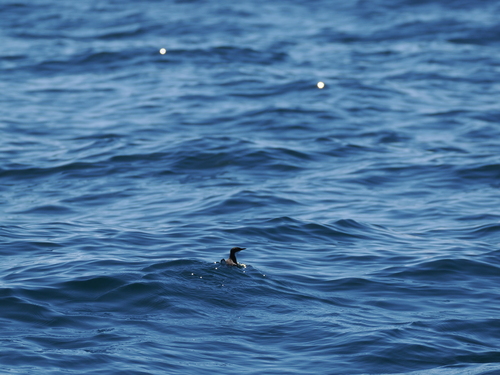
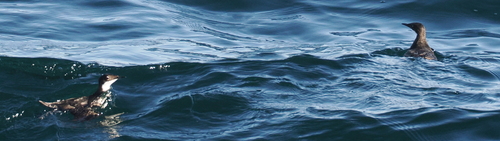
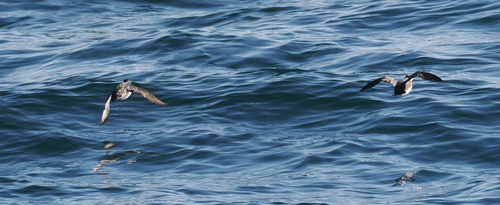
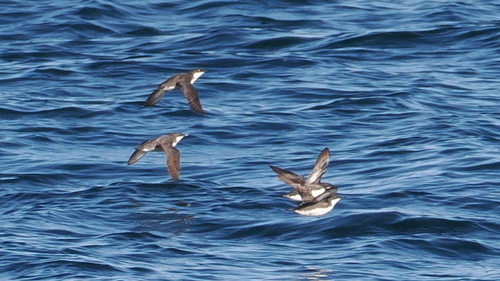
Craveri's murrelet is a small seabird which breeds on offshore islands in both the Pacific Ocean and the Gulf of California off the Baja peninsula of Mexico. It also wanders fairly regularly as far as central California in the US, primarily during post-breeding dispersal. It is almost never seen from or near the shore. With an estimated population of 6,000-10,000 breeding pairs, its population is listed as vulnerable.
Text adapted from Wikipedia, licensed CC BY-SA 4.0.
Easily confused with
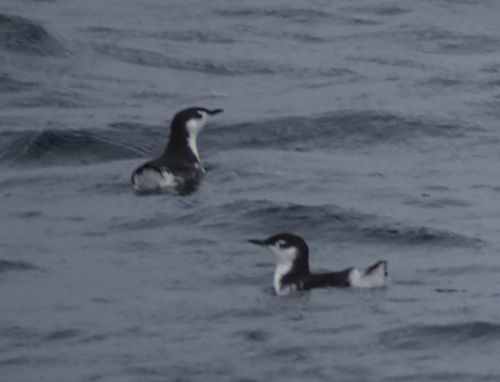 Guadalupe MurreletSynthliboramphus hypoleucusThe Guadalupe murrelet or Xantus's murrelet is a small seabird found in the California Current system in the Pacific Ocean.
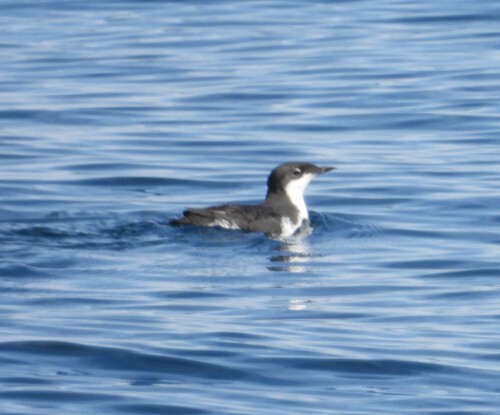 Scripps's MurreletSynthliboramphus scrippsiScripps's murrelet is a small seabird found in the California Current system in the Pacific Ocean.
 Japanese MurreletSynthliboramphus wumizusumeThe Japanese murrelet is a smallish seabird 24–26 cm (9.4–10.2 in) in length, with a wingspan of 43 cm (17 in), and weighing some 164–183 g (5.8–6.5 oz).
Learn the Craveri's Murrelet in the BeakBrain App
Photo and call practice. Coming soon to iPhone and Android.
Play today's Daily BirdEvery photo and recording on this page is credited to its author under the licence shown. Spotted a problem with this page, or have a better photo? Contribute.