Learn what every symbol on the card means.Full credits and sources at beakbrain.com/symbols
 ShrublandMedium · 116 g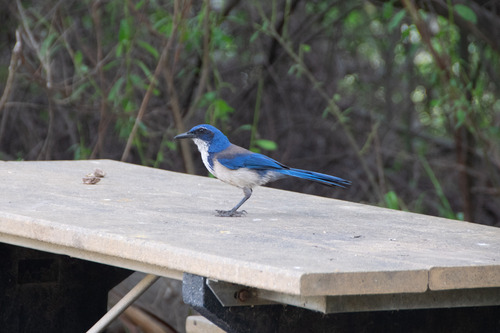
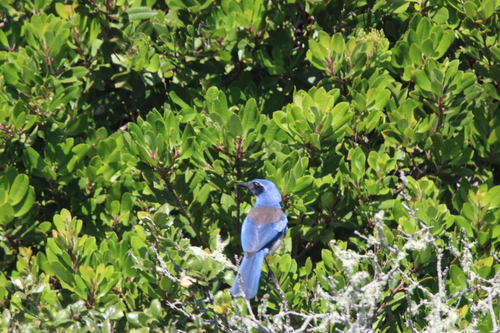


ID tip
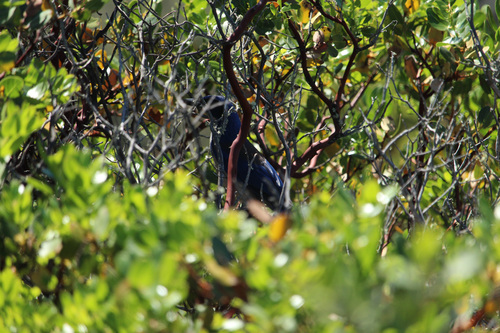
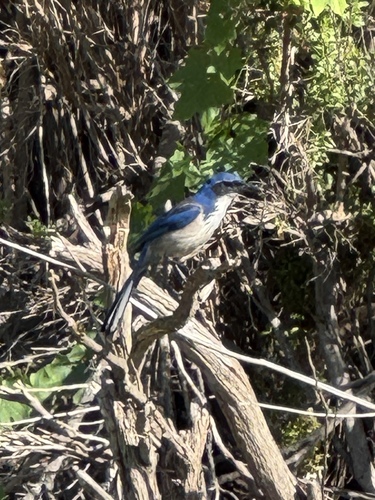
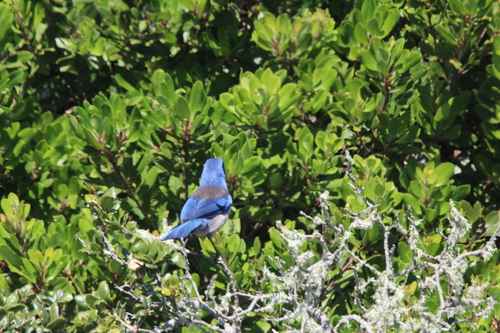
The island scrub jay is closely related to the California scrub jay (the coastal population found on the adjacent mainland), but differs in being larger, more brightly colored, and having a markedly stouter bill. They will bury, or cache, the acorns in the fall and may eat them months later. They also eat insects, spiders, snakes, lizards, mice and other birds' eggs and nestlings.
Text from Wikipedia, licensed CC BY-SA 4.0.
When to see the Island Scrub Jay
One bar for each month, and every month is filled: this bird is recorded here in all twelve. The wide bar is April, the month with the most records.
Where to see the Island Scrub Jay
The map shades 1 country with regular records. Everything unshaded has no records. Countries are listed below the map.
About the Island Scrub Jay
The island scrub jay, also known as the island jay or Santa Cruz jay, is a bird in the genus Aphelocoma, which is endemic to Santa Cruz Island off the coast of Southern California. Of the over 500 breeding bird species in the continental U.S. and Canada, it is the only insular endemic landbird species, meaning it is restricted to a geographical island.
Text adapted from Wikipedia, licensed CC BY-SA 4.0.
Easily confused with
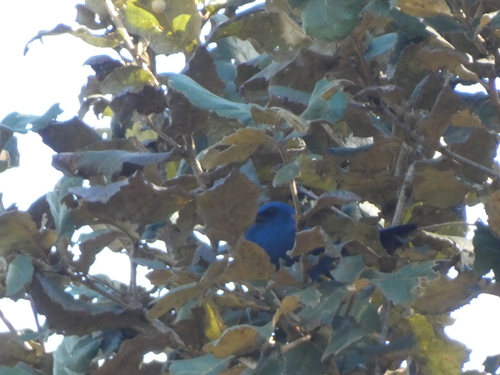 Unicolored JayAphelocoma unicolorThe unicolored jay is about 34 cm (13 in) long.
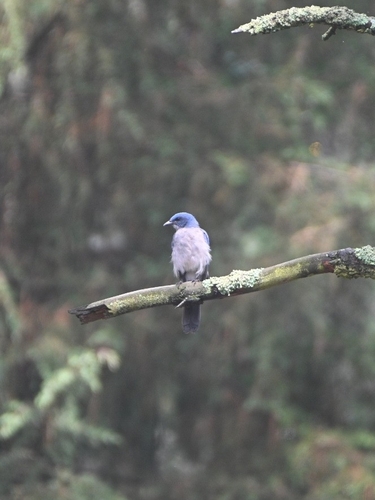 Transvolcanic JayAphelocoma ultramarinaThe Transvolcanic jay is 28 to 32 cm (11 to 13 in) long and weighs 120 to 150 g (4.2 to 5.3 oz).
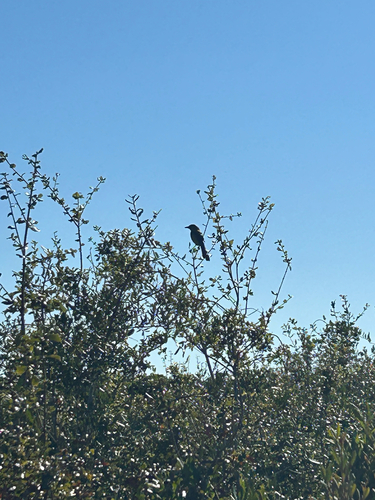 Florida Scrub JayAphelocoma coerulescensIt measures 23 to 28 cm (9.1 to 11.0 in) in length, and weighs from 66 to 92 g (2.3 to 3.2 oz), with an average 80.2 g (2.83 oz).
Side by side: Island Scrub Jay vs Mexican Jay · Florida Scrub Jay vs Island Scrub Jay · Island Scrub Jay vs Unicolored Jay · Island Scrub Jay vs Transvolcanic Jay
Learn the Island Scrub Jay in the BeakBrain App
Photo and call practice. Coming soon to iPhone and Android.
Play today's Daily BirdEvery photo and recording on this page is credited to its author under the licence shown. Spotted a problem with this page, or have a better photo? Contribute.