Learn what every symbol on the card means.Full credits and sources at beakbrain.com/symbols
 GrasslandScrapeMedium · 84 g


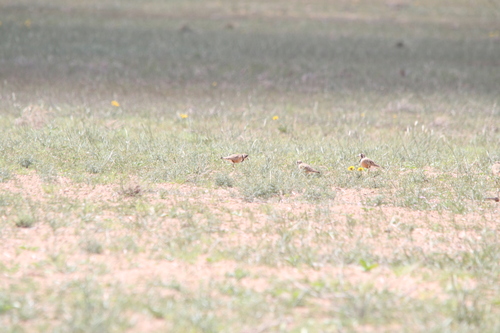
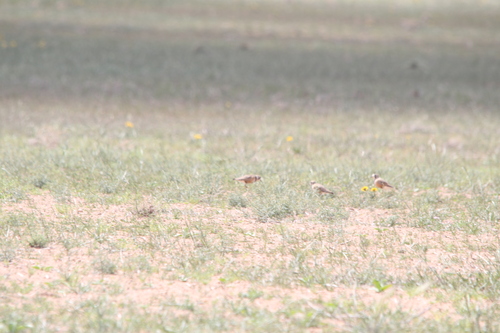
ID tip
The inland dotterel is a medium-sized plover with a distinctive cryptic plumage. Males and females are similarly sized: 19–23 cm (7.5–9 in) in length, a wingspan of 43–47 cm (17–19 in) a weight of 80–90 g (2.8–3.2 oz), and a short bill 1.7 cm (0.67 in). It is unlikely to be confused with any other species when found in its normal habitat. Its upperparts are a rich sandy buff, mottled with dark brown. The black band across the crown extending down through the eye is unique. The face, ear coverts and neck are white, as is the vent.
Text from Wikipedia, licensed CC BY-SA 4.0.
When to see the Inland Dotterel
One bar for each month. Filled bars are the 10 months with records; pale bars are months with none. The wide bar is September, the month with the most records.
Where to see the Inland Dotterel
The map shades 1 country with regular records. Everything unshaded has no records. Countries are listed below the map.
About the Inland Dotterel
The inland dotterel or inland plover is an endemic bird of the arid Australian interior. It forms loose flocks in sparsely vegetated gibber plain and claypans in the day where it loafs in the shade and eats shoots of shrubs. It is most often encountered at night when it forages on roads for insects. The relative remoteness of its habitat means that it is not well studied. The most detailed observations of the species were made by the South African arid-zone ornithology specialist Gordon Maclean in the 1970s. Alternate English names include Australian plover, inland plover, desert plover and prairie plover.
Text adapted from Wikipedia, licensed CC BY-SA 4.0.
Easily confused with
 Diademed Sandpiper-PloverPhegornis mitchelliiThe diademed sandpiper-plover is 16.5 to 19 cm (6.5 to 7.5 in) long and weighs 28 to 46 g (0.99 to 1.6 oz).
 Shore PloverThinornis novaeseelandiaeThe shore plover is about 20 cm long, brown above and white below, with a black (male) or brown (female) mask; the brown back feathers have narrow pale fringes, giving a scaly appearance at close range.
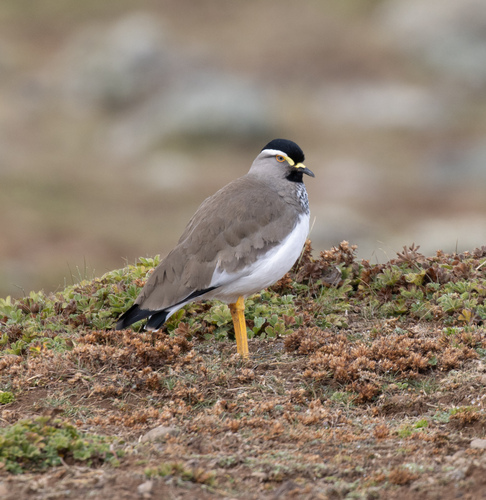 Spot-breasted LapwingVanellus melanocephalusThe spot-breasted lapwing, also known as the spot-breasted plover, is a species of bird in the family Charadriidae.
Learn the Inland Dotterel in the BeakBrain App
Photo and call practice. Coming soon to iPhone and Android.
Play today's Daily BirdEvery photo and recording on this page is credited to its author under the licence shown. Spotted a problem with this page, or have a better photo? Contribute.