Learn what every symbol on the card means.Full credits and sources at beakbrain.com/symbols
 ShrublandDomed nestMedium · 84 g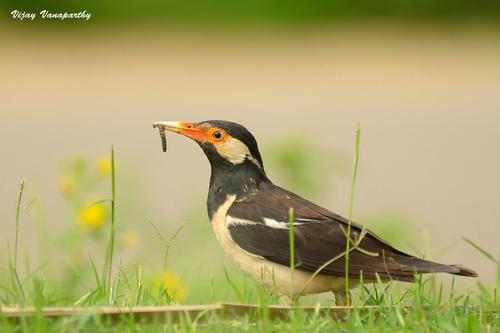
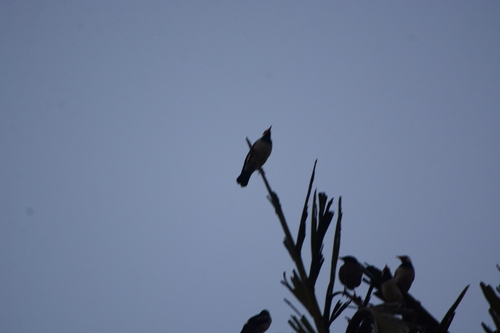


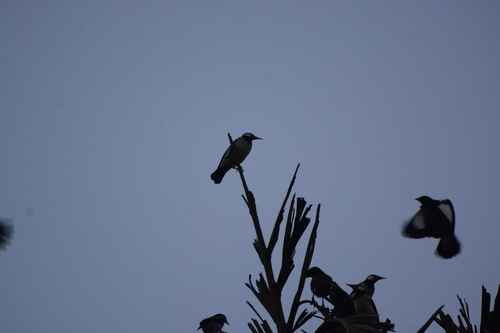
ID tip
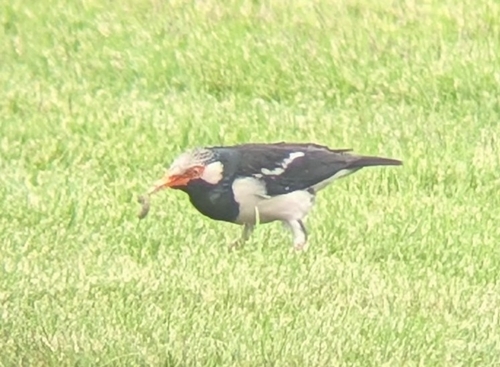
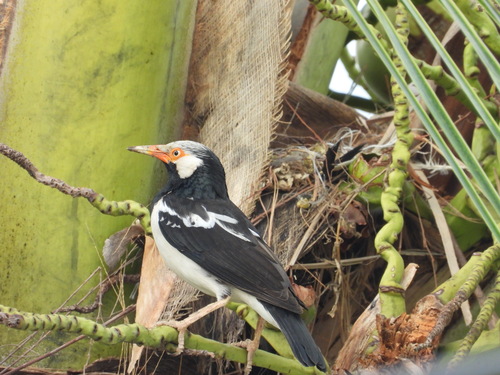
This myna is strikingly marked in black and white and has a yellowish bill with a reddish bill base. The bare skin around the eye is reddish. The upper body, throat and breast are black while the cheek, lores, wing coverts and rump are contrastingly white. The sexes are similar in plumage but young birds have dark brown in place of black. The subspecies vary slightly in plumage, extent of streaking of the feathers and in measurements. The flight is slow and butterfly-like on round wings. Leucistic individuals have been recorded.
Text from Wikipedia, licensed CC BY-SA 4.0.
When to see the Indian Pied Myna
One bar for each month, and every month is filled: this bird is recorded here in all twelve. The wide bar is February, the month with the most records.
Where to see the Indian Pied Myna
The map shades 14 countries with regular records, and 3 more in a lighter tone where the bird turns up only as a stray. Everything unshaded has no records. Countries are listed below the map.
Recorded as a rare visitor in Indonesia, Laos, Hong Kong SAR China.
About the Indian Pied Myna
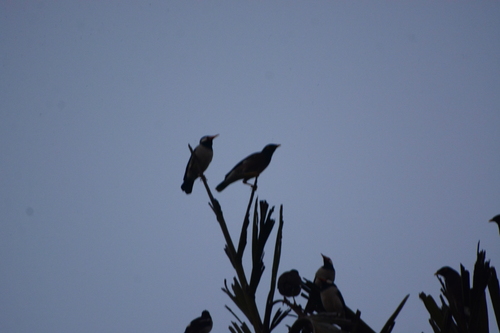
The Indian pied myna is a species of starling found in the Indian subcontinent. It is usually found in small groups mainly on the plains and low foothills. It is often seen within cities and villages although it is not as bold as the common myna. It produces a range of calls made up of liquid notes.
Text adapted from Wikipedia, licensed CC BY-SA 4.0.
Easily confused with
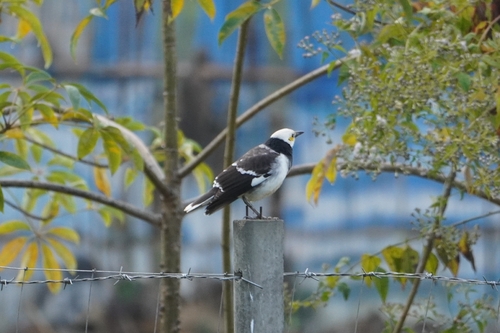 Black-collared StarlingGracupica nigricollisThe black-collared starling is 26–30 cm (10–12 in) long.
Siamese Pied MynaGracupica floweriThe Siamese pied myna is a species of starling in the family Sturnidae.
Black-collared StarlingGracupica nigricollisThe black-collared starling is 26–30 cm (10–12 in) long.
Siamese Pied MynaGracupica floweriThe Siamese pied myna is a species of starling in the family Sturnidae.
Side by side: Black-collared Starling vs Indian Pied Myna
Learn the Indian Pied Myna in the BeakBrain App
Photo and call practice. Coming soon to iPhone and Android.
Play today's Daily BirdEvery photo and recording on this page is credited to its author under the licence shown. Spotted a problem with this page, or have a better photo? Contribute.