Learn what every symbol on the card means.Full credits and sources at beakbrain.com/symbols
 ForestCup nestSmall · 18 g


ID tip
The adult ʻiʻiwi is mostly scarlet, with black wings and tail and a long, curved, salmon-colored bill used primarily for drinking nectar. The contrast of the red and black plumage with surrounding green foliage makes the ʻiʻiwi one of Hawaiʻi's most easily seen native birds. Younger birds have golden plumage with more spots and ivory bills and were mistaken for a different species by early naturalists. Observations of young birds moulting into adult plumage resolved this confusion. Along with the Hawaiʻi Mamo, ʻiʻiwi were used in the feather trade. Voice: The ʻiʻiwi has a complex and varied song, which has been compared to the sound of whistles, balls dropping in water, the rubbing of balloons together, and the squeaking of a rusty hinge. Both sexes have been observed to mimic other bird calls.
Text from Wikipedia, licensed CC BY-SA 4.0.
When to see the Iiwi
One bar for each month, and every month is filled: this bird is recorded here in all twelve. The wide bar is March, the month with the most records.
Where to see the Iiwi
The map shades 1 country with regular records. Everything unshaded has no records. Countries are listed below the map.
About the Iiwi
The ʻiʻiwi or scarlet honeycreeper is a species of Hawaiian honeycreeper. The ʻiʻiwi is a highly recognizable symbol of Hawaii.
Text adapted from Wikipedia, licensed CC BY-SA 4.0.
Easily confused with
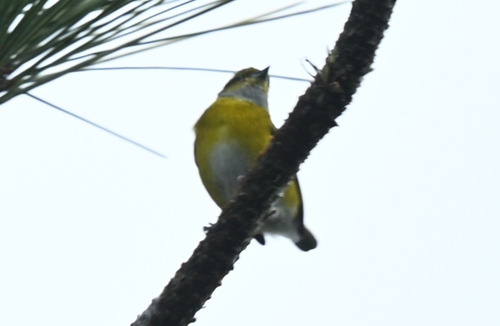 White-vented EuphoniaEuphonia minutaThe white-vented euphonia is about 9 cm (3.5 in) long and weighs about 8 to 11.5 g (0.28 to 0.41 oz).
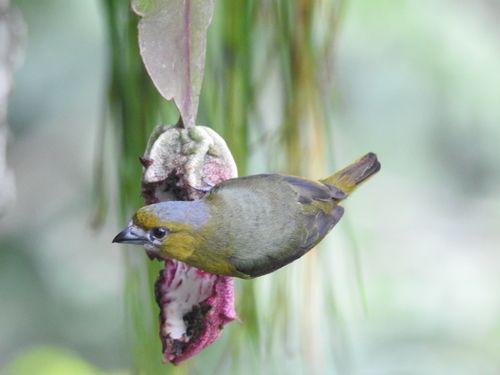 White-lored EuphoniaEuphonia chrysopastaThe white-lored euphonia is 9 to 10 cm (3.5 to 3.9 in) long and weighs about 11 to 16 g (0.39 to 0.56 oz).
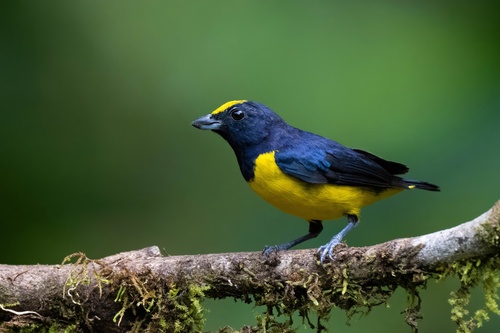 Spot-crowned EuphoniaEuphonia imitansThe spot-crowned euphonia is about 10 cm (3.9 in) long and weighs about 14 g (0.49 oz).
Side by side: Iiwi vs White-vented Euphonia · Iiwi vs Spot-crowned Euphonia
Learn the Iiwi in the BeakBrain App
Photo and call practice. Coming soon to iPhone and Android.
Play today's Daily BirdEvery photo and recording on this page is credited to its author under the licence shown. Spotted a problem with this page, or have a better photo? Contribute.