Learn what every symbol on the card means.Full credits and sources at beakbrain.com/symbols
 ForestCup nestSmall · 23 g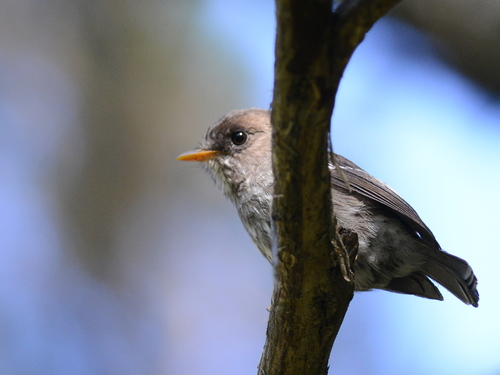

ID tip
The upperparts are grey-brown while the underparts are pale with dark streaks. It has a dark crown with pale streaks and the bill and feet are yellow-orange. The bird is 14 centimetres (5.5 in) long. It is often silent but has a soft trilling call. It differs from Muscicapa and other flycatchers in having plumage with a very soft and fluffy texture, and by having distinctive feathers on the crown that are a modification that represents the beginnings of the formation of a crest.
Text from Wikipedia, licensed CC BY-SA 4.0.
When to see the Humblot's Flycatcher
One bar for each month. Filled bars are the 4 months with records; pale bars are months with none. The wide bar is October, the month with the most records.
Where to see the Humblot's Flycatcher
The map shades 1 country with regular records. Everything unshaded has no records. Countries are listed below the map.
About the Humblot's Flycatcher
Humblot's flycatcher or the Grand Comore flycatcher, is a small passerine bird belonging to the Old World flycatcher family. It is the only member of its genus. Humblot's flycatcher is endemic to the island of Grand Comoro in the Comoros where it inhabits forest on the slopes of Mount Karthala. The scientific name commemorates the French naturalist Léon Humblot.
Text adapted from Wikipedia, licensed CC BY-SA 4.0.
Easily confused with
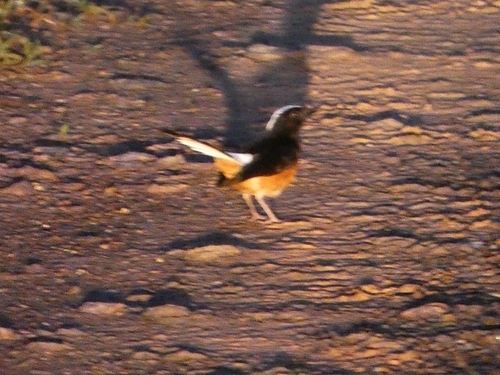 White-crowned ShamaCopsychus stricklandiiThe white-crowned shama is about 21–28 cm (8.3–11.0 in) in length (including a 7 cm (2.8 in) tail in adult males) and 31–42 g (1.1–1.5 oz) in weight.
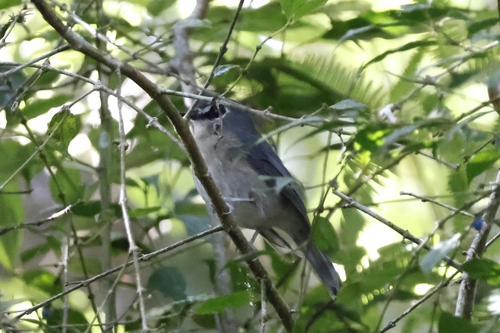 Slaty-backed Jungle FlycatcherVauriella goodfellowiThe slaty-backed jungle flycatcher, also known as the Goodfellow's jungle flycatcher or the Mindanao jungle flycatcher is a species of bird in the Old World flycatcher family Muscicapidae.
 BlackthroatCalliope obscuraThe blackthroat, also known as the black-throated robin or black-throated blue robin, is a species of bird in the family Muscicapidae.
Learn the Humblot's Flycatcher in the BeakBrain App
Photo and call practice. Coming soon to iPhone and Android.
Play today's Daily BirdEvery photo and recording on this page is credited to its author under the licence shown. Spotted a problem with this page, or have a better photo? Contribute.