Learn what every symbol on the card means.Full credits and sources at beakbrain.com/symbols
 ForestSmall · 41 g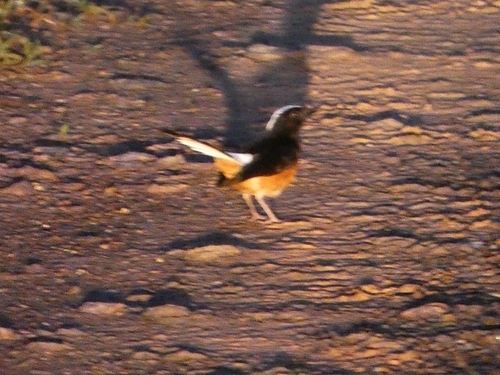
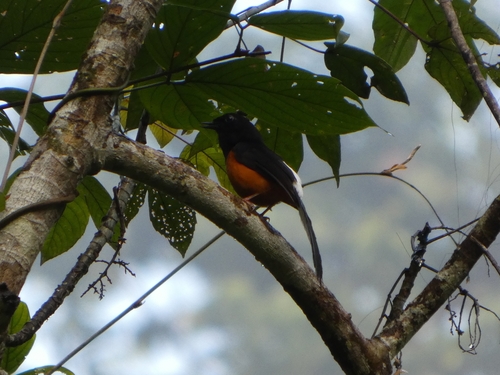
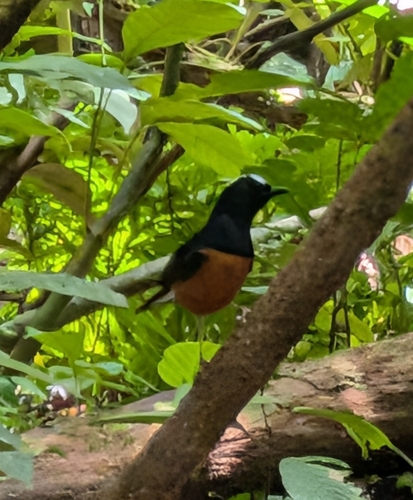
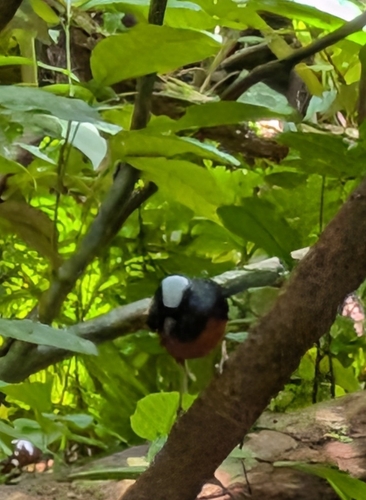
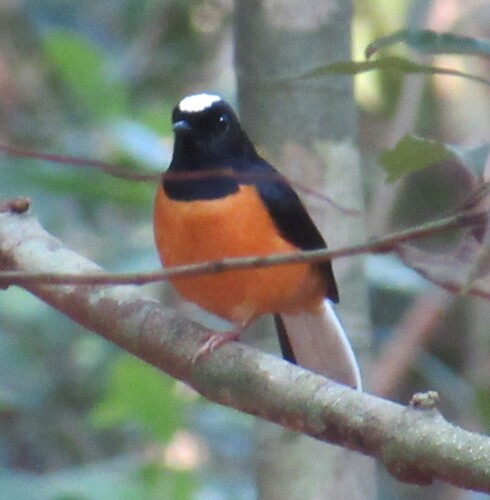
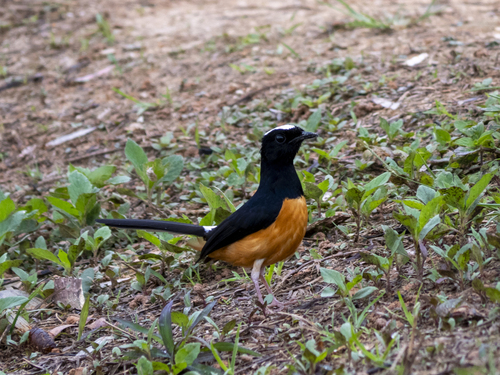
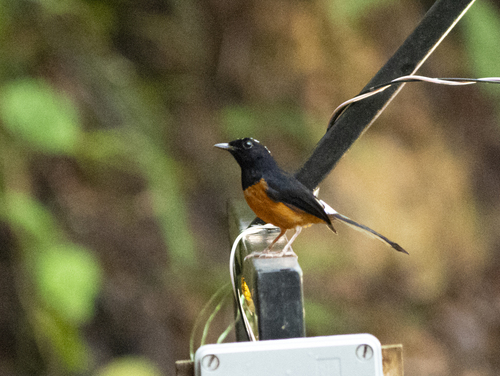
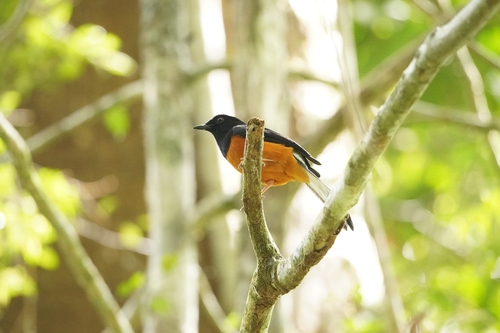
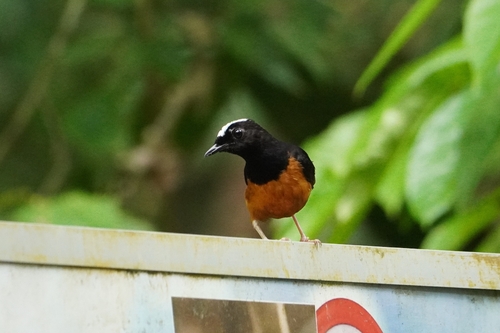

ID tip
The white-crowned shama is about 21–28 cm (8.3–11.0 in) in length (including a 7 cm (2.8 in) tail in adult males) and 31–42 g (1.1–1.5 oz) in weight. Mainly blue-black upperparts contrast with orange-rufous underparts. It has a white rump and black throat. It is largely similar in appearance to the white-rumped shama subspecies C. m. suavis, which replaces it in southern and western Borneo, and hybridises with it where the ranges meet. It differs in having a white, rather than black, crown. The distinctive Maratua form C. s.
Text from Wikipedia, licensed CC BY-SA 4.0.
When to see the White-crowned Shama
One bar for each month. Filled bars are the 8 months with records; pale bars are months with none. The wide bar is September, the month with the most records.
Where to see the White-crowned Shama
The map shades 1 country with regular records. Everything unshaded has no records. Countries are listed below the map.
About the White-crowned Shama
The white-crowned shama is a medium sized passerine bird in the Old World flycatcher family Muscicapidae. It is endemic to the Southeast Asian island of Borneo. The Maratua shama was formerly treated as a subspecies.
Text adapted from Wikipedia, licensed CC BY-SA 4.0.
Easily confused with
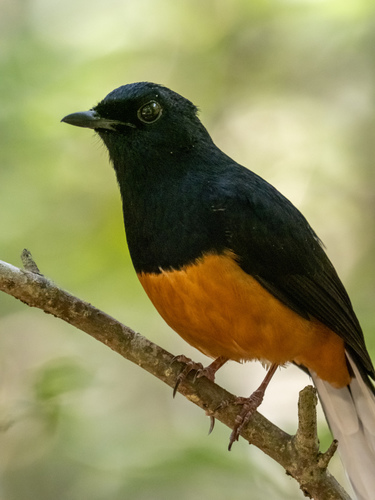 Sri Lanka ShamaCopsychus leggeiThe Sri Lanka shama has glossy blue-black upperparts, bright chestnut underparts, a white rump and white outer tail feathers.
Maratua ShamaCopsychus barbouriThe male Maratua shama has a white crown, black upperparts, bright chestnut underparts, a white rump and a completely black tail.
Kangean ShamaCopsychus nigricaudaThe Kangean shama has glossy blue-black upperparts, bright chestnut underparts apart from a white vent, a white rump and an almost entirely black tail with white tips to the outer feathers.
Sri Lanka ShamaCopsychus leggeiThe Sri Lanka shama has glossy blue-black upperparts, bright chestnut underparts, a white rump and white outer tail feathers.
Maratua ShamaCopsychus barbouriThe male Maratua shama has a white crown, black upperparts, bright chestnut underparts, a white rump and a completely black tail.
Kangean ShamaCopsychus nigricaudaThe Kangean shama has glossy blue-black upperparts, bright chestnut underparts apart from a white vent, a white rump and an almost entirely black tail with white tips to the outer feathers.
Learn the White-crowned Shama in the BeakBrain App
Photo and call practice. Coming soon to iPhone and Android.
Play today's Daily BirdEvery photo and recording on this page is credited to its author under the licence shown. Spotted a problem with this page, or have a better photo? Contribute.