Learn what every symbol on the card means.Full credits and sources at beakbrain.com/symbols
 ForestCup nestSmall · 29 g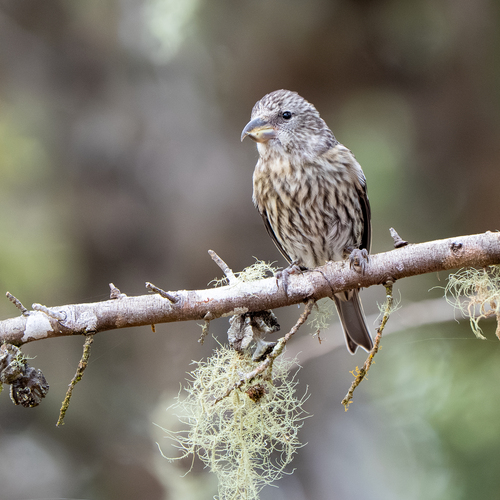


ID tip
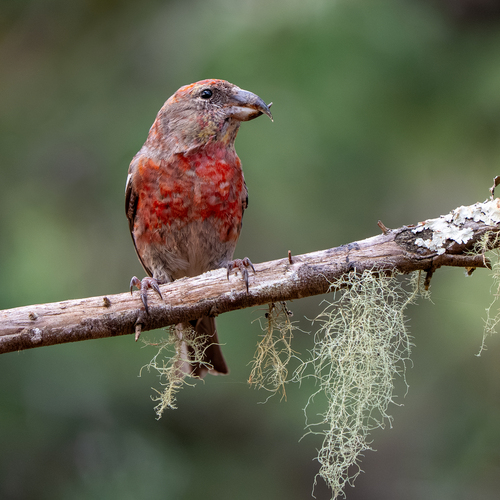
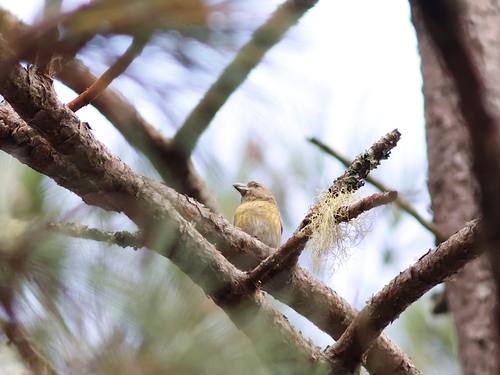
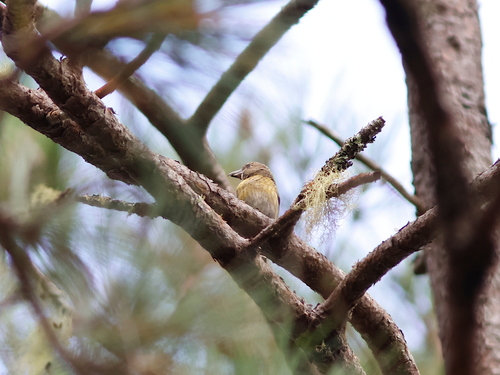
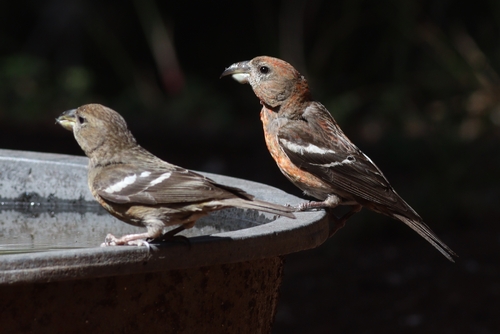
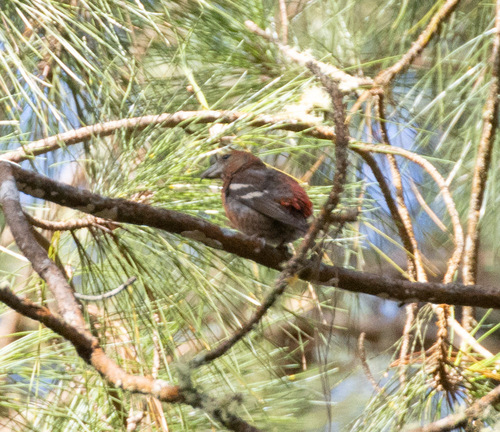
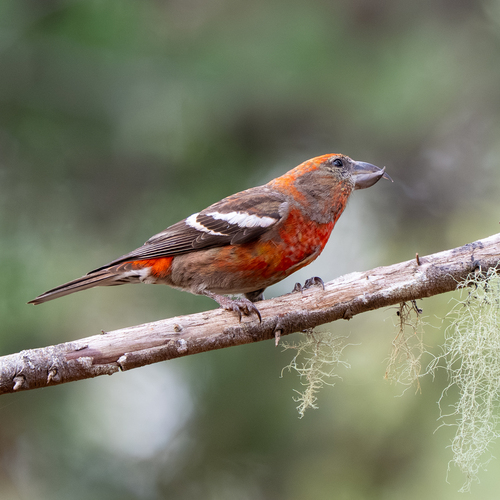
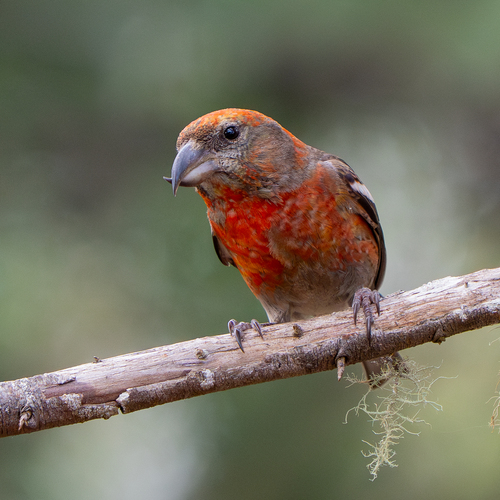
The Hispaniolan crossbill is about 15 to 16 cm (5.9 to 6.3 in) long and weighs about 28 g (0.99 oz). The species is sexually dimorphic. Both sexes have the characteristic crossed bill from which the genus' English name derives. In this species the direction of the crossing is variable. Adult males are mostly dull brown with a reddish to reddish orange wash that is heaviest on the nape, upper back, and upper chest. Their wings are blackish with two white wing bars. Adult females are also mostly dull brown. Voice: The Hispaniolan crossbill's song is a "high-pitched, emphatic, repeated chu-chu-chu-chu". Other vocalizations include "a soft, whistling warble", a "chit-chit" contact note between members of a pair, and a "chut" call by a male that was being attacked by a merlin (Falco columbarius).
Text from Wikipedia, licensed CC BY-SA 4.0.
When to see the Hispaniolan Crossbill
One bar for each month. Filled bars are the 7 months with records; pale bars are months with none. The wide bar is February, the month with the most records.
Where to see the Hispaniolan Crossbill
The map shades 2 countries with regular records. Everything unshaded has no records. Countries are listed below the map.
About the Hispaniolan Crossbill
The Hispaniolan crossbill is an Endangered species of passerine bird in the family Fringillidae, the finches and euphonias. It is endemic to the island of Hispaniola that is shared by Haiti and the Dominican Republic).
Text adapted from Wikipedia, licensed CC BY-SA 4.0.
Easily confused with
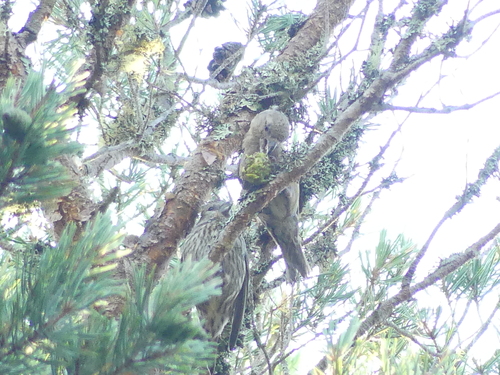 Scottish CrossbillLoxia scoticaVoice: The calls can be distinguished by sonograms.
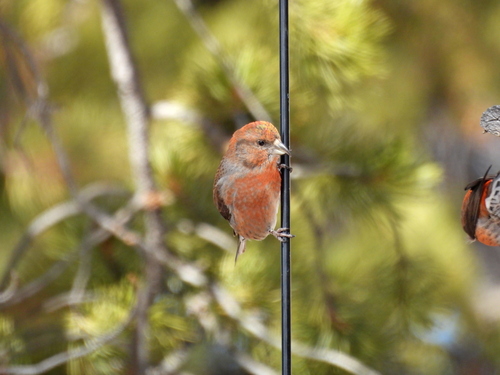 Cassia CrossbillLoxia sinesciurisThe Cassia crossbill shares many physical features with the red crossbill and all of its different call types.
 Parrot CrossbillLoxia pytyopsittacusAdult males tend to be red or orange in colour, and females green or yellow, but there is much variation.
Learn the Hispaniolan Crossbill in the BeakBrain App
Photo and call practice. Coming soon to iPhone and Android.
Play today's Daily BirdEvery photo and recording on this page is credited to its author under the licence shown. Spotted a problem with this page, or have a better photo? Contribute.