Learn what every symbol on the card means.Full credits and sources at beakbrain.com/symbols
 ForestCup nest34 g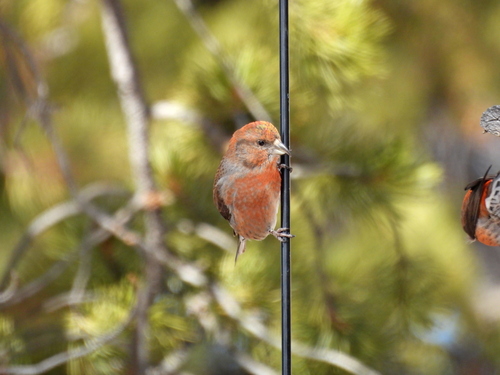


ID tip
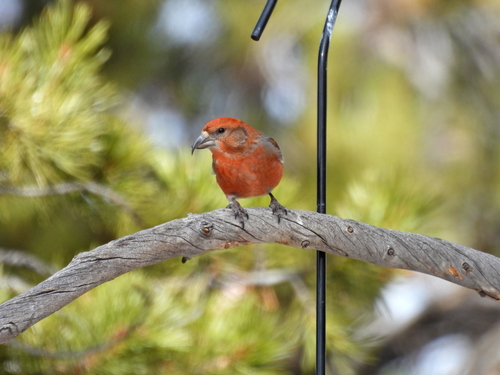
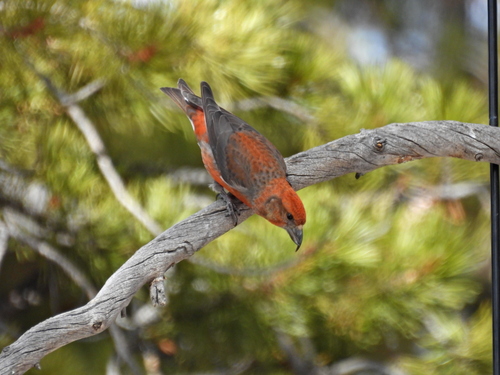
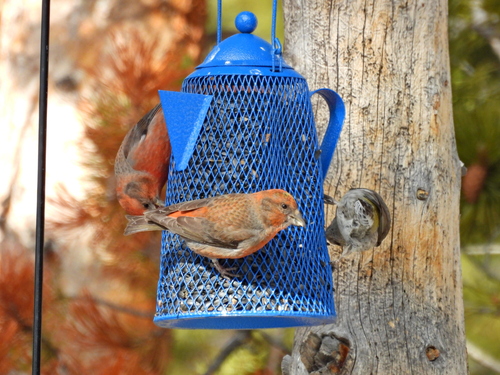
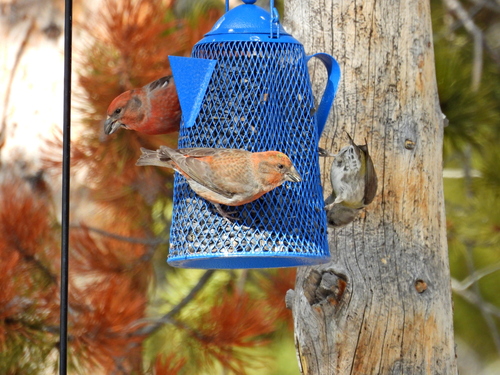
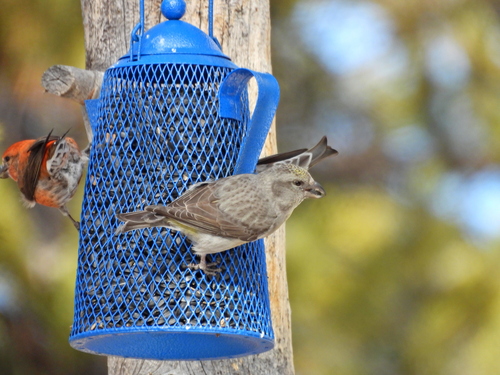
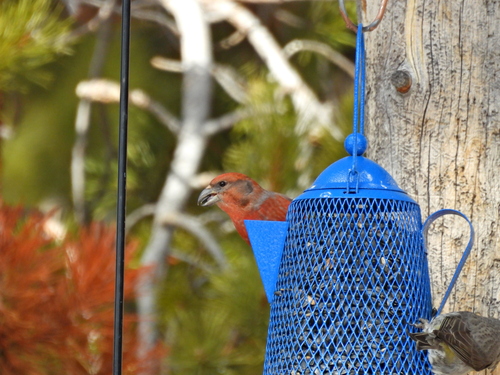
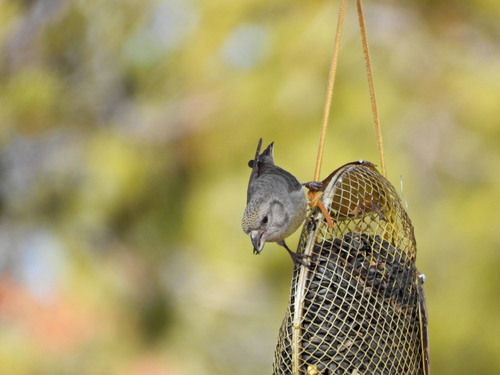
The Cassia crossbill shares many physical features with the red crossbill and all of its different call types. Adult males display a brick red plumage along its crown, breast, and belly, while its flight feathers have a brown colour. In contrast, adult females have an overall dull green or olive-yellow colour, with brown flight feathers. Its defining feature, a crossed bill, is a crisscrossed bill used to access the pine cone seeds. However, in relation to the red crossbill call types, the Cassia crossbill has a deeper and thicker bill to crack open the harder pine cones in its habitat. Voice: As mentioned previously, the red crossbill had 10 different call types and the Cassia crossbill was call type 9. The Cassia Crossbill fledgling initially imitates its parents' flight calls and eventually will modify its call to imitate their mate. Compared to the other call types, the Cassia crossbills songs will be more repetitive while using fewer syllables.
Text from Wikipedia, licensed CC BY-SA 4.0.
When to see the Cassia Crossbill
One bar for each month. Filled bars are the 6 months with records; pale bars are months with none. The wide bar is July, the month with the most records.
Where to see the Cassia Crossbill
The map shades 1 country with regular records. Everything unshaded has no records. Countries are listed below the map.
About the Cassia Crossbill
The Cassia crossbill is a passerine bird in the family Fringillidae. It is endemic to the South Hills and Albion Mountains in southern Idaho. Cassia crossbill rarely interbreeds with other call types that move into the South Hills of Idaho yearly, and can be considered to represent a distinct species via ecological speciation. The Cassia crossbill have specialized beaks to access the seeds of the lodgepole pine cones in this region, but are poorly adapted to other pine cones in surrounding regions.
Text adapted from Wikipedia, licensed CC BY-SA 4.0.
Easily confused with
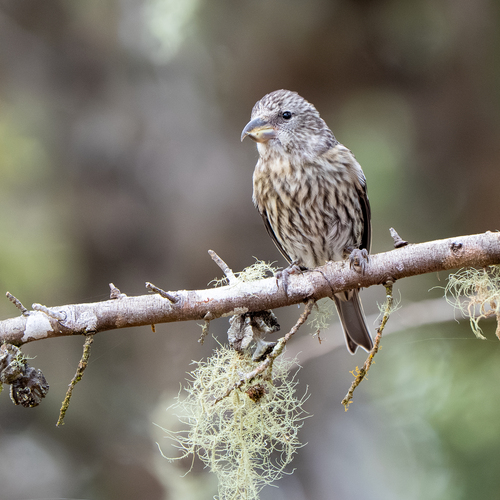 Hispaniolan CrossbillLoxia megaplagaThe Hispaniolan crossbill is about 15 to 16 cm (5.9 to 6.3 in) long and weighs about 28 g (0.99 oz).
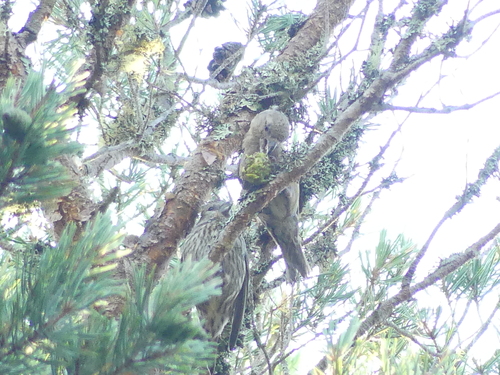 Scottish CrossbillLoxia scoticaVoice: The calls can be distinguished by sonograms.
 Parrot CrossbillLoxia pytyopsittacusAdult males tend to be red or orange in colour, and females green or yellow, but there is much variation.
Learn the Cassia Crossbill in the BeakBrain App
Photo and call practice. Coming soon to iPhone and Android.
Play today's Daily BirdEvery photo and recording on this page is credited to its author under the licence shown. Spotted a problem with this page, or have a better photo? Contribute.