Learn what every symbol on the card means.Full credits and sources at beakbrain.com/symbols
 ForestMedium · 87 g


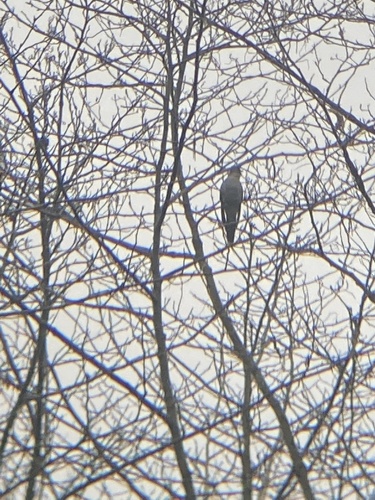
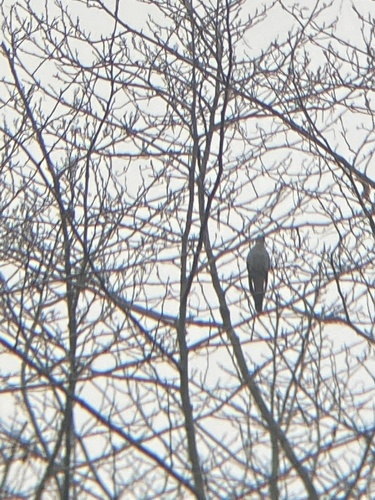
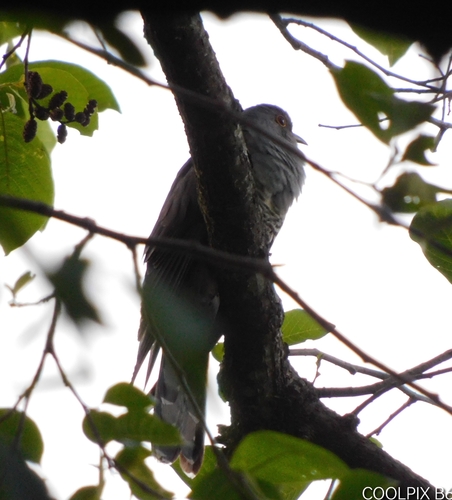
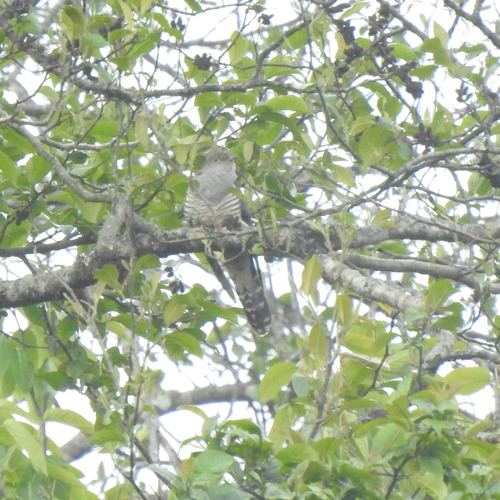
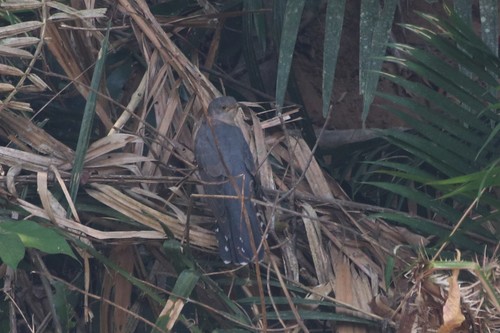
ID tip
Adult male Himalayan cuckoos are dark ashy-grey above with a brown, almost black, tail that is whitely spotted and tipped. Legs and feet range between yellow and orange. The area from their chins to the breast is ash-grey, with their lower breast and abdomen being white with black bars, and a white to milky orange vent with varying bars. The eye-ring is yellow with yellow to brown irises—darker orange has been seen in males. Bills are black with an orange-yellow or green-yellow base. Their size approximately 30–35 cm and 70–140 g. Voice: Males are notably recorded more during dawn and dusk from high lookouts or in flight. Their call includes a high note followed by three lower flat notes, similar to "hoop, hoop-hoop" or "tun-tadun", much like that of a Common Hoopoe (Upupa epops) but lower-pitched and more muffled. The males also produce hoarse croaking sounds and chuckles, even a harsh "gaak-gaak-gak-ak-ak-ak" at times.
Text from Wikipedia, licensed CC BY-SA 4.0.
When to see the Himalayan Cuckoo
One bar for each month. Filled bars are the 4 months with records; pale bars are months with none. The wide bar is April, the month with the most records.
Where to see the Himalayan Cuckoo
The map shades 18 countries with regular records, and 2 more in a lighter tone where the bird turns up only as a stray. Everything unshaded has no records. Countries are listed below the map.
Recorded as a rare visitor in Philippines, Indonesia.
About the Himalayan Cuckoo
The Himalayan cuckoo or Oriental cuckoo is a brooding parasitic bird that is part of the Cuculidae family. The species breeds from the Himalayas eastward to southern China and Taiwan. It migrates to southeast Asia and the Greater Sunda Islands for the winter.
Text adapted from Wikipedia, licensed CC BY-SA 4.0.
Easily confused with
 Lesser CuckooCuculus poliocephalusThe lesser cuckoo is a species of cuckoo in the family Cuculidae.
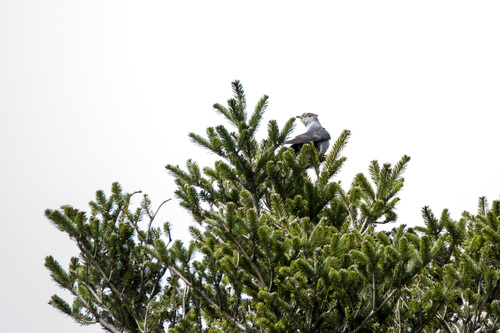 Oriental CuckooCuculus optatusIt is 30–32 centimetres long with a wingspan of 51–57 centimetres and a weight of 73–156 grams.
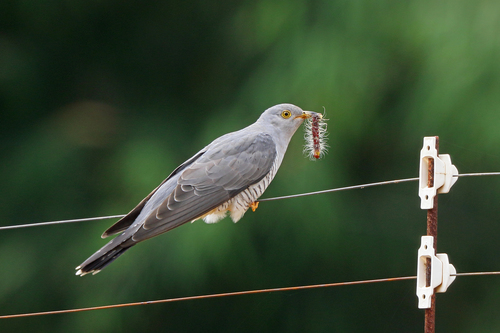 African CuckooCuculus gularisThis is a medium-sized species with a long tail, with a total length of 32 cm (13 in).
Side by side: Himalayan Cuckoo vs Indian Cuckoo · Black Cuckoo vs Himalayan Cuckoo · Himalayan Cuckoo vs Oriental Cuckoo · African Cuckoo vs Himalayan Cuckoo
Learn the Himalayan Cuckoo in the BeakBrain App
Photo and call practice. Coming soon to iPhone and Android.
Play today's Daily BirdEvery photo and recording on this page is credited to its author under the licence shown. Spotted a problem with this page, or have a better photo? Contribute.