Learn what every symbol on the card means.Full credits and sources at beakbrain.com/symbols
 MarineCavity nestLarge · 1.1 kg

ID tip
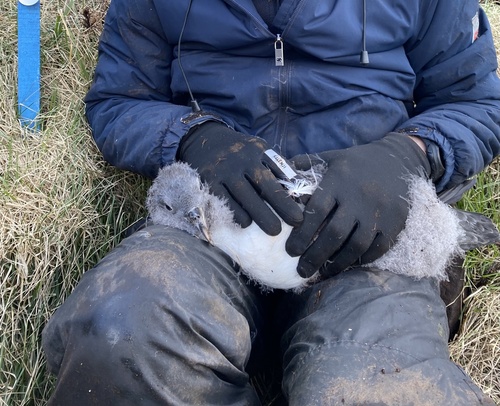
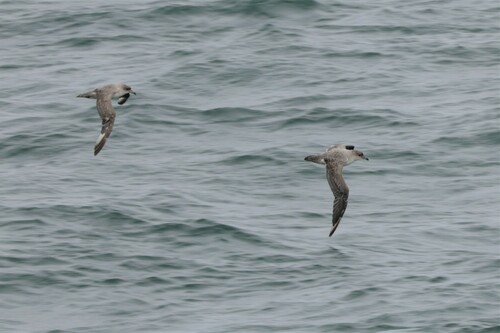
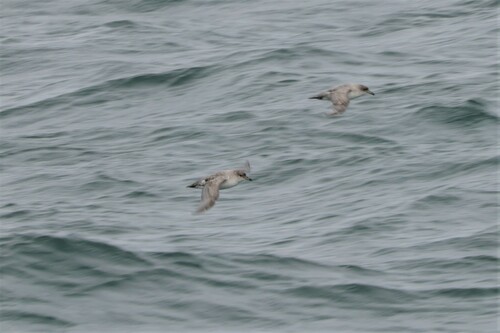
The grey petrel is a large grey, white, and brown petrel. It averages 50 cm (20 in) in length, 115–130 cm (45–51 in) in wingspan and weighs around 1,000 g (35 oz). It has a brownish-grey mantle, back, uppertail coverts, and upperwings. The belly is white and the underwings and under-tail that are ash-grey. It has a yellow-green bill and pink-grey feet. As a member of the Procellariiformes, it shares that order's identifying features. First, these birds have nasal passages called naricorns that attach to the upper bill.
Text from Wikipedia, licensed CC BY-SA 4.0.
When to see the Grey Petrel
One bar for each month. Filled bars are the 11 months with records; pale bars are months with none. The wide bar is March, the month with the most records.
Where to see the Grey Petrel
The map shades 5 countries with regular records, and 3 more in a lighter tone where the bird turns up only as a stray. Everything unshaded has no records. Countries are listed below the map.
Recorded as a rare visitor in South Africa, Chile, Réunion.
About the Grey Petrel
The grey petrel, also called the gray petrel, brown petrel, pediunker or grey shearwater, is a species of seabird in the Procellariidae, or petrel family. It is pelagic and occurs in the open seas of the Southern Hemisphere, mainly between 32°S and 58°S.
Text adapted from Wikipedia, licensed CC BY-SA 4.0.
Easily confused with
 Spectacled PetrelProcellaria conspicillataThe spectacled petrel is a large, approximately 55 cm (22 in) in length, predominately black petrel.
 Black PetrelProcellaria parkinsoniThe plumage of the black petrel is all black, as are its legs and bill except for pale sections on the bill.
 Westland PetrelProcellaria westlandicaThe adult Westland petrel is a stocky bird, weighing around 1,100 grams (39 oz).
Learn the Grey Petrel in the BeakBrain App
Photo and call practice. Coming soon to iPhone and Android.
Play today's Daily BirdEvery photo and recording on this page is credited to its author under the licence shown. Spotted a problem with this page, or have a better photo? Contribute.