Learn what every symbol on the card means.Full credits and sources at beakbrain.com/symbols
 WoodlandCup nestSmall · 53 g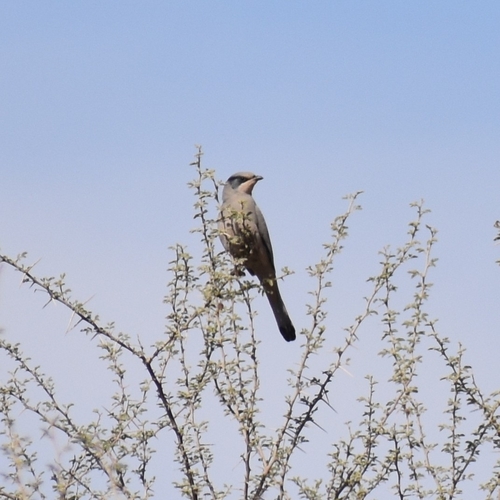
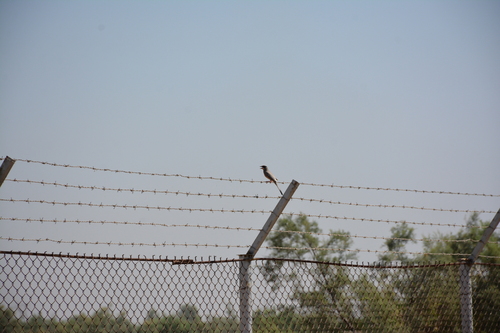
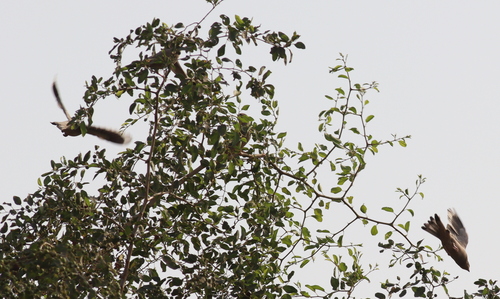
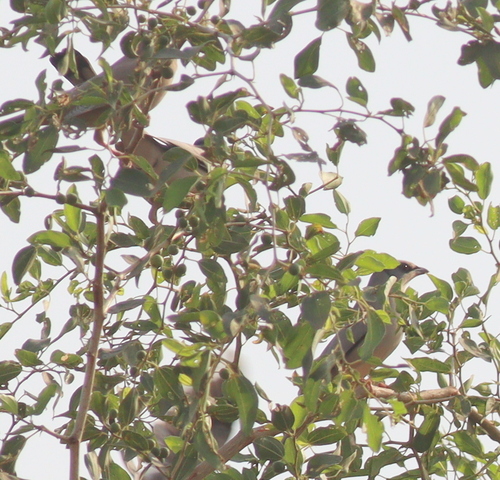


ID tip
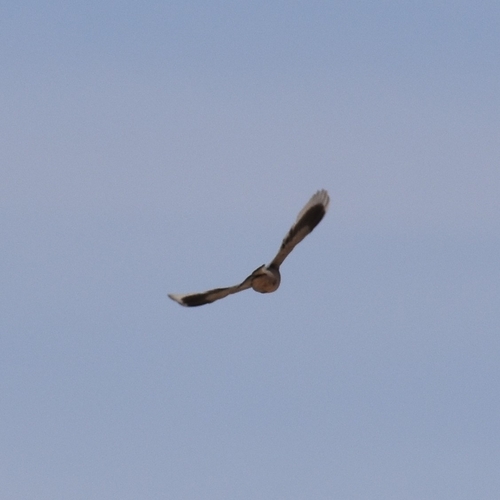
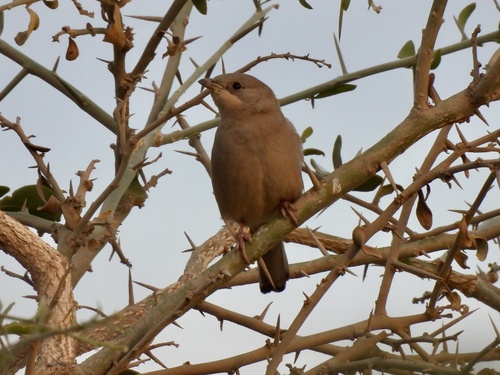
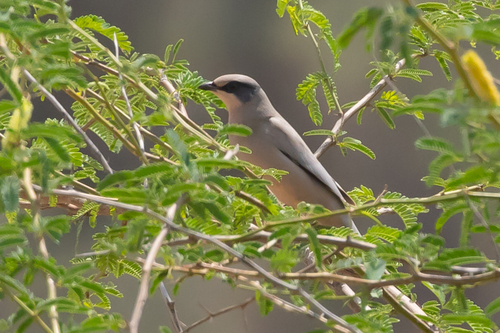
The grey hypocolius is a slim bird with a long tail, slight crest and thick, short hook-tipped bill. Its shape and soft, satiny plumage resembles that of the waxwing. Birds are mainly a uniform grey or brownish-grey colour, with males having a black triangular mask around the eyes. They have white-tipped black primary wing feathers and a black terminal band on the tail. Adults are about 19–21 cm (7.5–8.3 in) in length. The head feathers are raised when the bird is excited. They fly in a straight non-undulating style and when hopping in shrubbery, can appear like a babbler. Voice: The most common call is a series of squealing descending notes or kleeeu whistles. Other calls include scolding chirps.
Text from Wikipedia, licensed CC BY-SA 4.0.
When to see the Grey Hypocolius
One bar for each month. Filled bars are the 7 months with records; pale bars are months with none. The wide bar is November, the month with the most records.
Where to see the Grey Hypocolius
The map shades 12 countries with regular records, and 1 more in a lighter tone where the bird turns up only as a stray. Everything unshaded has no records. Countries are listed below the map.
Recorded as a rare visitor in Turkmenistan.
About the Grey Hypocolius
The grey hypocolius or simply hypocolius is a small passerine bird species. It is the sole member of the genus Hypocolius and it is placed in a family of its own, the Hypocoliidae. This slender and long tailed bird is found in the dry semi-desert region of northern Africa, Arabia, Afghanistan, Pakistan, and western India. They fly in flocks and forage mainly on fruit but also some insects, migrating south in winter. During migration they are often found feeding on the fruit of Salvadora persica.
Text adapted from Wikipedia, licensed CC BY-SA 4.0.
Learn the Grey Hypocolius in the BeakBrain App
Photo and call practice. Coming soon to iPhone and Android.
Play today's Daily BirdEvery photo and recording on this page is credited to its author under the licence shown. Spotted a problem with this page, or have a better photo? Contribute.