Learn what every symbol on the card means.Full credits and sources at beakbrain.com/symbols
 GrasslandScrape250 g


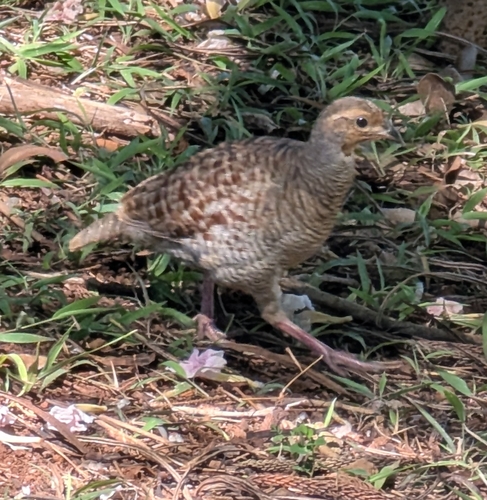
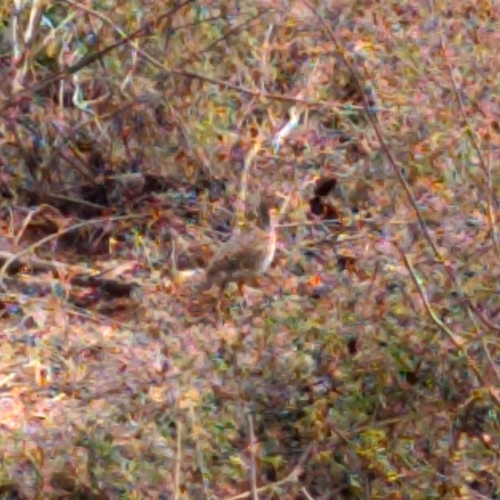
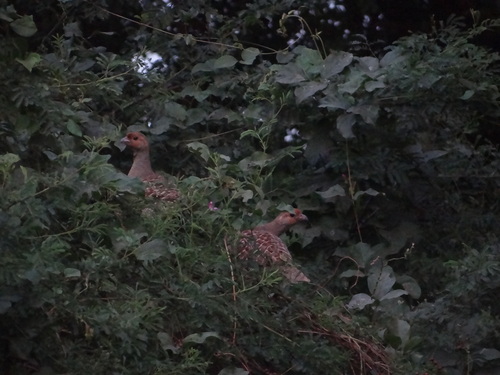

What the Grey Francolin sounds like

ID tip
This bird is a medium-sized francolin, with males averaging 11.6–13.4 in (29–34 cm) and females averaging 10.2–11.9 in (26–30 cm). The males weigh 9–12 oz (260–340 g), whereas the weight of the females is 7–11 oz (200–310 g). The francolin is barred throughout and the face is pale with a thin, black border to the pale throat. The only similar species is the painted francolin, which has a rufous vent. The male can have up to two spurs on the legs, while females usually lack them. Subspecies O.p. mecranensis is palest and found in arid north-western India, eastern Pakistan, and southern Iran.
Text from Wikipedia, licensed CC BY-SA 4.0.
When to see the Grey Francolin
One bar for each month, and every month is filled: this bird is recorded here in all twelve. The wide bar is February, the month with the most records.
Where to see the Grey Francolin
The map shades 15 countries with regular records. Everything unshaded has no records. Countries are listed below the map.
About the Grey Francolin
The grey francolin is a species of francolin found in the plains and drier parts of the Indian subcontinent and Iran. This species was formerly also called the grey partridge, not to be confused with the European grey partridge. They are mainly ground-living birds and are found in open cultivated lands as well as scrub forest and their local name of teetar is based on their calls, a loud and repeated Ka-tee-tar...tee-tar, which is produced by one or more birds. The term teetar can also refer to other partridges and quails. During the breeding season, calling males attract challengers, and decoys were used to trap these birds especially for fighting.
Text adapted from Wikipedia, licensed CC BY-SA 4.0.
Easily confused with
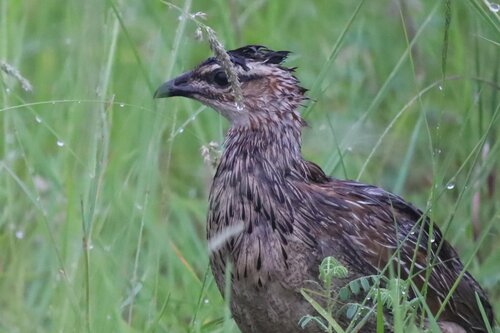 Crested FrancolinOrtygornis sephaenaThe crested francolin is a species of bird in the family Phasianidae.
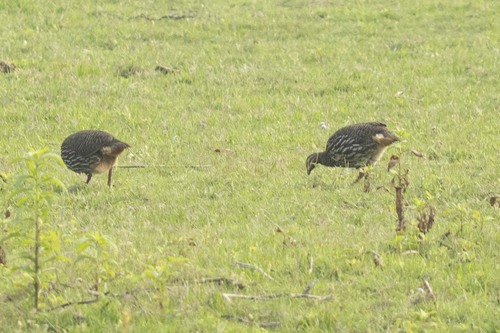 Swamp FrancolinOrtygornis gularisFrom Frank Finn's The Game Birds of India & Asia (1911):
This species is easily distinguished from most of our partridges by its large size and comparatively long legs; as in the last species, the sexes are alike in plumage, but the cock is easily distinguishable by his spurs.
Swamp FrancolinOrtygornis gularisFrom Frank Finn's The Game Birds of India & Asia (1911):
This species is easily distinguished from most of our partridges by its large size and comparatively long legs; as in the last species, the sexes are alike in plumage, but the cock is easily distinguishable by his spurs.
Side by side: Grey Francolin vs Ruffed Grouse · Grey Francolin vs Swamp Francolin
Learn the Grey Francolin in the BeakBrain App
Photo and call practice. Coming soon to iPhone and Android.
Play today's Daily BirdEvery photo and recording on this page is credited to its author under the licence shown. Spotted a problem with this page, or have a better photo? Contribute.