Learn what every symbol on the card means.Full credits and sources at beakbrain.com/symbols
 GrasslandScrapeHuge · 23.0 kg


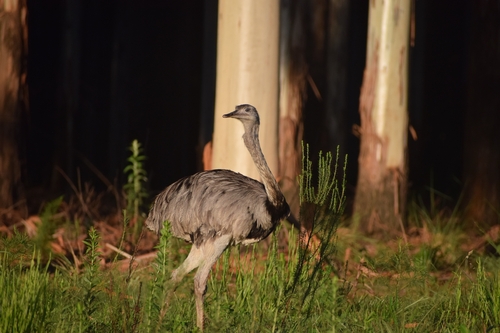
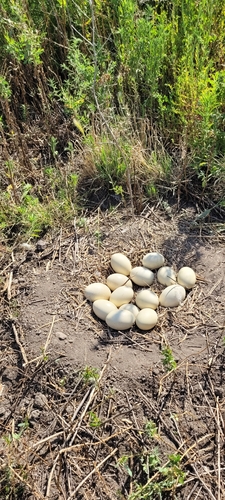
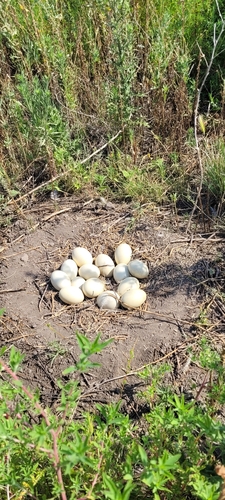
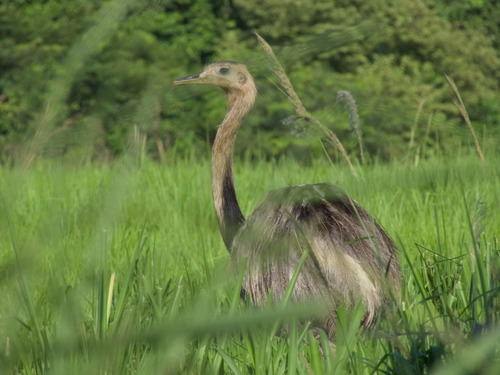
ID tip
The adults have an average weight of 20–27 kg (44–60 lb) and often measure 127 to 140 cm (50 to 55 in) long from beak to tail; they usually stand about 1.5 m (4 ft 11 in) tall, with a typical range of 1.4 to 1.7 m (4 ft 7 in to 5 ft 7 in), to the top of the head. The males are generally bigger than the females.
Text from Wikipedia, licensed CC BY-SA 4.0.
When to see the Greater Rhea
One bar for each month, and every month is filled: this bird is recorded here in all twelve. The wide bar is October, the month with the most records.
Where to see the Greater Rhea
The map shades 6 countries with regular records, and 2 more in a lighter tone where the bird turns up only as a stray. Everything unshaded has no records. Countries are listed below the map.
Recorded as a rare visitor in Belgium, United Kingdom.
About the Greater Rhea
The greater rhea is a species of flightless bird native to eastern South America. Other names for the greater rhea include the grey, common, or American rhea; ema (Portuguese); or ñandú. It is the largest bird of South America. One of two species in the genus Rhea, in the family Rheidae, it inhabits a variety of open areas, such as grasslands, savanna or grassy wetlands. Weighing 20–27 kilograms (44–60 lb), the greater rhea is the largest native bird in the Americas. In the wild, the greater rhea has a life expectancy of 10.5 years. It is also notable for its reproductive habits, and for the fact that a population has established itself in Northern Germany in the 2000s and 2010s.
Text adapted from Wikipedia, licensed CC BY-SA 4.0.
Easily confused with

Side by side: Greater Rhea vs Lesser Rhea
Learn the Greater Rhea in the BeakBrain App
Photo and call practice. Coming soon to iPhone and Android.
Play today's Daily BirdEvery photo and recording on this page is credited to its author under the licence shown. Spotted a problem with this page, or have a better photo? Contribute.