Learn what every symbol on the card means.Full credits and sources at beakbrain.com/symbols
 DesertScrapeMedium · 66 g
ID tip
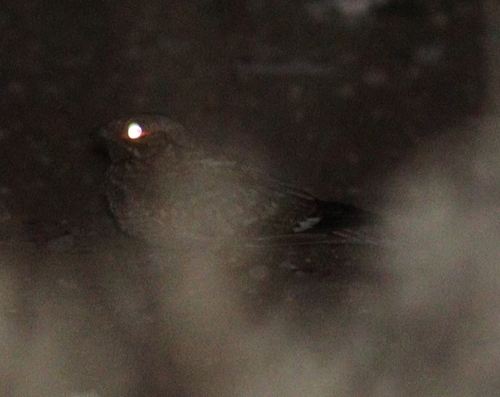
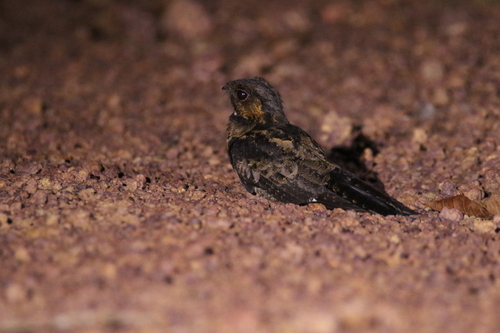
The golden nightjar is a distinctively coloured, smallish nightjar which measures 23–25 cm in length. When at rest the golden nightjar appears large headed and the upperparts and wing coverts are tawny buff marked with greyish-white, dark brown edged and speckled, square shaped spots. It has a large whitish patch on its throat, the upper breast is similarly marked to the upperparts but this fades towards the unmarked tawny-buff lower breast and belly. In flight it shows a large white spot towards the tips of the wings and in poor light it appears very pale. Both sexes are alike. Voice: The golden nightjar's song is low pitched churr which may last quite a long time and is delivered at dawn and dusk from the ground.
Text from Wikipedia, licensed CC BY-SA 4.0.
When to see the Golden Nightjar
One bar for each month. Filled bars are the 5 months with records; pale bars are months with none. The wide bar is January, the month with the most records.
Where to see the Golden Nightjar
The map shades 4 countries with regular records, and 1 more in a lighter tone where the bird turns up only as a stray. Everything unshaded has no records. Countries are listed below the map.
Recorded as a rare visitor in Sudan.
About the Golden Nightjar
The golden nightjar is a species of nightjar in the family Caprimulgidae. It is found in Sahel region in northern Sub-Saharan Africa.
Text adapted from Wikipedia, licensed CC BY-SA 4.0.
Easily confused with
Learn the Golden Nightjar in the BeakBrain App
Photo and call practice. Coming soon to iPhone and Android.
Play today's Daily BirdEvery photo and recording on this page is credited to its author under the licence shown. Spotted a problem with this page, or have a better photo? Contribute.