Learn what every symbol on the card means.Full credits and sources at beakbrain.com/symbols
 ForestCup nestSmall · 16 g


ID tip
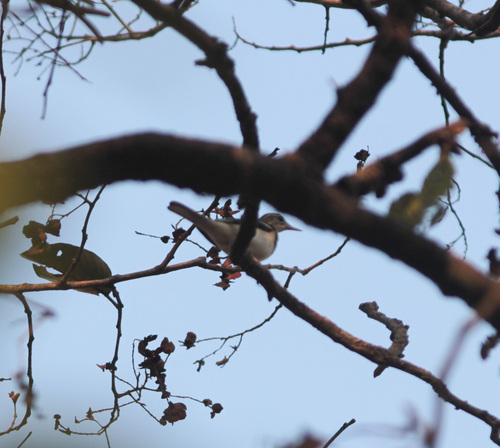
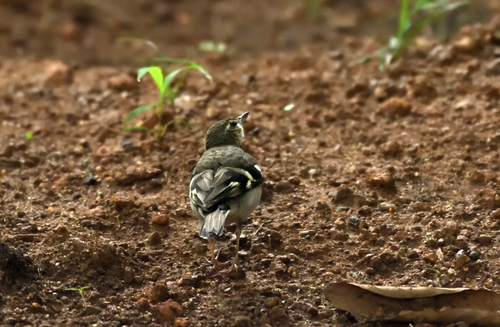
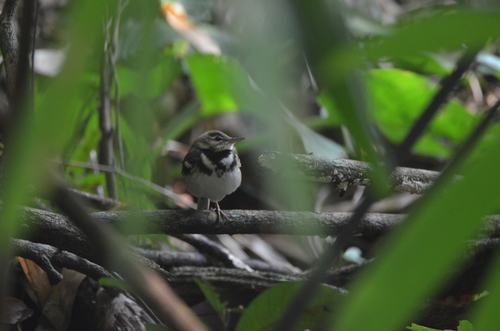
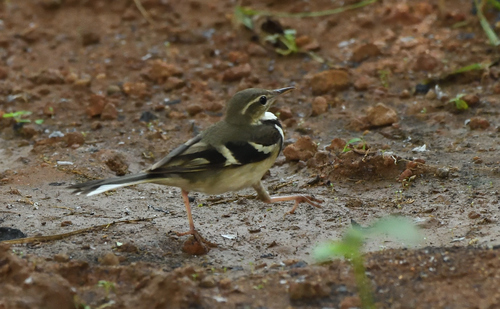
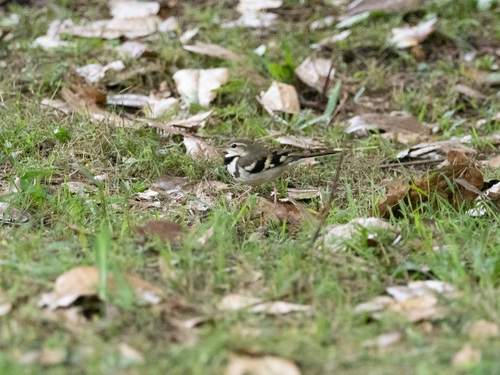
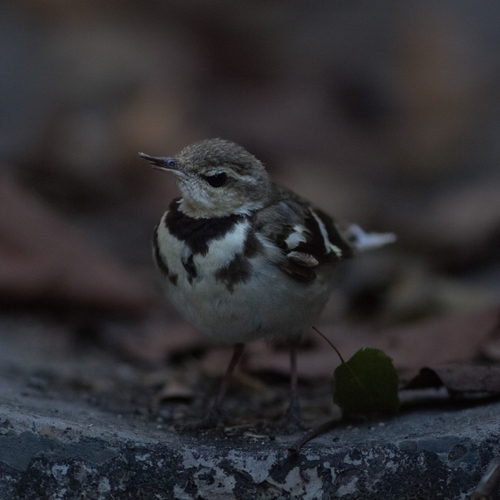
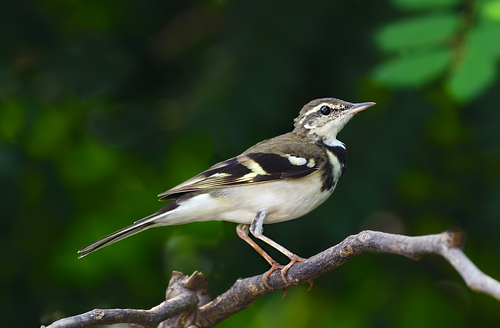
This is a distinctive wagtail, the only one placed in the genus Dendronanthus (all other wagtails are placed in Motacilla). The forest wagtail is 18 cm (7.1 in) in length, a slender bird with a long tail. The back and crown are olive brown, and the wings are black with two yellow wing bars and white tertial edges. There is a white supercilium, above a dark stripe through the eye. The underparts are white, apart from a black double breast band. The upper breast band is bib-like while the lower band is often broken. The sexes are similar in appearance.
Text from Wikipedia, licensed CC BY-SA 4.0.
When to see the Forest Wagtail
One bar for each month. Filled bars are the 9 months with records; pale bars are months with none. The wide bar is February, the month with the most records.
Where to see the Forest Wagtail
The map shades 25 countries with regular records, and 2 more in a lighter tone where the bird turns up only as a stray. Everything unshaded has no records. Countries are listed below the map.
About the Forest Wagtail
The forest wagtail is a medium-sized passerine bird in the wagtail family Motacillidae. It has a distinctive plumage that sets it apart from other wagtails and has the habit of wagging its tail sideways unlike the usual up and down movements of the other wagtail species. It is the only wagtail species that nests in trees. It is found mainly in forested habitats, breeding in the temperate parts of east Asia and wintering across tropical Asia from India to Indonesia.
Text adapted from Wikipedia, licensed CC BY-SA 4.0.
Easily confused with
 Berthelot's PipitAnthus berthelotiiBerthelot's pipit is a small passerine bird which breeds in Madeira and the Canary Islands.
 Long-billed PipitAnthus similisThis is a medium-large pipit, 16–17.5 cm (6.3–6.9 in) long, but is an undistinguished looking species on the ground, mainly sandy grey above and whitish or pale buff below.
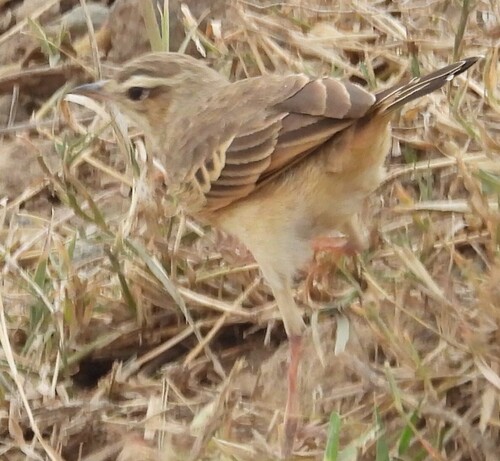 Plain-backed PipitAnthus leucophrysThe plain-backed pipit or plain pipit is a medium-sized passerine bird which is a resident breeder in Africa south of the Sahara Desert.
Side by side: Forest Wagtail vs Long-billed Pipit
Learn the Forest Wagtail in the BeakBrain App
Photo and call practice. Coming soon to iPhone and Android.
Play today's Daily BirdEvery photo and recording on this page is credited to its author under the licence shown. Spotted a problem with this page, or have a better photo? Contribute.