Learn what every symbol on the card means.Full credits and sources at beakbrain.com/symbols
 WoodlandCup nestSmall · 17 g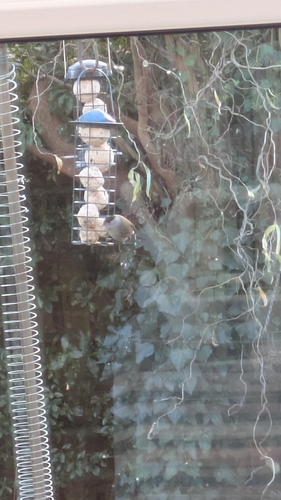
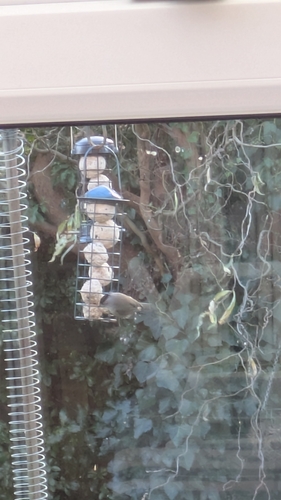
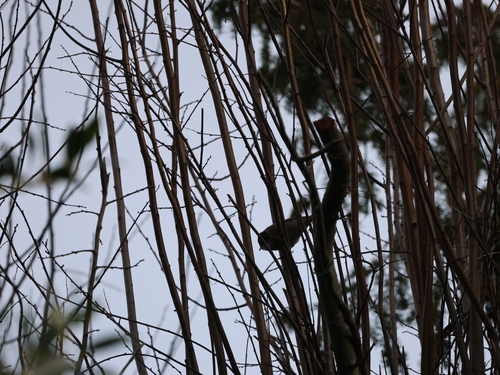
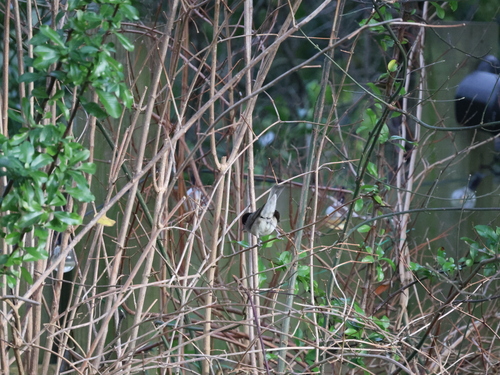
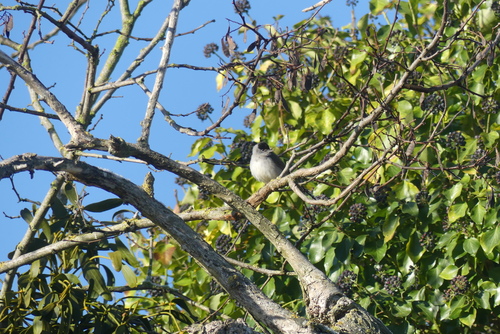
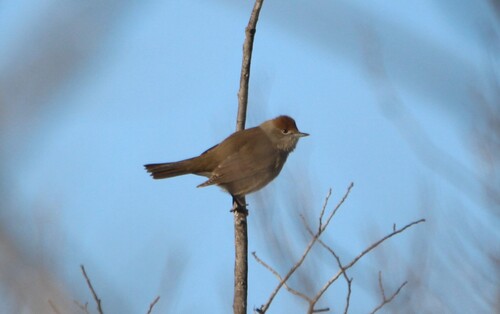
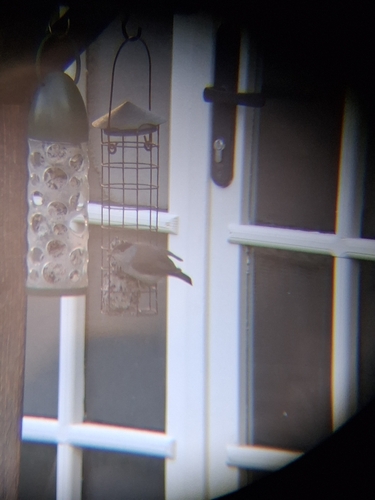
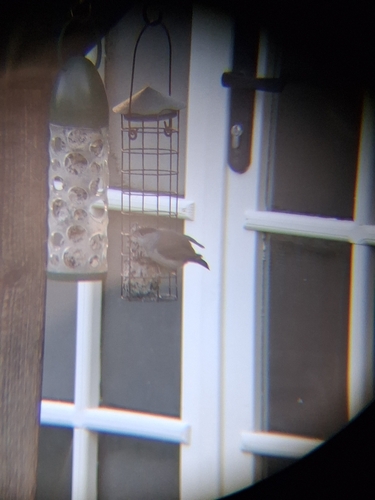


What the Eurasian Blackcap sounds like


ID tip
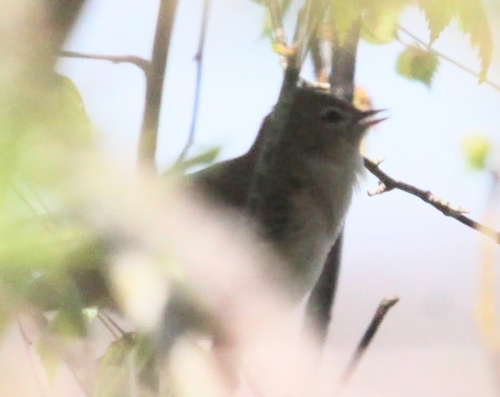
The blackcap is a mainly grey warbler with distinct male and female plumages. The nominate subspecies is about 13 cm (5.1 in) long with a 7–8 cm (2.8–3.1 in) wing length. The weight is typically 16–25 g (0.56–0.88 oz), but can be up to 31 g (1.1 oz) for birds preparing to migrate. The adult male has olive-grey upperparts, other than a paler grey nape and a neat black cap on the head. The underparts are light grey, becoming silvery white on the chin, throat and upper breast. The tail is dark grey, with an olive tint to the outer edge of each feather. Voice: The male's song is a rich musical warbling, often ending in a loud high-pitched crescendo, which is given in bursts of up to 30 seconds. The song is repeated for about two-and-a-half minutes, with a short pause before each repetition.
Text from Wikipedia, licensed CC BY-SA 4.0.
When to see the Eurasian Blackcap
One bar for each month. Filled bars are the 8 months with records; pale bars are months with none. The wide bar is May, the month with the most records.
Where to see the Eurasian Blackcap
The map shades 98 countries with regular records, and 4 more in a lighter tone where the bird turns up only as a stray. Everything unshaded has no records. Countries are listed below the map.
Recorded as a rare visitor in India, South Africa, Zambia, Zimbabwe.
About the Eurasian Blackcap
The Eurasian blackcap is a bird usually known simply as the blackcap. It is a common and widespread warbler. It has mainly olive-grey upperparts and pale grey underparts, and differences across the five subspecies are small. Both sexes have a neat coloured cap to the head, black in the male and reddish-brown in the female. The male's typical song is a rich musical warbling, often ending in a loud high-pitched crescendo, but a simpler song is given in some isolated areas, such as valleys in the Alps. The blackcap's closest relative is the garden warbler, which looks quite different but has a similar song.
Text adapted from Wikipedia, licensed CC BY-SA 4.0.
Easily confused with
 Garden WarblerSylvia borinThe garden warbler is 14 cm (5.5 in) long with a 7.6–8.4 cm (3.0–3.3 in) wing length.
 Bush BlackcapSylvia nigricapillusThe bush blackcap is a species of bird in the family Sylviidae.
 African Hill BabblerSylvia abyssinicaThe African hill babbler is an arboreal robin-like forest bird with a thin bill, bright reddish brown back and a contrasting grey head and nape.
Side by side: Eurasian Blackcap vs Garden Warbler
Learn the Eurasian Blackcap in the BeakBrain App
Photo and call practice. Coming soon to iPhone and Android.
Play today's Daily BirdEvery photo and recording on this page is credited to its author under the licence shown. Spotted a problem with this page, or have a better photo? Contribute.