Learn what every symbol on the card means.Full credits and sources at beakbrain.com/symbols
 ForestDomed nestMedium · 152 g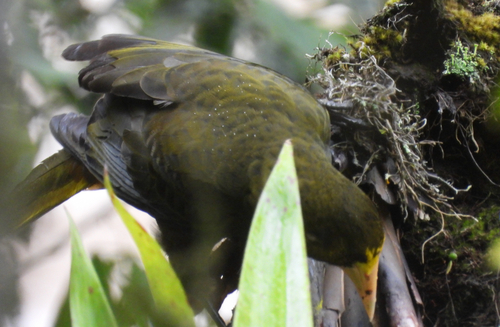


What the Dusky-green Oropendola sounds like

ID tip
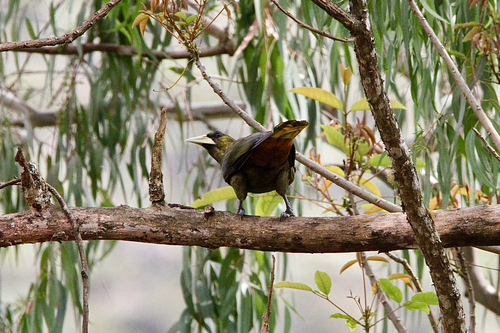
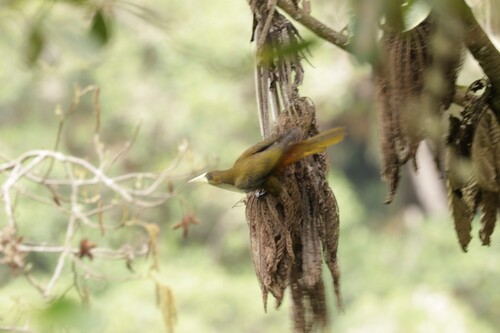
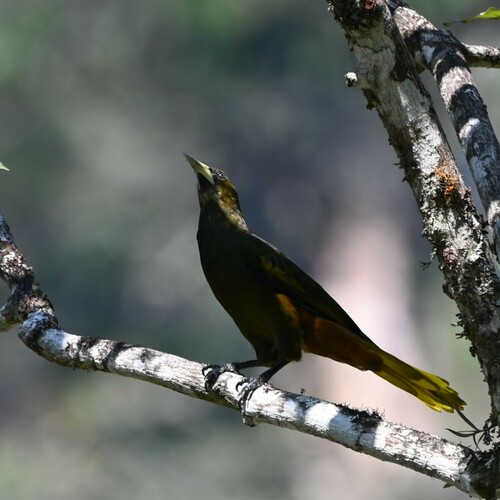
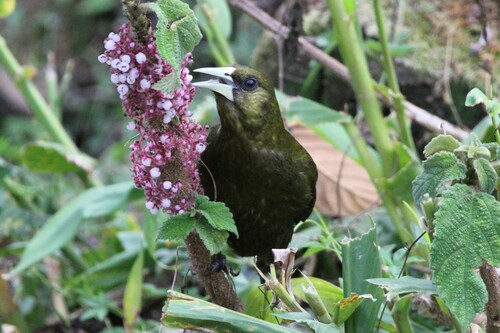
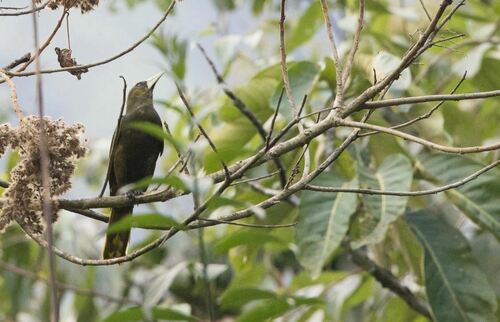
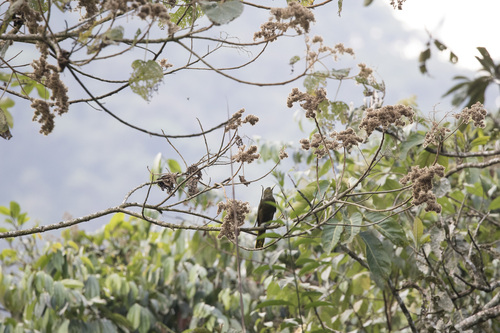
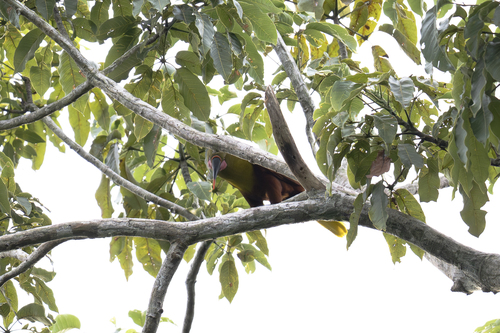
The male dusky-green oropendola grows to a length of about 42 cm (17 in) and the female of about 33 cm (13 in). The sexes are similar in morphology, the plumage being mainly dark brownish-green or blackish-green, with a rufous-brown rump and crissum (the undertail coverts surrounding the cloaca). The beak is greenish-white, there may be a few yellow feathers on the head, and the iris is brown or blue, the latter colour perhaps appearing in older birds.
Text from Wikipedia, licensed CC BY-SA 4.0.
When to see the Dusky-green Oropendola
One bar for each month. Filled bars are the 8 months with records; pale bars are months with none. The wide bar is October, the month with the most records.
Where to see the Dusky-green Oropendola
The map shades 2 countries with regular records. Everything unshaded has no records. Countries are listed below the map.
About the Dusky-green Oropendola
The dusky-green oropendola is a species of bird in the family Icteridae. It is found on the eastern slope of the Andes in Bolivia and Peru. Its natural habitats are subtropical or tropical moist montane forests and heavily degraded former forest.
Text adapted from Wikipedia, licensed CC BY-SA 4.0.
Easily confused with
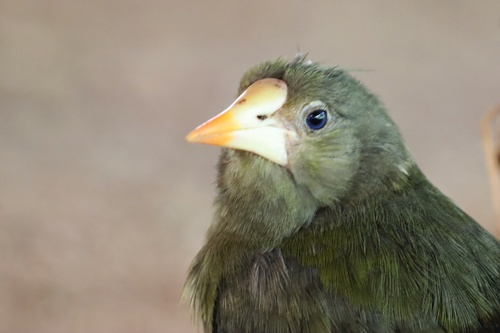 Green OropendolaPsarocolius viridisMale green oropendolas average 48.5 cm (19 in) long and females 37 cm (15 in).
 Olive OropendolaPsarocolius bifasciatusThe olive oropendola is the largest member of its genus.
 Black OropendolaPsarocolius guatimozinusMale black oropendolas are about 47 cm (19 in) long and females about 39 cm (15 in).
Side by side: Dusky-green Oropendola vs Olive Oropendola · Dusky-green Oropendola vs Green Oropendola
Learn the Dusky-green Oropendola in the BeakBrain App
Photo and call practice. Coming soon to iPhone and Android.
Play today's Daily BirdEvery photo and recording on this page is credited to its author under the licence shown. Spotted a problem with this page, or have a better photo? Contribute.