Learn what every symbol on the card means.Full credits and sources at beakbrain.com/symbols
 ShrublandDomed nestSmall · 16 g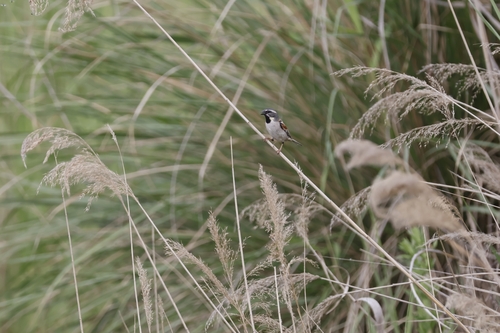
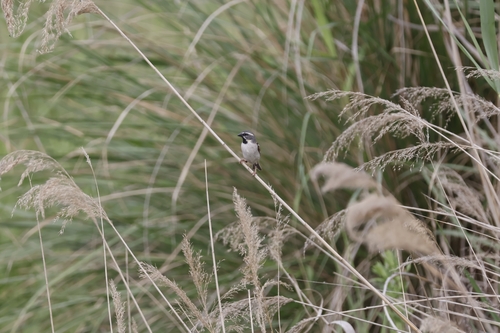
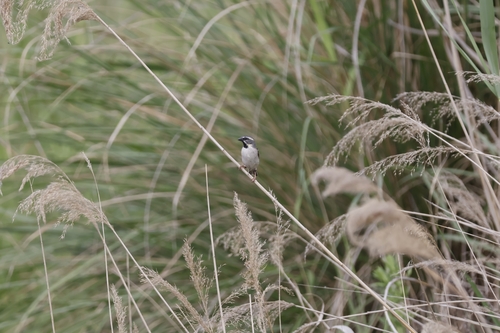
ID tip
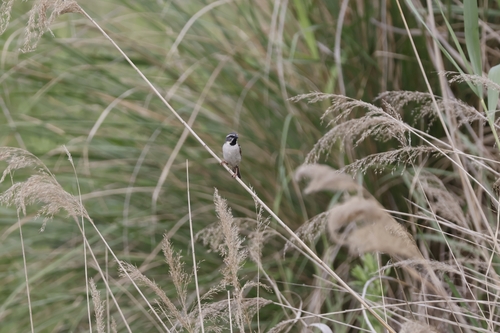
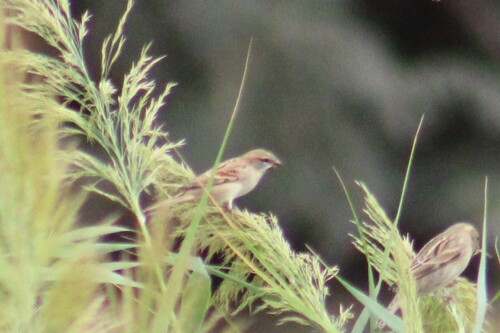
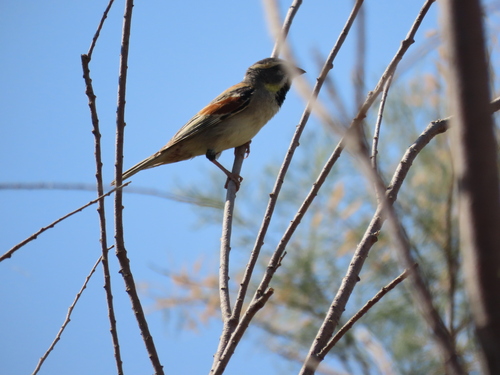
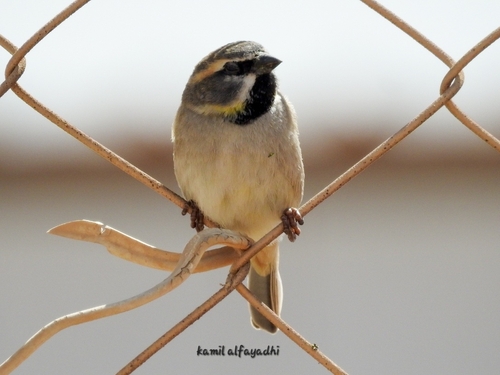
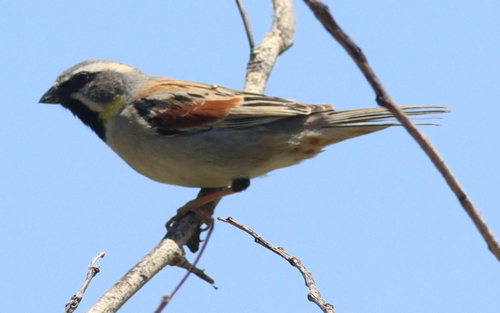
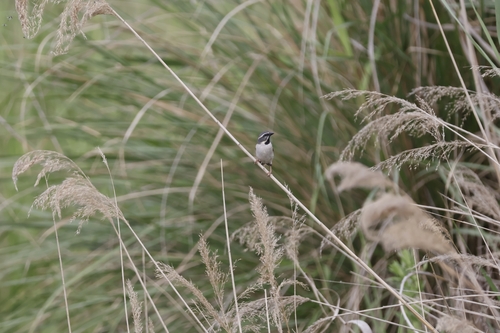
At 12–13 cm (4.7–5.1 in) long it is one of the smaller species of its family, some 4 cm (1.6 in) shorter than the widespread house sparrow. Like most of its relatives, it is sexually dimorphic with males being more brightly and distinctively marked than females. The male Dead Sea sparrow has a grey crown, rear neck and cheeks, and a small black bib. It has a pale supercilium shading to buff at the rear, and yellow neck sides. The upperparts are dark-streaked reddish brown, and the underparts are grey-white.
Text from Wikipedia, licensed CC BY-SA 4.0.
When to see the Dead Sea Sparrow
One bar for each month, and every month is filled: this bird is recorded here in all twelve. The wide bar is March, the month with the most records.
Where to see the Dead Sea Sparrow
The map shades 8 countries with regular records, and 2 more in a lighter tone where the bird turns up only as a stray. Everything unshaded has no records. Countries are listed below the map.
Recorded as a rare visitor in United Arab Emirates, Cyprus.
About the Dead Sea Sparrow
The Dead Sea sparrow is a species of bird in the Old World sparrow family Passeridae, with one subspecies breeding in parts of the West Asia and another in western Afghanistan and eastern Iran. The eastern subspecies P. m. yatii is sometimes considered a separate species known as Yate's sparrow.
Text adapted from Wikipedia, licensed CC BY-SA 4.0.
Easily confused with
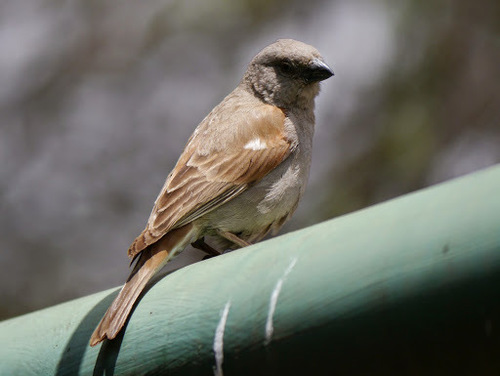 Parrot-billed SparrowPasser gongonensisThe parrot-billed sparrow is found in the arid lowlands of eastern Africa.
 Swainson's SparrowPasser swainsoniiThe Swainson's sparrow reaches a body length of 16 centimetres (6.3 in).
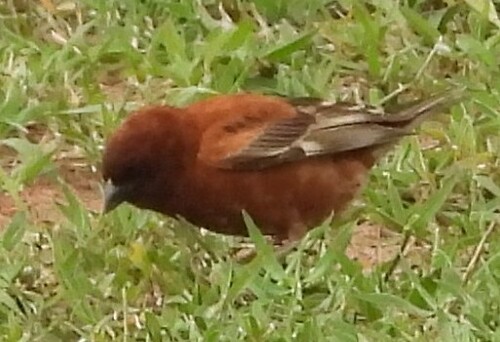 Chestnut SparrowPasser eminibeyLike the other members of the sparrow family, the chestnut sparrow is a small, chunky songbird with a thick bill suited to its diet of seeds.
Learn the Dead Sea Sparrow in the BeakBrain App
Photo and call practice. Coming soon to iPhone and Android.
Play today's Daily BirdEvery photo and recording on this page is credited to its author under the licence shown. Spotted a problem with this page, or have a better photo? Contribute.