Learn what every symbol on the card means.Full credits and sources at beakbrain.com/symbols
 GrasslandPlatform nestMedium · 263 g


ID tip
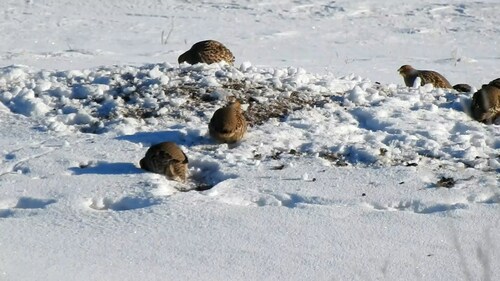
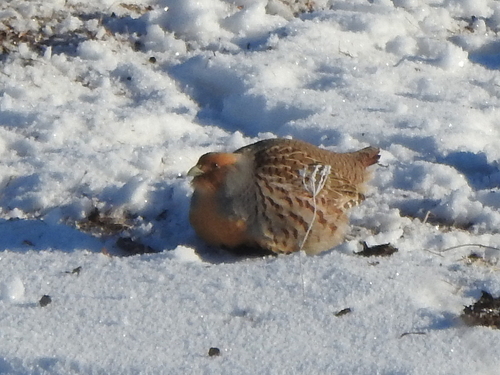
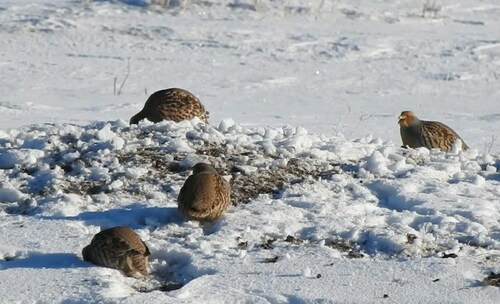
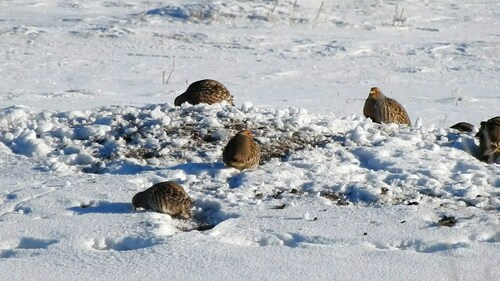
It is a rotund bird measuring roughly 28–30 cm (11–12 in) long. In the fall, males weigh about 200–340 grams (7.1–12.0 oz) and 290–330 grams (10–12 oz) for females. Both sexes have a sandy-orange face and long feathers under the beak, forming a 'beard'. The rest of the head and underparts are pale slate-grey with a buff line on the chest and black belly patch. The female has a smaller belly patch and is slightly duller than the male. Their song sounds like a higher-pitched, sped-up version of the grey partridge's; a shrill, grating kieerr-ik!
Text from Wikipedia, licensed CC BY-SA 4.0.
When to see the Daurian Partridge
One bar for each month. Filled bars are the 8 months with records; pale bars are months with none. The wide bar is June, the month with the most records.
Where to see the Daurian Partridge
The map shades 5 countries with regular records. Everything unshaded has no records. Countries are listed below the map.
About the Daurian Partridge
The Daurian partridge, also known as steppe partridge, Asian grey partridge or bearded partridge, is a gamebird in the pheasant family Phasianidae of the order Galliformes. Its name derives from the Dauria region of Russia, which forms part of their distribution.
Text adapted from Wikipedia, licensed CC BY-SA 4.0.
Easily confused with
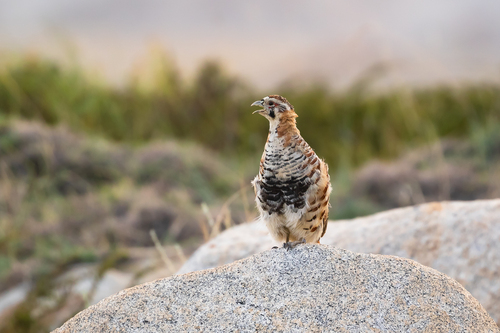 Tibetan PartridgePerdix hodgsoniaeSomewhat different in appearance from the other Perdix species such as the grey and Daurian partridges this 28–31 cm long partridge has the brown back, blackish belly patch and chestnut flanks of its relatives, but has a striking black and white face pattern, which contrasts with the rufous collar.
 Grey PartridgePerdix perdixThe grey partridge is a rotund bird, brown-backed, with grey flanks and chest.
Learn the Daurian Partridge in the BeakBrain App
Photo and call practice. Coming soon to iPhone and Android.
Play today's Daily BirdEvery photo and recording on this page is credited to its author under the licence shown. Spotted a problem with this page, or have a better photo? Contribute.