
Isabelline Wheatear
Oenanthe isabellina
Male and female isabelline wheatear are similar in appearance. The upper-parts are a pale sandy brown with an isabelline tinge (isabelline is a pale grey-yellow, fawn, cream-brown or parchment colour). The lower back is isabelline and the rump and upper tail-coverts are white. The tail feathers are brownish-black with a narrow edge and tip of buff and a large white base. In the outer tail feathers this occupies more than half the length of the feather but in the central feathers it is about one third. There is an over-eye streak of creamy white and the ear-coverts are pale brown.
ID text from Wikipedia, CC BY-SA 4.0
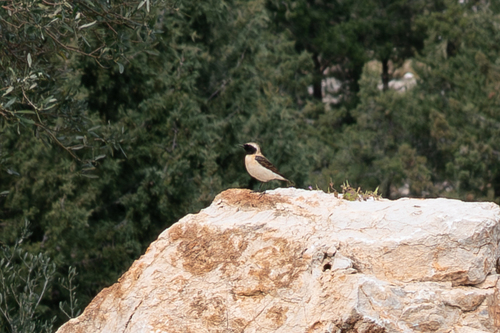
Western Black-eared Wheatear
Oenanthe hispanica
The breeding male has the forehead and crown white or nearly white, the mantle buff, and the wings blacker than those of the northern wheatear. The underparts are white tinged with buff. The back, upper tail coverts and most of the tail are white. A black mask extends from the ear coverts to the bill. The throat can be either black or white. In autumn and winter the head and mantle are distinctly buff, as are the underparts (including the throat in non-black-throated individuals), but the buff varies in intensity.
ID text from Wikipedia, CC BY-SA 4.0
Where you might meet both
And 17 more countries.
Learn this pair in the BeakBrain App
Photo and call practice. Coming soon to iPhone and Android.
Play today's Daily BirdPhotos and recordings are credited to their authors under the licence shown. Full profiles: Isabelline Wheatear and Western Black-eared Wheatear.