
Fork-tailed Swift
Apus pacificus
At 17–18 cm (6.7–7.1 in) in length, the Pacific swift is the largest of the Apus swifts. It has a 43-to-54-cm (17-to-21-in) wingspan. Females are slightly heavier than males, averaging 44.5 g (1.57 oz) against 42.5 g (1.50 oz). It is similar in general shape to the common swift, although slightly longer-winged and with a more protruding head. The fork of the tail is deeper, and the rump is broader. The upperparts are black, apart from a white rump band and a somewhat greyer head. Voice: The calls given by flocks near the breeding areas are typical swift screams, including a trilled tsiririri or harsher spee-eer. They resemble the cries of the common swift, but are softer and less wheezy. Pacific swifts are less vocal on the wintering grounds, but produce a variety of twitters and buzzes.
ID text from Wikipedia, CC BY-SA 4.0
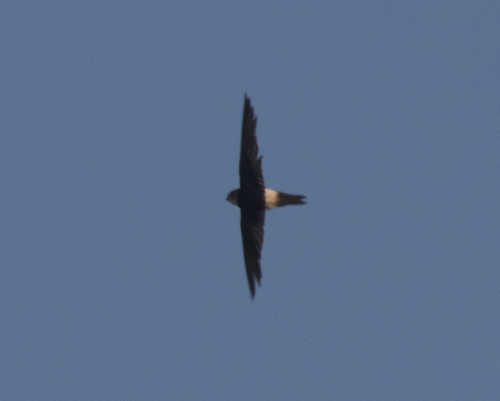
Horus Swift
Apus horus
The Horus swift is 13–15 cm (5.1–5.9 in) long and quite bulky. It appears entirely blackish except for a white patch on the chin and a white rump. It has a medium length forked tail. It has a fluttering flight like little swift. The little swift has a square tail, and more extensive white on the rump than Horus, and white-rumped swift has a more deeply forked tail and a narrower white band. The call is a buzzing peeeeooo, peeeeooo.
ID text from Wikipedia, CC BY-SA 4.0
Learn this pair in the BeakBrain App
Photo and call practice. Coming soon to iPhone and Android.
Play today's Daily BirdPhotos and recordings are credited to their authors under the licence shown. Full profiles: Fork-tailed Swift and Horus Swift.