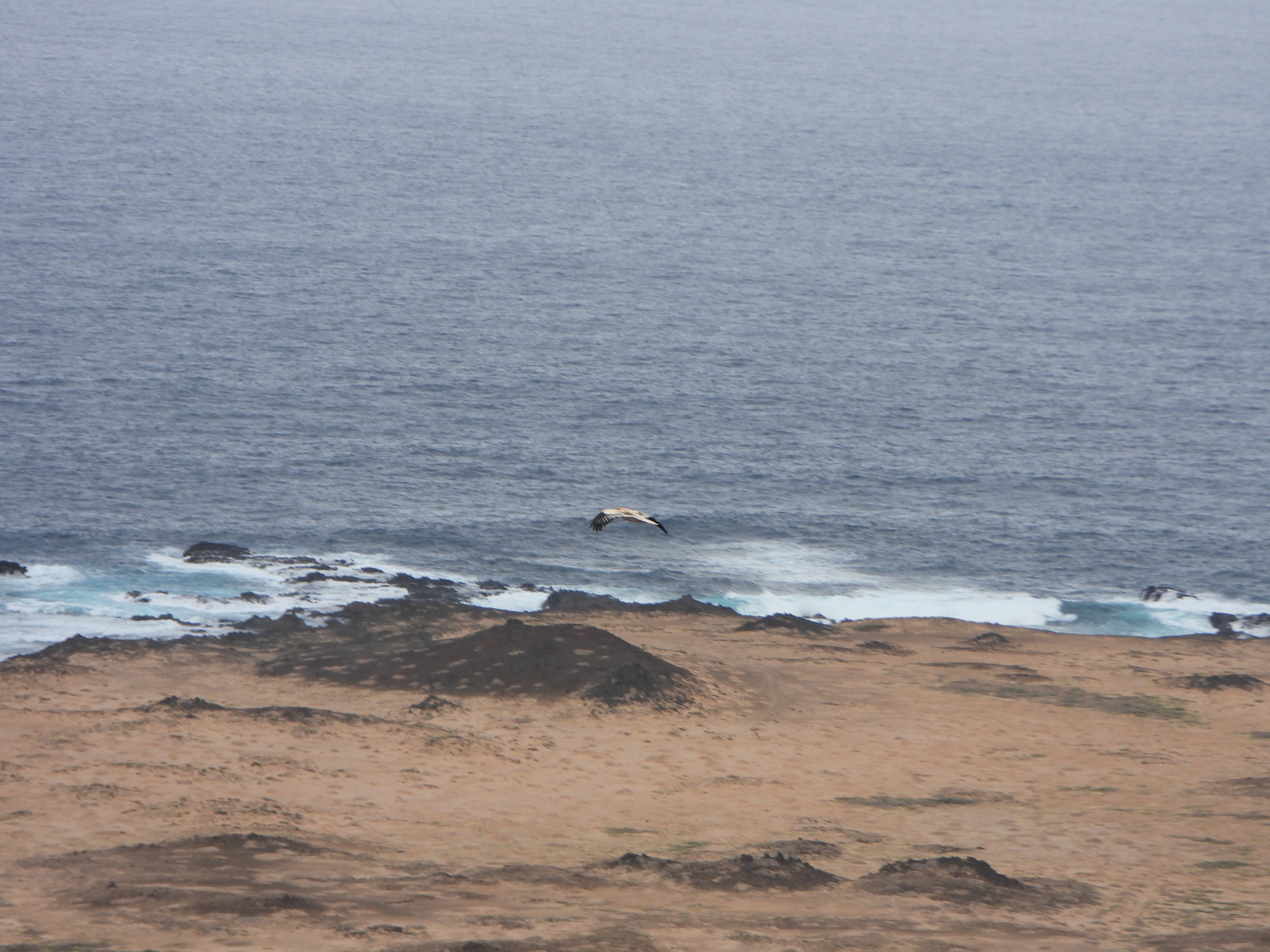
Egyptian Vulture
Neophron percnopterus
The adult's plumage is white, with black flight feathers in the wings. Wild birds usually appear soiled with a rusty or brown shade to the white plumage, derived from mud or iron-rich soil. Captive specimens without access to soil have clean white plumage. It has been suggested as a case of cosmetic colouration. The bill is slender and long, and the tip of the upper mandible is hooked. The nostril is an elongated horizontal slit. The neck feathers are long and form hackles. The wings are pointed, with the third primary being the longest; the tail is wedge shaped.
ID text from Wikipedia, CC BY-SA 4.0
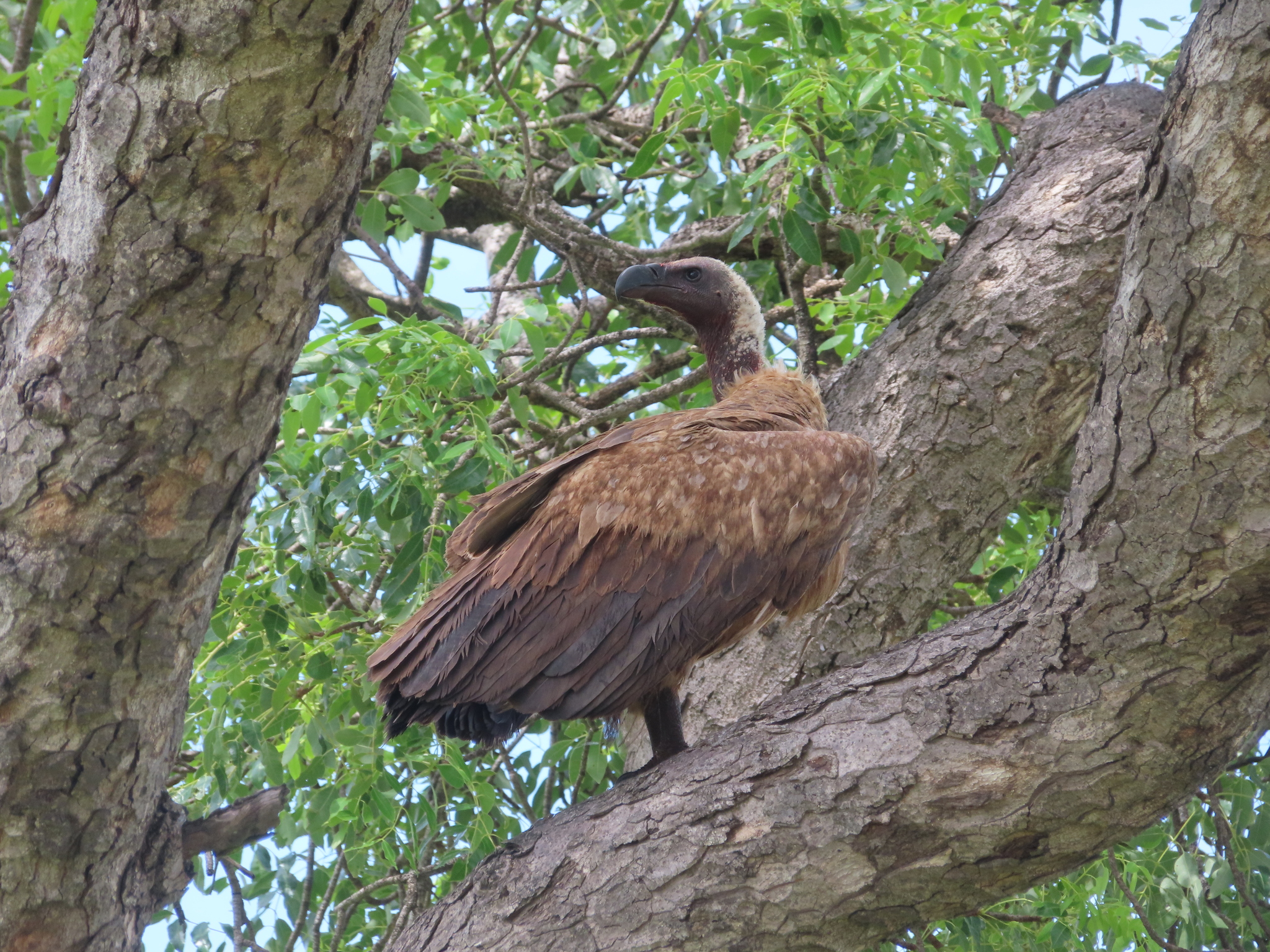
White-backed Vulture
Gyps africanus
The white-backed vulture is a typical vulture, with only down feathers on the head and neck, very broad wings and short tail feathers. It has a white neck ruff. The adult's whitish back contrasts with the otherwise dark plumage. Juveniles are largely dark. This is a medium-sized vulture; its body mass is 4.2 to 7.2 kg (9.3–15.9 lb), it is 78 to 98 cm (31 to 39 in) long and has a 1.96 to 2.25 m (6 ft 5 in to 7 ft 5 in) wingspan.
ID text from Wikipedia, CC BY-SA 4.0
Where you might meet both
Learn this pair in BeakBrain
Photo and call practice, free in any browser.
Play BeakBrainPhotos and recordings are credited to their authors under the licence shown. Full profiles: Egyptian Vulture and White-backed Vulture.