Learn what every symbol on the card means.Full credits and sources at beakbrain.com/symbols
 ShrublandCup nestSmall · 24 g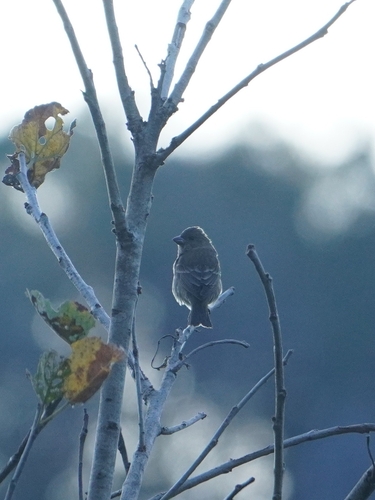
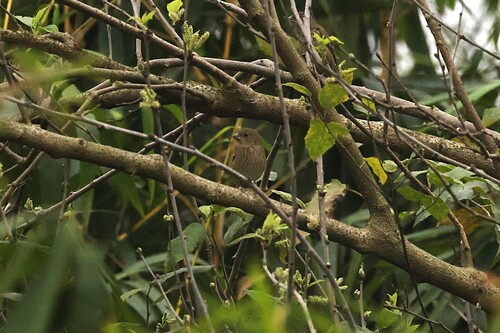


What the Common Rosefinch sounds like


ID tip
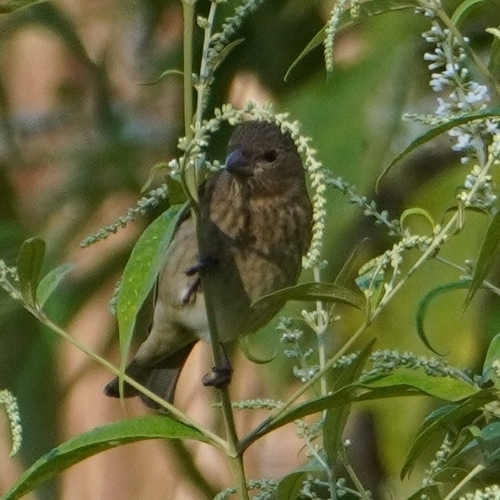
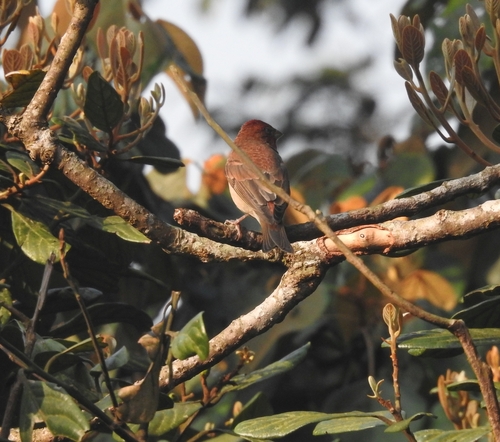
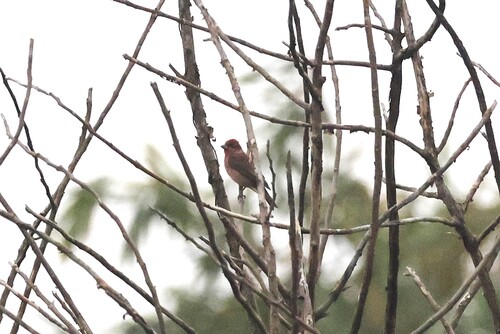
The common rosefinch is 13–15 cm (5.1–5.9 in) in length. It has a stout and conical bill. The mature male has brilliant rosy-carmine head, breast and rump; heavy bill; dark brown wings with two indistinct bars, and a white belly. Females and young males are dull-colored with yellowish-brown above, brighter on the rump and greyer on head; buff below. Adults moult in their winter quarters, between September and November. After moulting the red of male is subdued, and becomes brighter during the winter due to wear of the feathers.
Text from Wikipedia, licensed CC BY-SA 4.0.
When to see the Common Rosefinch
One bar for each month. Filled bars are the 4 months with records; pale bars are months with none. The wide bar is June, the month with the most records.
Where to see the Common Rosefinch
The map shades 69 countries with regular records, and 7 more in a lighter tone where the bird turns up only as a stray. Everything unshaded has no records. Countries are listed below the map.
Recorded as a rare visitor in United States, Portugal, Luxembourg, Cambodia, Sri Lanka, Morocco, Malta.
About the Common Rosefinch
The common rosefinch or scarlet rosefinch is the most widespread and common rosefinch of Asia and Europe.
Text adapted from Wikipedia, licensed CC BY-SA 4.0.
Easily confused with
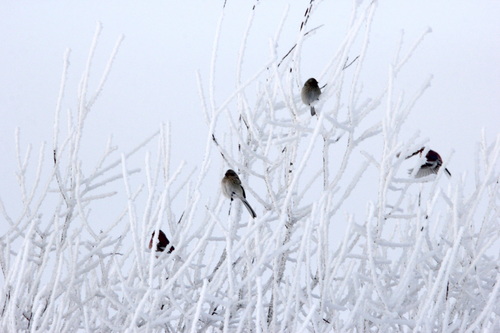 Long-tailed RosefinchCarpodacus sibiricusThe Siberian long-tailed rosefinch is a species of finch of the family Fringillidae.
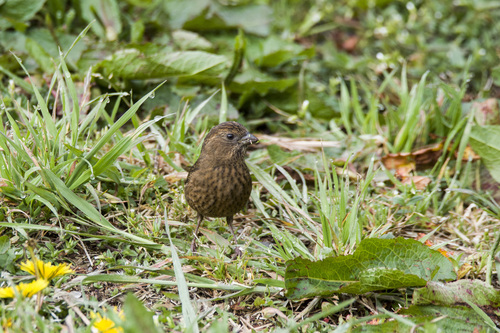 Taiwan RosefinchCarpodacus formosanusThe Taiwan rosefinch is a species of finch in the family Fringillidae.
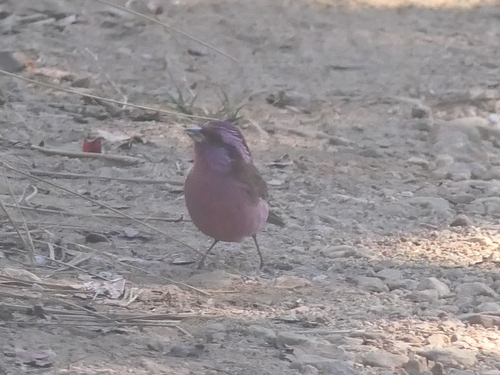 Pink-browed RosefinchCarpodacus rodochroaThe pink-browed Rosefinch is a medium-sized bird, about 14-15 centimeters and 16-20 grams.
Side by side: Common Rosefinch vs Pine Grosbeak · Common Rosefinch vs Pink-browed Rosefinch
Learn the Common Rosefinch in the BeakBrain App
Photo and call practice. Coming soon to iPhone and Android.
Play today's Daily BirdEvery photo and recording on this page is credited to its author under the licence shown. Spotted a problem with this page, or have a better photo? Contribute.