Learn what every symbol on the card means.Full credits and sources at beakbrain.com/symbols
 WetlandCup nestSmall · 19 g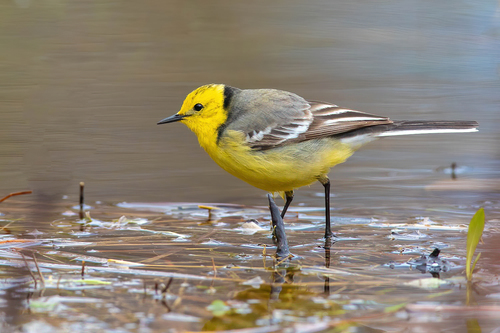


What the Citrine Wagtail sounds like


ID tip
It is a slender, 15.5–17 cm long bird, with the long, constantly wagging tail characteristic of the genus Motacilla. The adult male in breeding plumage is basically grey or black above, with white on the remiges, and bright yellow below and on the entire head except for the black nape. In winter plumage, its yellow underparts may be diluted by white, and the head is brownish with a yellowish supercilium. Females look generally like washed-out versions of males in winter plumage.
Text from Wikipedia, licensed CC BY-SA 4.0.
When to see the Citrine Wagtail
One bar for each month. Filled bars are the 10 months with records; pale bars are months with none. The wide bar is January, the month with the most records.
Where to see the Citrine Wagtail
The map shades 80 countries with regular records, and 9 more in a lighter tone where the bird turns up only as a stray. Everything unshaded has no records. Countries are listed below the map.
Recorded as a rare visitor in France, Canada, Belgium, Australia, South Africa, Netherlands, Morocco, United States, Malaysia.
About the Citrine Wagtail
The citrine wagtail is a small songbird in the family Motacillidae.
Text adapted from Wikipedia, licensed CC BY-SA 4.0.
Easily confused with
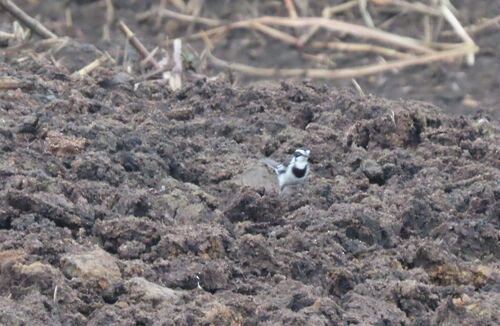 African Pied WagtailMotacilla aguimpA striking black and white wagtail with black upperparts contrasting with white underparts, it has a white supercilium and a white patch in the folded wing.
 Eastern Yellow WagtailMotacilla tschutschensisIt is a slender 15–16 cm long bird, with the characteristic long, constantly wagging tail of its genus.
 Japanese WagtailMotacilla grandisThe Japanese wagtail is about 20 cm long.
Side by side: Citrine Wagtail vs White-browed Wagtail · Citrine Wagtail vs Eastern Yellow Wagtail · African Pied Wagtail vs Citrine Wagtail · Citrine Wagtail vs Japanese Wagtail
Learn the Citrine Wagtail in the BeakBrain App
Photo and call practice. Coming soon to iPhone and Android.
Play today's Daily BirdEvery photo and recording on this page is credited to its author under the licence shown. Spotted a problem with this page, or have a better photo? Contribute.