Learn what every symbol on the card means.Full credits and sources at beakbrain.com/symbols
 ForestDomed nestSmall · 19 g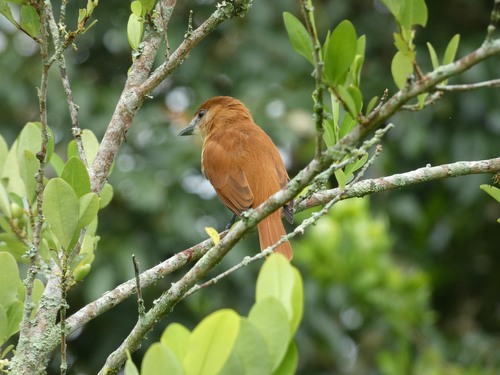
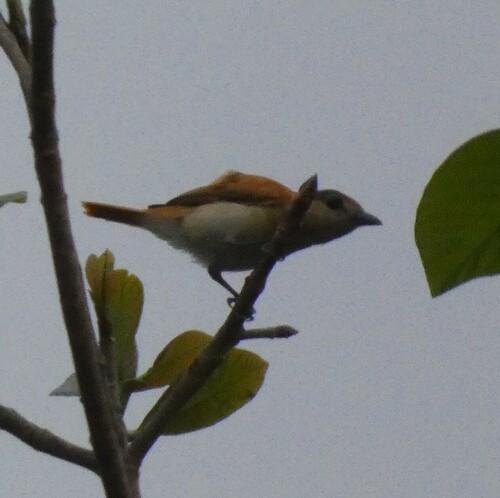
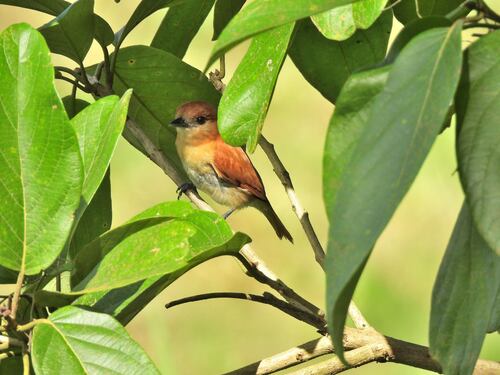
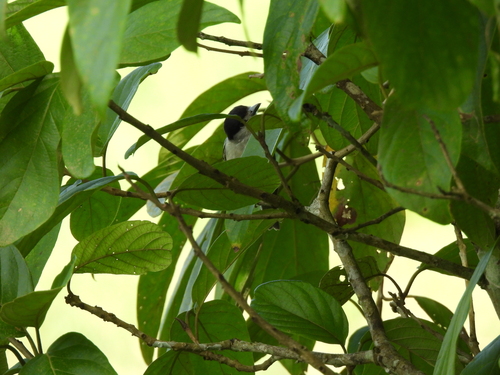


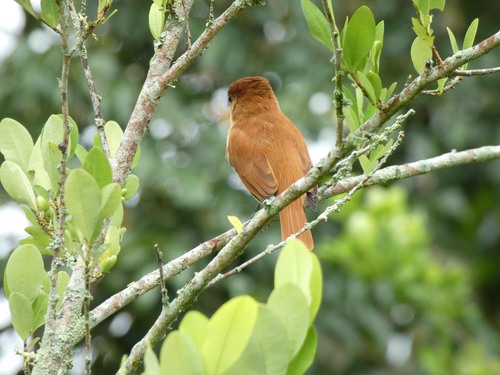
ID tip
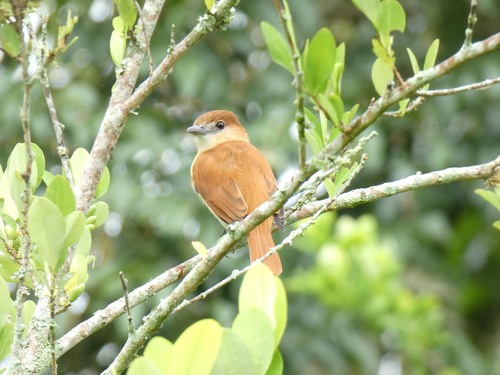
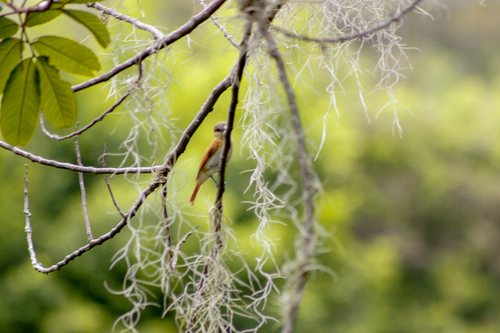
The cinereous becard is 12.9 to 14 cm (5.1 to 5.5 in) long and weighs about 18.5 g (0.65 oz). Adult males of the nominate subspecies have a glossy black crown, a white forehead and lores, a dusky spot in front of the eye, and pearl-gray cheeks. Their upperparts are mostly pearl-gray and sometimes have a faint olive tinge on the upper back. Their wings are blackish with thin white edges on the outer flight feathers and wider white edges on the inner flight feathers and coverts. Their tail is slaty gray; the feathers sometimes have whitish edges at their tips. Voice: "Both sexes appear to have rather large repertoire of melancholy songs". They typically are "a fast series of musical notes, e.g. twee, twee, twee-twee-twee-tweetweeteeteetititi, rising in pitch and accelerating to almost a trill".
Text from Wikipedia, licensed CC BY-SA 4.0.
When to see the Cinereous Becard
One bar for each month, and every month is filled: this bird is recorded here in all twelve. The wide bar is May, the month with the most records.
Where to see the Cinereous Becard
The map shades 8 countries with regular records. Everything unshaded has no records. Countries are listed below the map.
About the Cinereous Becard
The cinereous becard is a species of bird in the family Tityridae, the tityras, becards, and allies. It is found in Brazil, Colombia, French Guiana, Guyana, Panama, Peru, Suriname, Venezuela, and possibly Ecuador.
Text adapted from Wikipedia, licensed CC BY-SA 4.0.
Easily confused with
 Green-backed BecardPachyramphus viridisThe green-backed becard is about 14.5 to 16 cm (5.7 to 6.3 in) long; two individuals of the nominate subspecies weighed 18 and 21 g (0.63 and 0.74 oz).
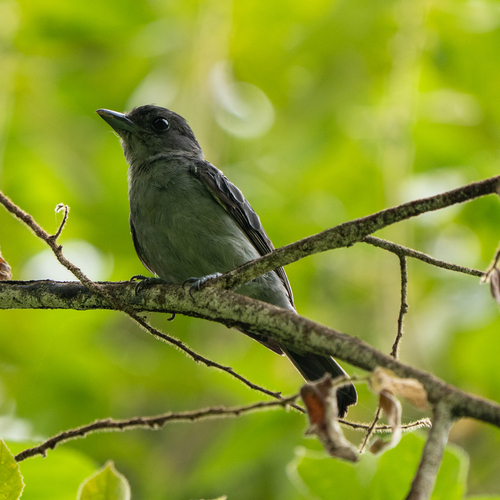 One-colored BecardPachyramphus homochrousThe one-colored becard is about 16.5 cm (6.5 in) long and weighs about 35 g (1.2 oz).
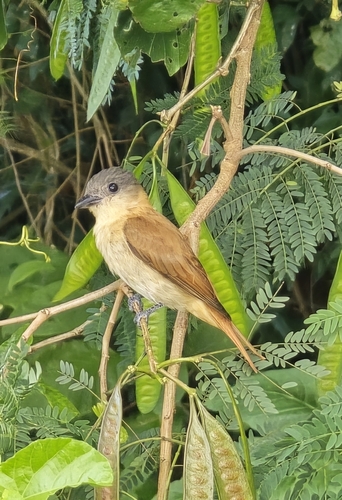 Crested BecardPachyramphus validusThe crested becard is 17 to 18.5 cm (6.7 to 7.3 in) long.
Side by side: Barred Becard vs Cinereous Becard · Chestnut-crowned Becard vs Cinereous Becard · Cinereous Becard vs Crested Becard · Cinereous Becard vs Green-backed Becard · Cinereous Becard vs One-colored Becard
Learn the Cinereous Becard in the BeakBrain App
Photo and call practice. Coming soon to iPhone and Android.
Play today's Daily BirdEvery photo and recording on this page is credited to its author under the licence shown. Spotted a problem with this page, or have a better photo? Contribute.