Learn what every symbol on the card means.Full credits and sources at beakbrain.com/symbols
 ShrublandCup nestSmall · 41 g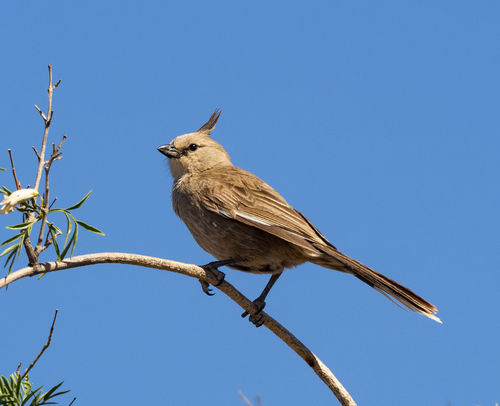
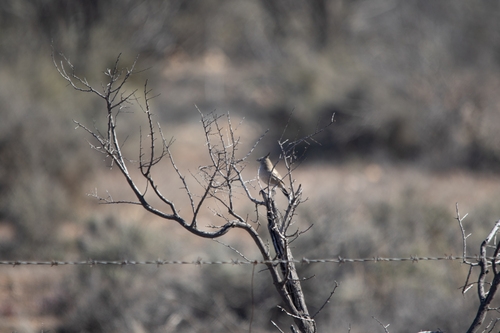
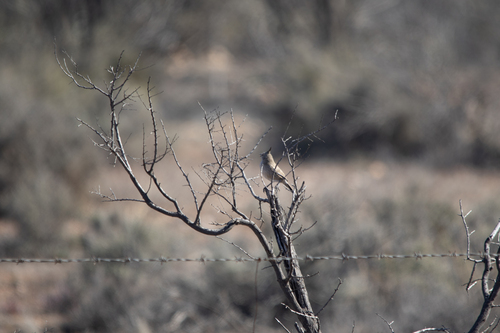


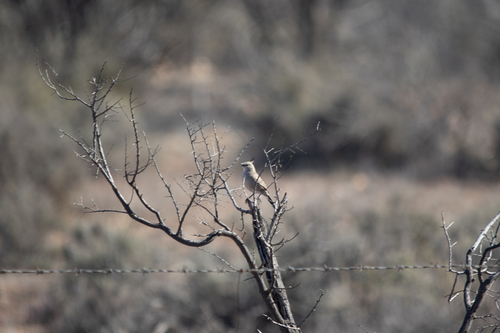
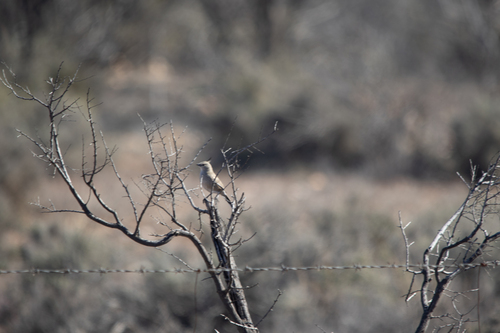
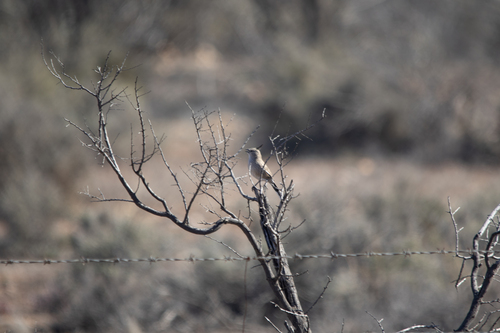
ID tip
The chirruping wedgebill is a medium-sized bird, measuring approximately 18–21 cm and weighing 31-64 g. Its bill is dark and wedge-shaped when mature, and horn-coloured when immature. It possesses a slim upright crest, and long rounded tail. Adult plumage consists of pale brown upperparts, with white/pale grey underparts. Flight feathers are edged with white, and the tail is coloured dark black-brown with a white tip. Immature individuals possess similar plumage, the only key differences being buff-tipped flight feathers, unlike the white tips of the mature individual. Voice: The distinctive call of this species is described as an antiphonal duet. Accounts of the call differ slightly. Pizzey and Knight describe the male as calling sitzi-cheeri (similar to the budgerigar's rolling chirrup), while the female replies with an upward rolling r-e-e-e-t CHEER. The call is described by Simpson and Day, however, as "sparrow-like and repetitive".
Text from Wikipedia, licensed CC BY-SA 4.0.
When to see the Chirruping Wedgebill
One bar for each month. Filled bars are the 10 months with records; pale bars are months with none. The wide bar is August, the month with the most records.
Where to see the Chirruping Wedgebill
The map shades 1 country with regular records. Everything unshaded has no records. Countries are listed below the map.
About the Chirruping Wedgebill
The chirruping wedgebill is a medium-sized member of the genus Psophodes, which consists or four to five songbirds endemic to Australia. Commonly found in low shrublands in south-eastern inland Australia, the species is distinguished by its distinctive, chirruping call. The chirruping wedgebill and chiming wedgebill were considered to be a single species until as late as 1973, when they were separated due to marked differences in their calls.
Text adapted from Wikipedia, licensed CC BY-SA 4.0.
Easily confused with
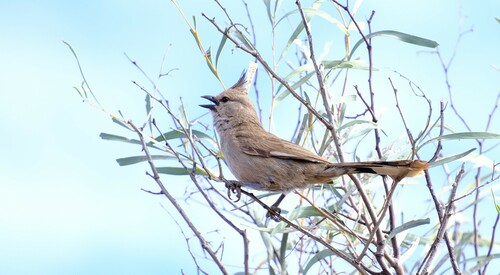 Chiming WedgebillPsophodes occidentalisThe male chiming wedgebill weighs 38-45 grams and the female chiming wedgebill weighs 30-36 grams.
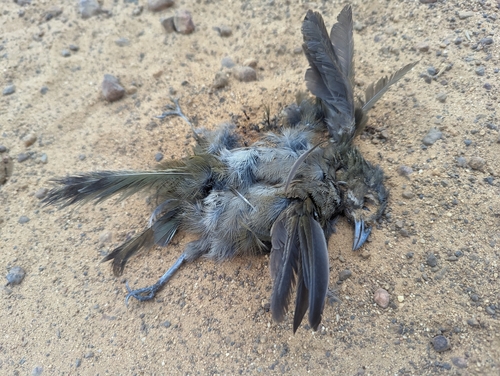 Western WhipbirdPsophodes nigrogularisThe western whipbird is a slim bird some 21–25 cm (8.3–9.8 in) in length.
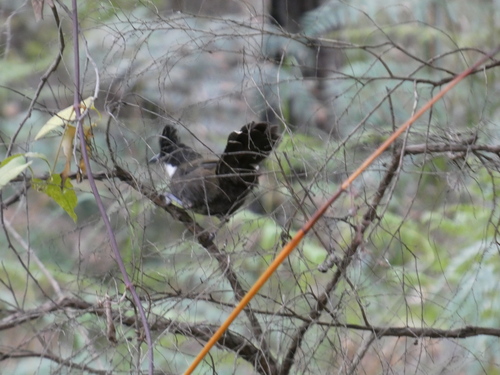 Eastern WhipbirdPsophodes olivaceusA slim bird some 26–30 cm (10–12 in) in length and 47–72 grams (1.7–2.5 oz) in weight, it is olive green with a black head and breast.
Side by side: Chirruping Wedgebill vs Eastern Whipbird
Learn the Chirruping Wedgebill in the BeakBrain App
Photo and call practice. Coming soon to iPhone and Android.
Play today's Daily BirdEvery photo and recording on this page is credited to its author under the licence shown. Spotted a problem with this page, or have a better photo? Contribute.