Learn what every symbol on the card means.Full credits and sources at beakbrain.com/symbols
 ShrublandDomed nestSmall · 58 g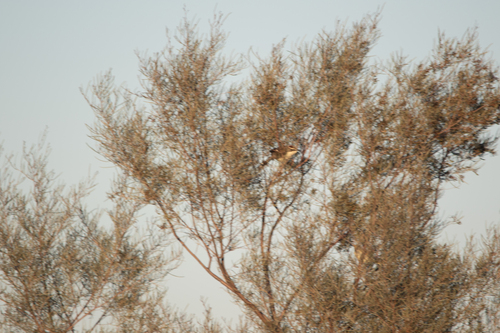


ID tip
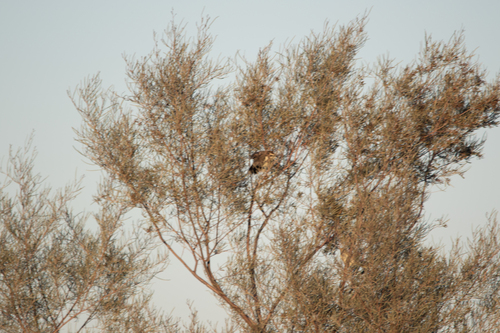
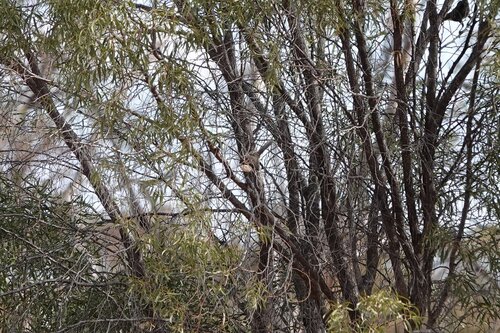
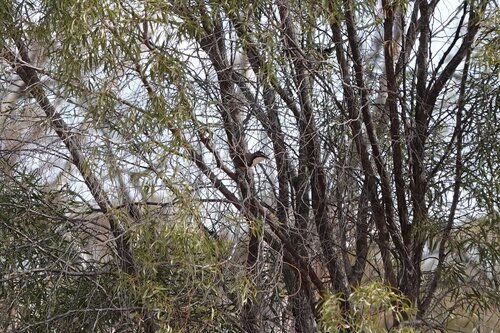
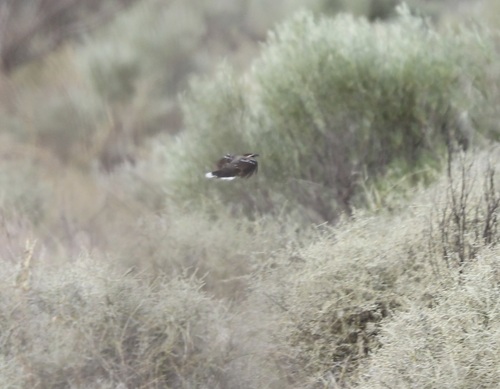
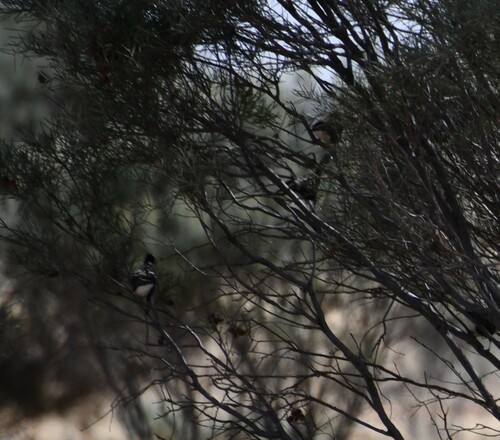
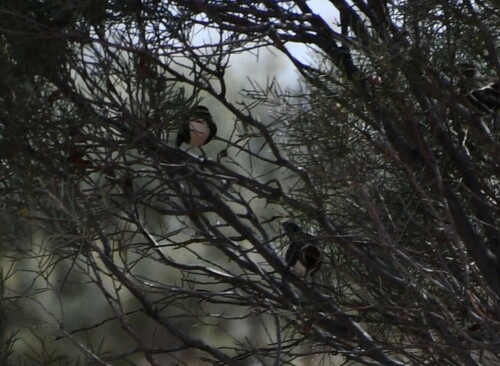
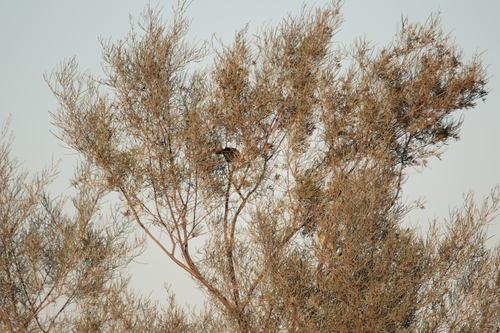
Chestnut-crowned babblers are dark, brown-grey birds with a white throat and breast, white-tipped tail and a long, black, down-curved bill. Wings are short and rounded and the tail is long with a rounded tip. Diagnostic features include two white wing bars and a rich, chestnut crown highlighted by long, white eyebrows. The birds have dark brown eyes and grey legs, while the wings, back and flanks are brown-grey to mottled dusky on the mantle. The white of the throat and breast is well-defined and narrower than that of the similar, white-browed babbler (Pomatostomus superciliosus). Voice: The birds have a strident, irregular but melodious territorial song, similar to the piping of the little eagle (Hieraaetus morphnoides), emitted from the top of a tall mulga tree or similar vantage point. There is constant chattering among members of the group, including whistling calls intermixed with tchak-tchak-tchak, which becomes louder and more frequent when excited, quarrelling or alarmed.
Text from Wikipedia, licensed CC BY-SA 4.0.
When to see the Chestnut-crowned Babbler
One bar for each month. Filled bars are the 10 months with records; pale bars are months with none. The wide bar is September, the month with the most records.
Where to see the Chestnut-crowned Babbler
The map shades 1 country with regular records. Everything unshaded has no records. Countries are listed below the map.
About the Chestnut-crowned Babbler
The chestnut-crowned babbler is a medium-sized bird that is endemic to arid and semi-arid areas of south-eastern Australia. It is a member of the family Pomatostomidae, which comprises five species of Australo-Papuan babblers. All are boisterous and highly social, living in groups of up to 23 individuals that forage and breed communally. Other names include red-capped babbler, rufous-crowned babbler and chatterer.
Text adapted from Wikipedia, licensed CC BY-SA 4.0.
Easily confused with
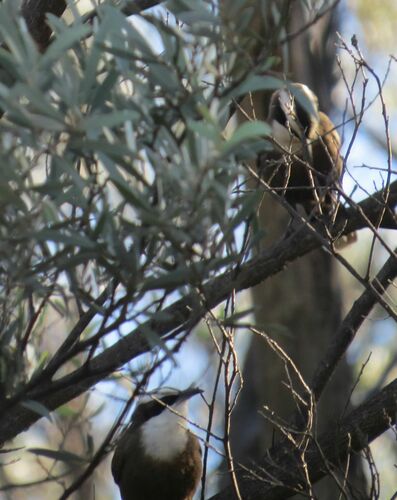 Hall's BabblerPomatostomus halliHall's babbler is medium in size (19 cm-21 cm) and identified by its thick white eyebrows and a white 'bib' from chin to mid-breast, which is sharply demarcated from the brown lower breast to belly.
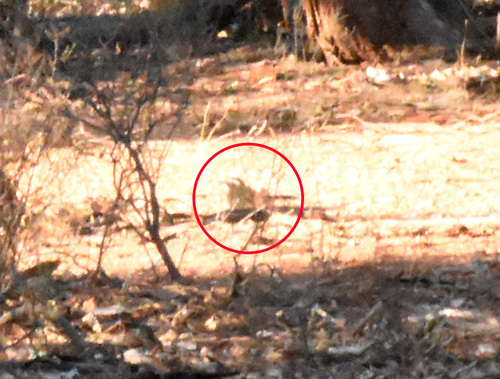 White-browed BabblerPomatostomus superciliosusRanging from 17 cm to 21 cm in length, the white-browed babbler is the smallest of the Australian babblers.
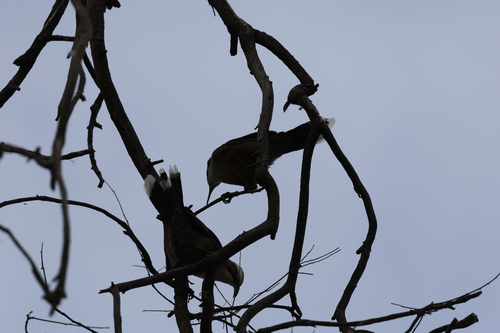 Grey-crowned BabblerPomatostomus temporalisThe grey-crowned babbler is a species of bird in the family Pomatostomidae.
Side by side: Chestnut-crowned Babbler vs White-browed Babbler
Learn the Chestnut-crowned Babbler in the BeakBrain App
Photo and call practice. Coming soon to iPhone and Android.
Play today's Daily BirdEvery photo and recording on this page is credited to its author under the licence shown. Spotted a problem with this page, or have a better photo? Contribute.