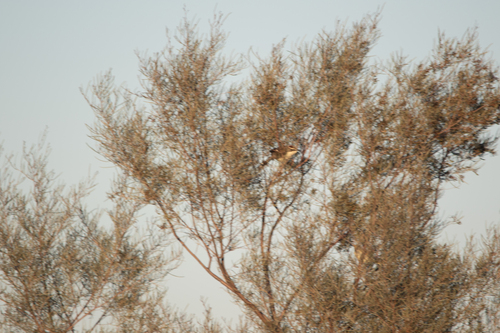
Chestnut-crowned Babbler
Pomatostomus ruficeps
Chestnut-crowned babblers are dark, brown-grey birds with a white throat and breast, white-tipped tail and a long, black, down-curved bill. Wings are short and rounded and the tail is long with a rounded tip. Diagnostic features include two white wing bars and a rich, chestnut crown highlighted by long, white eyebrows. The birds have dark brown eyes and grey legs, while the wings, back and flanks are brown-grey to mottled dusky on the mantle. The white of the throat and breast is well-defined and narrower than that of the similar, white-browed babbler (Pomatostomus superciliosus). Voice: The birds have a strident, irregular but melodious territorial song, similar to the piping of the little eagle (Hieraaetus morphnoides), emitted from the top of a tall mulga tree or similar vantage point. There is constant chattering among members of the group, including whistling calls intermixed with tchak-tchak-tchak, which becomes louder and more frequent when excited, quarrelling or alarmed.
ID text from Wikipedia, CC BY-SA 4.0
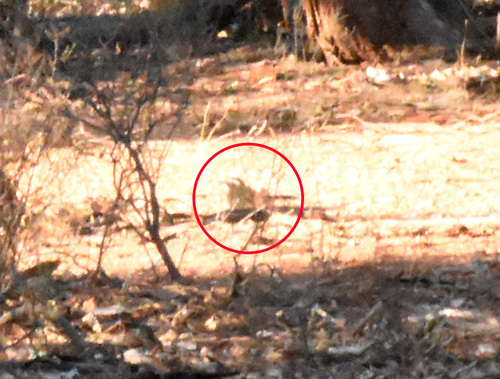
White-browed Babbler
Pomatostomus superciliosus
Ranging from 17 cm to 21 cm in length, the white-browed babbler is the smallest of the Australian babblers. It is a medium-sized terrestrial bird with a long and decurved bill. The wings are short and rounded in shape, adjacent to a plump, full body which is similar but slightly smaller than the chestnut-crowned or Hall's babbler. The tail is long and graduated, ending with a rounded tip. The gregarious nature of this species means that the tail is often fanned, raised, or a mix of the two. Voice: The most common call heard is a low repeated 'chuck' call, which is thought to be a contact call while foraging. The long-distance call consists of chattering 'mee' sounds repeated three or more times, followed by whistled 'wee-aw' which rises in pitch.
ID text from Wikipedia, CC BY-SA 4.0
Where you might meet both
Learn this pair in the BeakBrain App
Photo and call practice. Coming soon to iPhone and Android.
Play today's Daily BirdPhotos and recordings are credited to their authors under the licence shown. Full profiles: Chestnut-crowned Babbler and White-browed Babbler.