Learn what every symbol on the card means.Full credits and sources at beakbrain.com/symbols
 GrasslandScrapeLarge · 1.4 kg


ID tip
These birds lack the color and brilliance of most pheasants, with buffy gray plumage and long, gray crests. Its long tail has 18 feathers and the central tail feathers are much longer and the colour is mainly gray and brown. The female is slightly smaller in overall size.
Text from Wikipedia, licensed CC BY-SA 4.0.
When to see the Cheer Pheasant
One bar for each month. Filled bars are the 9 months with records; pale bars are months with none. The wide bar is May, the month with the most records.
Where to see the Cheer Pheasant
The map shades 3 countries with regular records. Everything unshaded has no records. Countries are listed below the map.
About the Cheer Pheasant
The cheer pheasant, also known as Wallich's pheasant or chir pheasant, is a vulnerable species of the pheasant family, Phasianidae. It is the only member in the genus Catreus. The scientific name commemorates Danish botanist Nathaniel Wallich.
Text adapted from Wikipedia, licensed CC BY-SA 4.0.
Easily confused with
 Painted Bush QuailPerdicula erythrorhynchaThis quail is darkish brightly colored with a deep red bill and legs, eye-catching even in flight.
 Bar-backed PartridgeArborophila brunneopectusThe bar-backed partridge is typically 280 mm (11 in) long in total, with an average wingspan of 144 mm (5.7 in) for males and 134 mm (5.3 in) for females of the species.
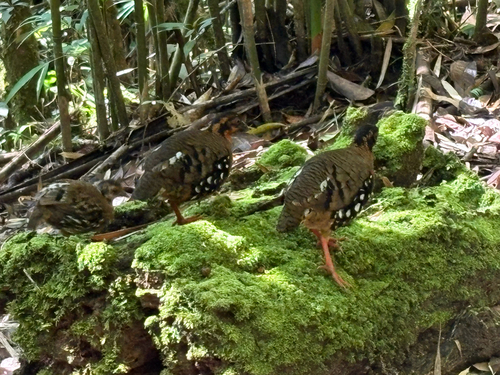 Red-breasted PartridgeArborophila hyperythraThe red-breasted partridge is about 27 cm (11 in) long and weighs about 270 g (9.5 oz).
Learn the Cheer Pheasant in the BeakBrain App
Photo and call practice. Coming soon to iPhone and Android.
Play today's Daily BirdEvery photo and recording on this page is credited to its author under the licence shown. Spotted a problem with this page, or have a better photo? Contribute.