Learn what every symbol on the card means.Full credits and sources at beakbrain.com/symbols
 ForestPlatform nestLarge · 339 g


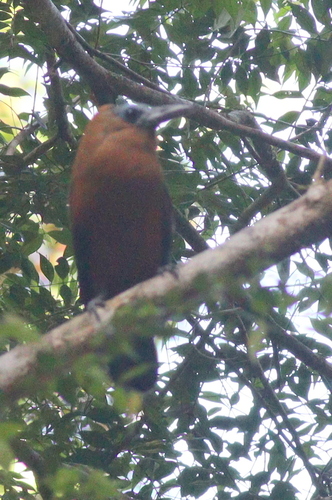
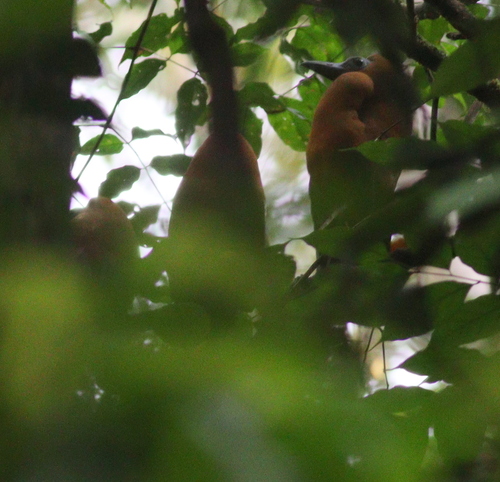
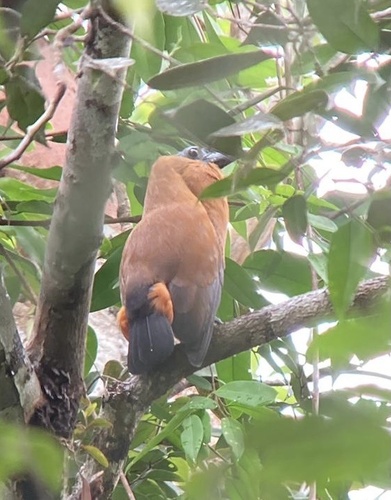
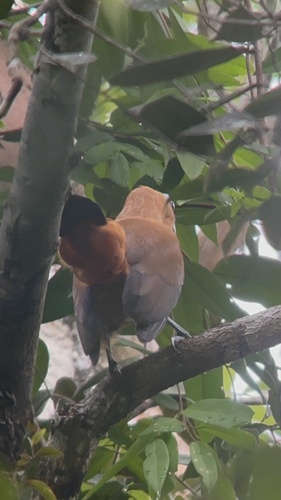
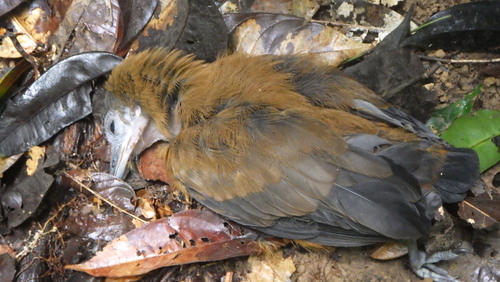
ID tip
The capuchinbird is a large thick-set suboscine passerine with a relatively heavy bill. Adults weigh between 340 and 420 grams (12 and 15 oz) and are typically around 40 centimetres (16 in) long, making it the largest suboscine passerine, apart from the Amazonian and long-wattled umbrellabirds – indeed, females average larger than any female umbrellabird. Its plumage is overall rich brown, approaching orange on the belly and undertail coverts, and the remiges and short tail are black. The most distinctive feature is its bare, almost vulture-like head covered in dull blue skin.
Text from Wikipedia, licensed CC BY-SA 4.0.
When to see the Capuchinbird
One bar for each month. Filled bars are the 11 months with records; pale bars are months with none. The wide bar is February, the month with the most records.
Where to see the Capuchinbird
The map shades 6 countries with regular records. Everything unshaded has no records. Countries are listed below the map.
About the Capuchinbird
The capuchinbird or calfbird is a large passerine bird of the family Cotingidae. It is monotypic within the genus Perissocephalus. It is found in humid forests in north-eastern South America, almost entirely north of the Amazon River and east of Rio Negro.
Text adapted from Wikipedia, licensed CC BY-SA 4.0.
Easily confused with
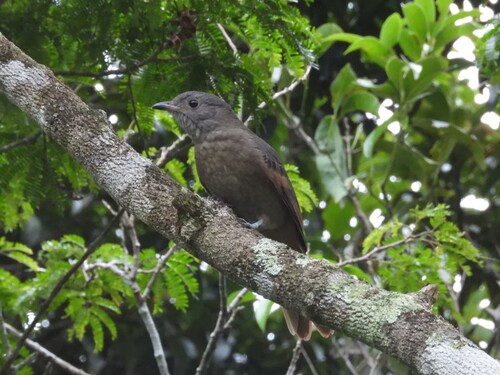 Cinnamon-vented PihaLipaugus lanioidesThe cinnamon-vented piha is 25 to 28 cm (9.8 to 11 in) long and weighs 85 to 110 g (3.0 to 3.9 oz).
 Black-and-gold CotingaLipaugus aterThe black-and-gold cotinga is 25 to 28 cm (9.8 to 11 in) long.
 Guianan Cock-of-the-rockRupicola rupicolaThe Guianan cock-of-the-rock is a stout-bodied bird with a prominent half-moon crest.
Learn the Capuchinbird in the BeakBrain App
Photo and call practice. Coming soon to iPhone and Android.
Play today's Daily BirdEvery photo and recording on this page is credited to its author under the licence shown. Spotted a problem with this page, or have a better photo? Contribute.