Learn what every symbol on the card means.Full credits and sources at beakbrain.com/symbols
 ForestMedium · 80 g
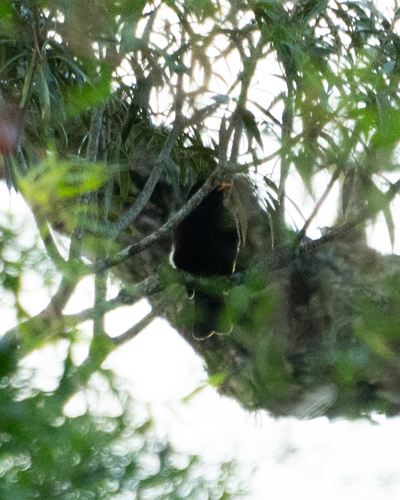
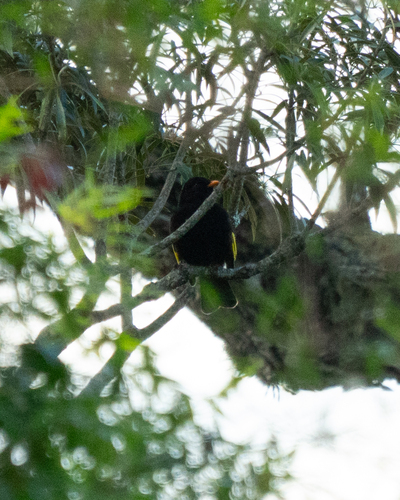
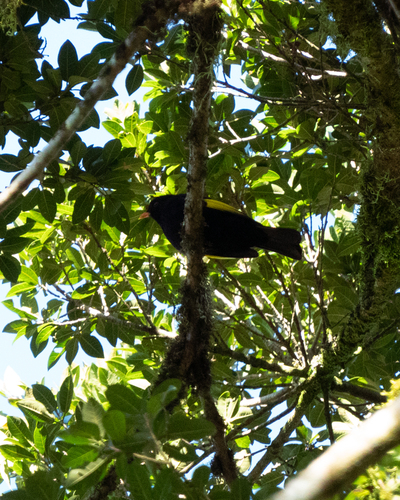
ID tip
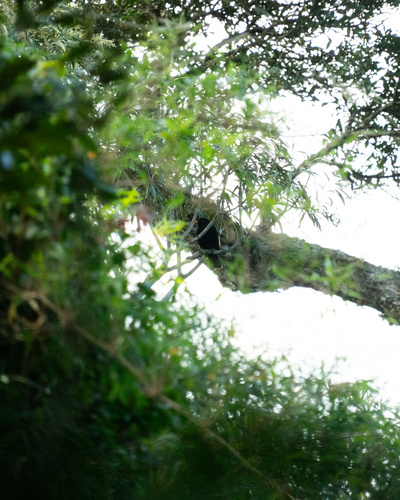
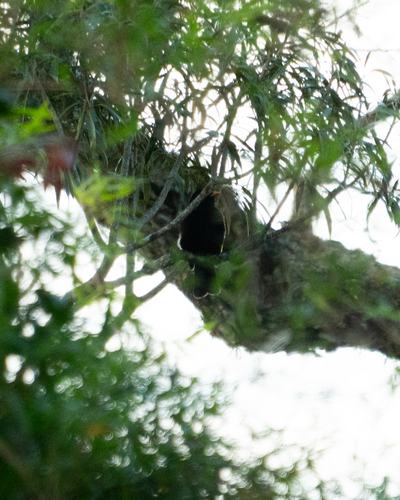
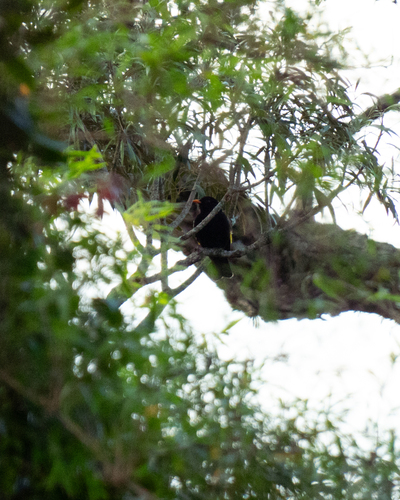
The black-and-gold cotinga is 25 to 28 cm (9.8 to 11 in) long. The sexes are strongly sexually dimorphic. Adult males are entirely black but for a large golden yellow patch on the wing's flight feathers (remiges). They have a reddish brown iris, a bright orange bill with a slight hook on the end, and dark brown legs and feet. Females are overall dull olive-green which is yellower on the edges of the flight feathers and belly. They much resemble the monomorphic grey-winged cotinga (L. condita) and their ranges overlap. Their bill is a duller orange than the male's. Voice: The black-and-gold cotinga's song is a "curious high, sharp, eerie suuuuuwíii, increasing in strength upslurred midway". Two or more males alternate vocalizing from treetops, producing a continuous sound that carries a long distance.
Text from Wikipedia, licensed CC BY-SA 4.0.
When to see the Black-and-gold Cotinga
One bar for each month, and every month is filled: this bird is recorded here in all twelve. The wide bar is October, the month with the most records.
Where to see the Black-and-gold Cotinga
The map shades 1 country with regular records. Everything unshaded has no records. Countries are listed below the map.
About the Black-and-gold Cotinga
The black-and-gold cotinga is a species of bird in the family Cotingidae. It is endemic to Brazil.
Text adapted from Wikipedia, licensed CC BY-SA 4.0.
Easily confused with
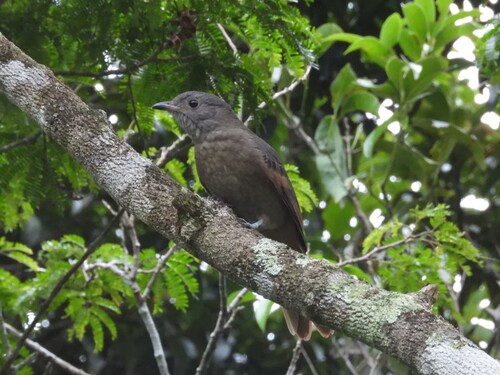 Cinnamon-vented PihaLipaugus lanioidesThe cinnamon-vented piha is 25 to 28 cm (9.8 to 11 in) long and weighs 85 to 110 g (3.0 to 3.9 oz).
 Dusky PihaLipaugus fuscocinereusThe dusky piha is the largest member and has the longest tail of genus Lipaugus.
 Chestnut-capped PihaLipaugus weberiOverall the chestnut-capped piha is a dark grey bird with a notable chestnut crown on the upper nape and pale cinnamon-colored undertail coverts.
Learn the Black-and-gold Cotinga in the BeakBrain App
Photo and call practice. Coming soon to iPhone and Android.
Play today's Daily BirdEvery photo and recording on this page is credited to its author under the licence shown. Spotted a problem with this page, or have a better photo? Contribute.