Learn what every symbol on the card means.Full credits and sources at beakbrain.com/symbols
 GrasslandCup nestSmall · 50 g


ID tip
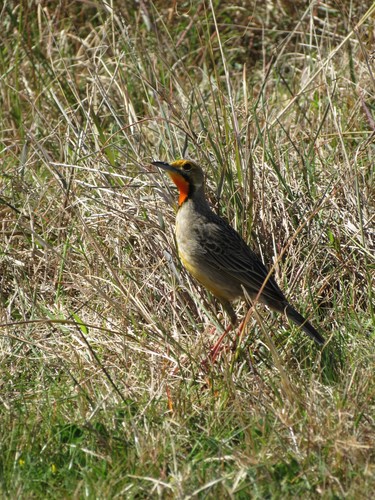
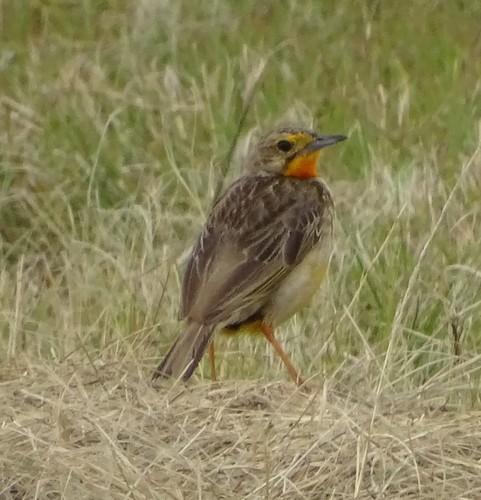
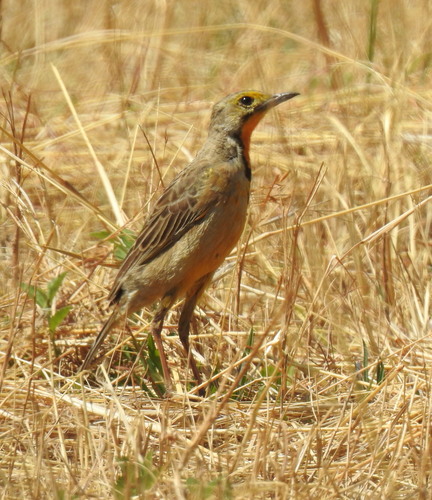
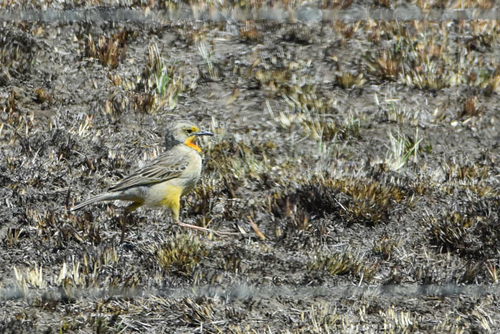
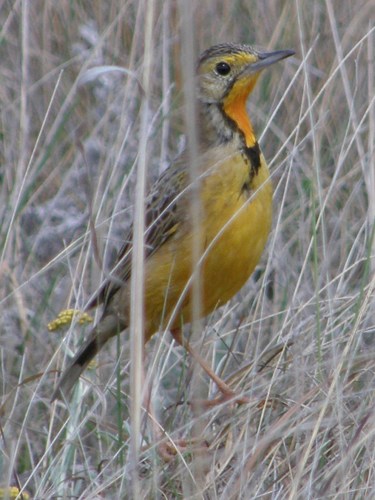
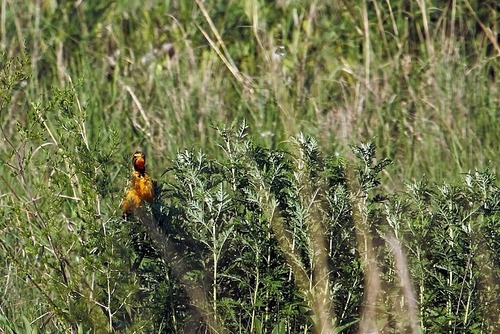
The Cape longclaw is a 19–20 cm long. The adult male has a grey head with a buff supercilium and a streaked blackish back. It has a bright orange gorget, black breast band and otherwise yellow underparts. The female is duller, having a yellow throat and much weaker breast band. The juvenile has a dirty yellow throat, indistinct breast band, and yellowish white underparts. The Cape longclaw is usually found in pairs throughout the year. It feeds on the ground on insects and some seeds. The song is a musical cheewit cheewit, the contact call is tsweet, and there is also a mewling alarm call.
Text from Wikipedia, licensed CC BY-SA 4.0.
When to see the Cape Longclaw
One bar for each month, and every month is filled: this bird is recorded here in all twelve. The wide bar is October, the month with the most records.
Where to see the Cape Longclaw
The map shades 5 countries with regular records, and 1 more in a lighter tone where the bird turns up only as a stray. Everything unshaded has no records. Countries are listed below the map.
Recorded as a rare visitor in Botswana.
About the Cape Longclaw
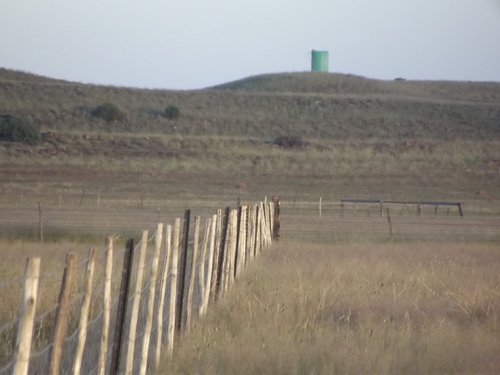
The Cape longclaw or orange-throated longclaw is a passerine bird in the family Motacillidae, which comprises the longclaws, pipits and wagtails. It occurs in Southern Africa in Zimbabwe and southern and eastern South Africa. This species is found in coastal and mountain grassland, often near water.
Text adapted from Wikipedia, licensed CC BY-SA 4.0.
Easily confused with
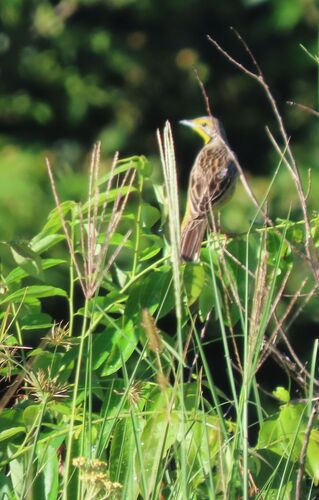 Yellow-throated LongclawMacronyx croceusThey have yellow underparts and a black "bib" on the upper chest.
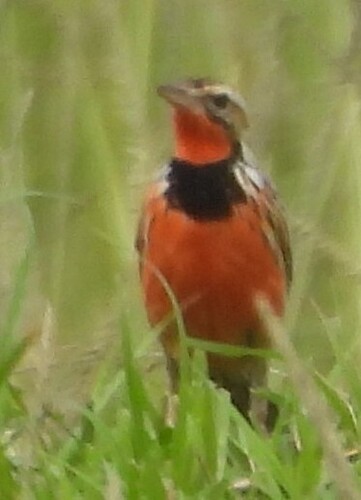 Rosy-throated LongclawMacronyx ameliaeAdult birds are 19–20 centimetres (7.5–7.9 in) long with greyish-brown scalloped upper parts.
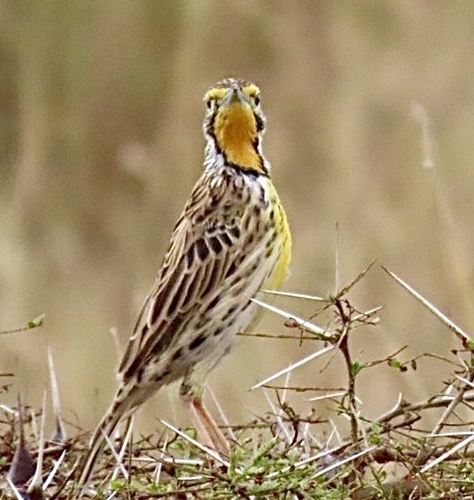 Pangani LongclawMacronyx aurantiigulaThe Pangani longclaw measures around 20 cm (8 in) in length.
Side by side: Cape Longclaw vs Yellow-throated Longclaw · Cape Longclaw vs Rosy-throated Longclaw
Learn the Cape Longclaw in the BeakBrain App
Photo and call practice. Coming soon to iPhone and Android.
Play today's Daily BirdEvery photo and recording on this page is credited to its author under the licence shown. Spotted a problem with this page, or have a better photo? Contribute.