Learn what every symbol on the card means.Full credits and sources at beakbrain.com/symbols
 MarinePlatform nestHuge · 1.9 kg


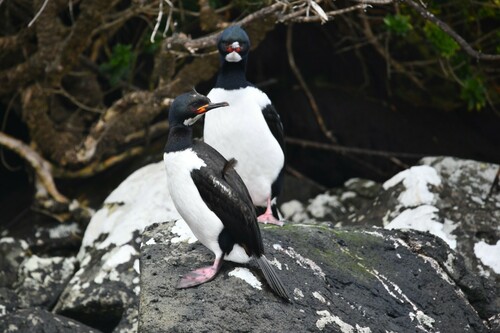
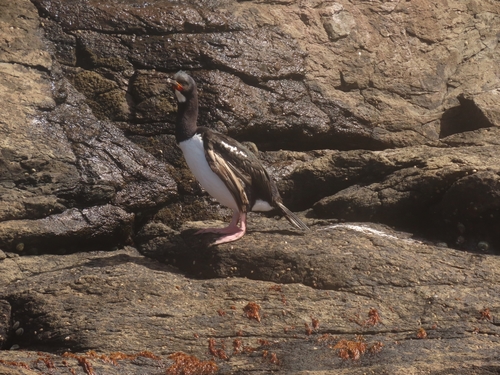
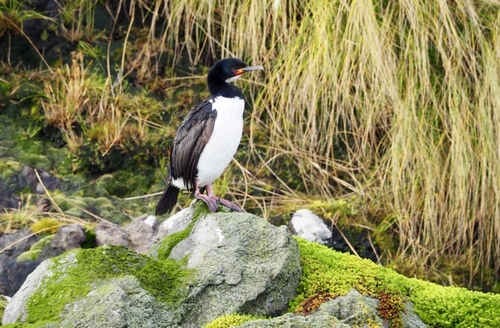
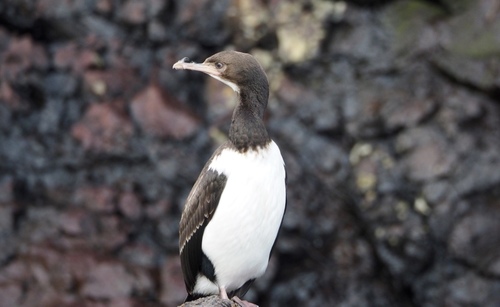
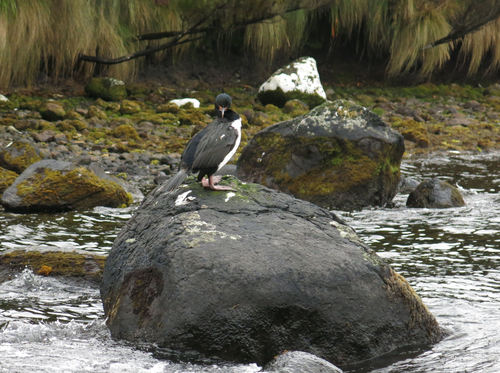
ID tip
The Campbell Island shag is a marine bird with black and white plumage and pink feet. They have a white chin, underparts and wing patches, with a black neck, throat and head. Their black feathers have a metallic greenish blue sheen. In breeding season, adult birds have a head crest, a yellow line above the bill's gape, and facial skin and throat pouch that can range from purple to orange. Juveniles and non-breeding adults have browner plumage instead of all black, as well as duller skin and throat pouches. Nestlings are born naked with black skin. Voice: There is little information on their vocalisations, other than that, when they leave the breeding colonies, they are silent. It is known that male and female Campbell Island shags have different courtship behaviour, including male shags barking during displays, but this has not been thoroughly described.
Text from Wikipedia, licensed CC BY-SA 4.0.
When to see the Campbell Shag
One bar for each month. Filled bars are the 4 months with records; pale bars are months with none. The wide bar is December, the month with the most records.
Where to see the Campbell Shag
The map shades 1 country with regular records. Everything unshaded has no records. Countries are listed below the map.
About the Campbell Shag
The Campbell shag, also known as the Campbell Island shag, is a species of bird in the family Phalacrocoracidae. It is endemic to Campbell Island, one of the New Zealand outlying islands. Its natural habitats are open seas and rocky shores. It is a medium-sized bird, around 63 cm in length, with a wingspan of 105 cm, weighing between 1.6 – 2 kg. They only breed on Campbell Island]and forage within 10 km of the island. Its unique, looped head and elongated beak allow to easily feed on shellfish and marine invertebrates. This is done through foraging dive cycles of high speed and efficiency.
Text adapted from Wikipedia, licensed CC BY-SA 4.0.
Easily confused with
 Chatham ShagLeucocarbo onslowiAn adult Chatham Islands shag is 63 cm (25 in) in length and weighs around 1,790–2,400 g (63–85 oz).
 Auckland ShagLeucocarbo colensoiThe Auckland shag or Auckland Islands shag is a species of cormorant from New Zealand.
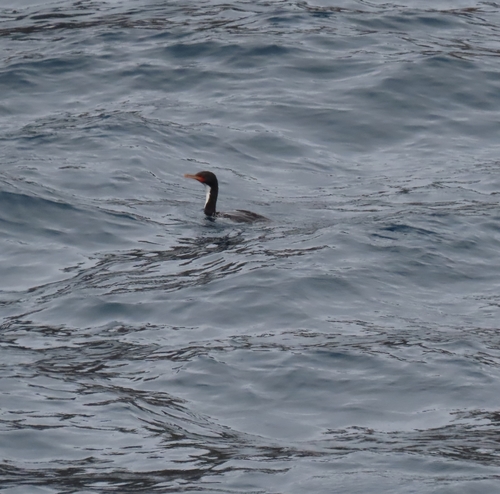 Bounty ShagLeucocarbo ranfurlyiSize; 71 cm (28 in).
Learn the Campbell Shag in the BeakBrain App
Photo and call practice. Coming soon to iPhone and Android.
Play today's Daily BirdEvery photo and recording on this page is credited to its author under the licence shown. Spotted a problem with this page, or have a better photo? Contribute.