Learn what every symbol on the card means.Full credits and sources at beakbrain.com/symbols
 GrasslandCup nestMedium · 62 g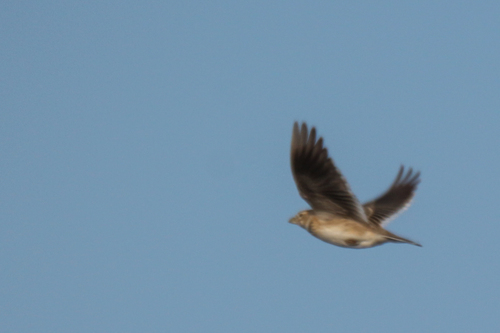
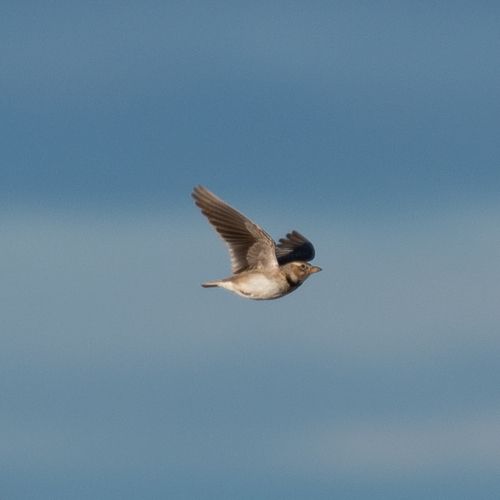
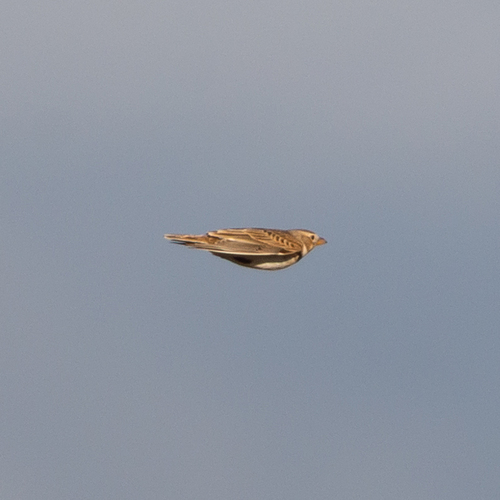


What the Calandra Lark sounds like

ID tip
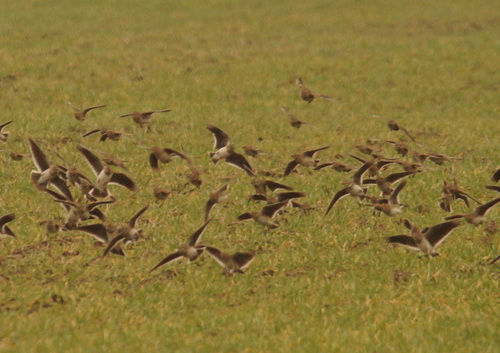
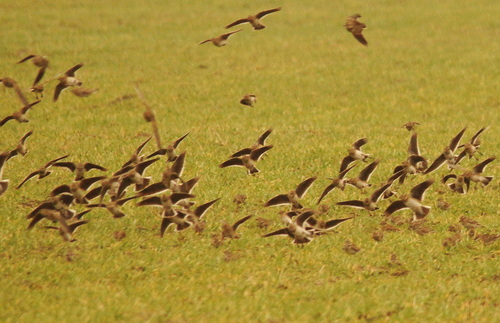
This is a large, robust lark, 17.5–20 cm long. It is an undistinguished-looking species on the ground, mainly streaked greyish brown above and white below, and with large black patches on the breast sides. It has a white supercilium. In flight it shows short broad wings, which are dark below, and a short white-edged tail. The wing and tail patterns are distinctions from its more easterly relatives. The song is like a slower version of that of the skylark.
Text from Wikipedia, licensed CC BY-SA 4.0.
When to see the Calandra Lark
One bar for each month. Filled bars are the 9 months with records; pale bars are months with none. The wide bar is May, the month with the most records.
Where to see the Calandra Lark
The map shades 47 countries with regular records, and 9 more in a lighter tone where the bird turns up only as a stray. Everything unshaded has no records. Countries are listed below the map.
Recorded as a rare visitor in Norway, United Kingdom, Germany, Finland, Belgium, Hungary, Malta, Libya, Netherlands.
About the Calandra Lark
The calandra lark or European calandra-lark breeds in warm temperate countries around the Mediterranean and eastwards through Turkey into northern Iran and southern Russia. It is replaced further east by its relative, the bimaculated lark.
Text adapted from Wikipedia, licensed CC BY-SA 4.0.
Easily confused with
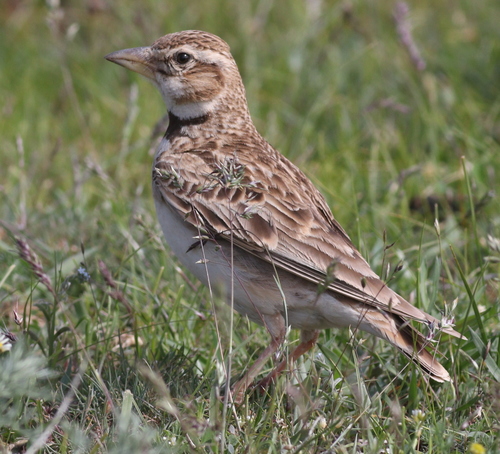 Bimaculated LarkMelanocorypha bimaculataThis is a large, robust lark, 16–18 cm in length.
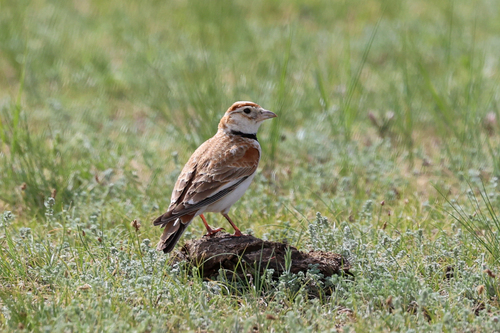 Mongolian LarkMelanocorypha mongolicaIts head is pale brown, with a red crown.
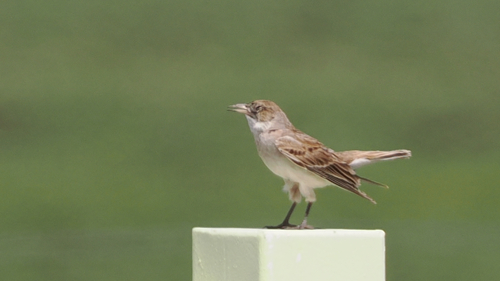 Tibetan LarkMelanocorypha maximaThe Tibetan lark is a species of lark in the family Alaudidae found on the Tibetan Plateau from north-western India to central China.
Side by side: Bimaculated Lark vs Calandra Lark
Learn the Calandra Lark in the BeakBrain App
Photo and call practice. Coming soon to iPhone and Android.
Play today's Daily BirdEvery photo and recording on this page is credited to its author under the licence shown. Spotted a problem with this page, or have a better photo? Contribute.