Learn what every symbol on the card means.Full credits and sources at beakbrain.com/symbols
 WetlandMedium · 206 g


ID tip
It is a largely terrestrial bird the size of a small domestic chicken, with mainly brown upperparts, finely banded black and white underparts, a white eyebrow, chestnut band running from the bill round the nape, with a buff band on the breast. It utilises a range of moist or wetland habitats with low, dense vegetation for cover. It is usually quite shy but may become very tame and bold in some circumstances, such as in island resorts within the Great Barrier Reef region.
Text from Wikipedia, licensed CC BY-SA 4.0.
When to see the Buff-banded Rail
One bar for each month, and every month is filled: this bird is recorded here in all twelve. The wide bar is November, the month with the most records.
Where to see the Buff-banded Rail
The map shades 17 countries with regular records. Everything unshaded has no records. Countries are listed below the map.
About the Buff-banded Rail
The buff-banded rail is a distinctively coloured, highly dispersive, medium-sized rail of the rail family, Rallidae. This species comprises several subspecies found throughout much of Australasia and the south-west Pacific region, including the Philippines, New Guinea, Australia, New Zealand, and numerous smaller islands, covering a range of latitudes from the tropics to the subantarctic. The species was formerly placed in the genus Hypotaenidia.
Text adapted from Wikipedia, licensed CC BY-SA 4.0.
Easily confused with
 WekaGallirallus australisWeka are large rails.
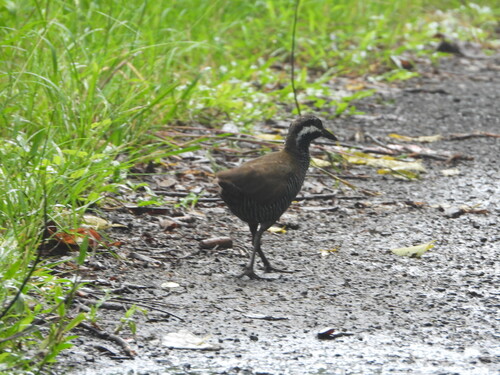 Barred RailGallirallus torquatusThe barred rail is a species of rail found across the Philippines, Sulawesi (Indonesia) and Salawati.
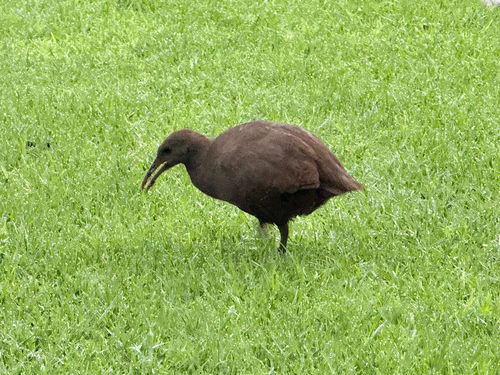 Lord Howe WoodhenGallirallus sylvestrisThe Lord Howe woodhen is a medium-sized olive-brown rail, with a short tail, downcurved bill, red iris, and chestnut wings.
Side by side: Buff-banded Rail vs Weka · Buff-banded Rail vs Lord Howe Woodhen
Learn the Buff-banded Rail in the BeakBrain App
Photo and call practice. Coming soon to iPhone and Android.
Play today's Daily BirdEvery photo and recording on this page is credited to its author under the licence shown. Spotted a problem with this page, or have a better photo? Contribute.