Learn what every symbol on the card means.Full credits and sources at beakbrain.com/symbols
 ForestCavity nestLarge · 876 g


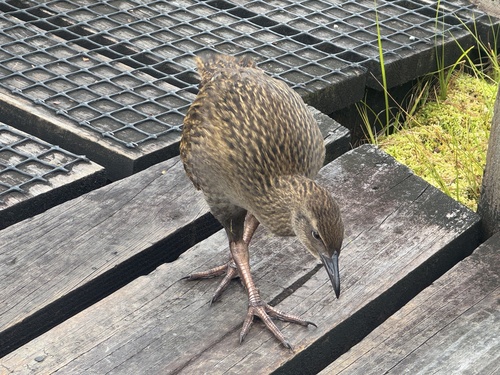
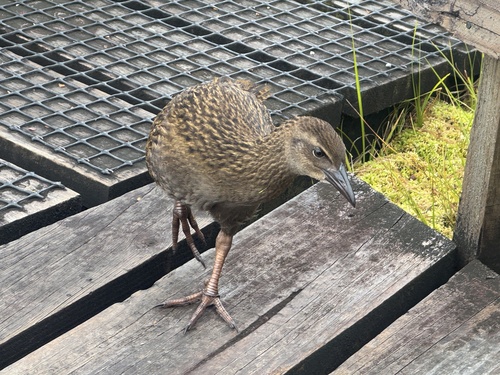
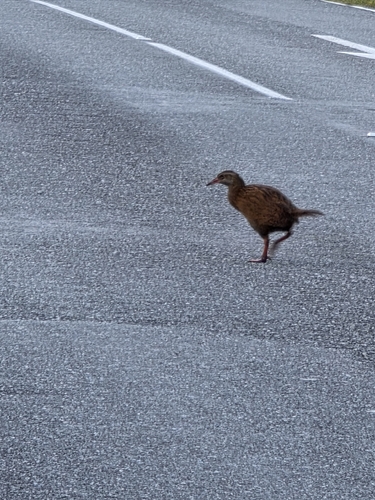
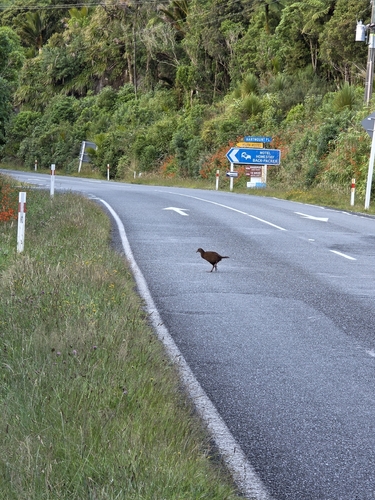
What the Weka sounds like


ID tip
Weka are large rails. They are predominantly rich brown mottled with black and grey; the brown shade varies from pale to dark depending on subspecies. The male is the larger sex at 50–60 cm (20–24 in) in length and 532–1,605 g (1.173–3.538 lb) in weight. Females measure 46–50 cm (18–20 in) in length and weigh 350–1,035 g (0.772–2.282 lb). The reduced wingspan ranges from 50 to 60 cm (20 to 24 in). The relatively large, reddish-brown beak is about 5 cm (2.0 in) long, stout and tapered, and used as a weapon.
Text from Wikipedia, licensed CC BY-SA 4.0.
When to see the Weka
One bar for each month. Filled bars are the 10 months with records; pale bars are months with none. The wide bar is January, the month with the most records.
Where to see the Weka
The map shades 1 country with regular records. Everything unshaded has no records. Countries are listed below the map.
About the Weka
The weka, also known as the Māori hen or woodhen is a flightless bird species of the rail family. It is endemic to New Zealand. Some authorities consider it as the only extant member of the genus Gallirallus. Four subspecies are recognized but only two (northern/southern) are supported by genetic evidence.
Text adapted from Wikipedia, licensed CC BY-SA 4.0.
Easily confused with
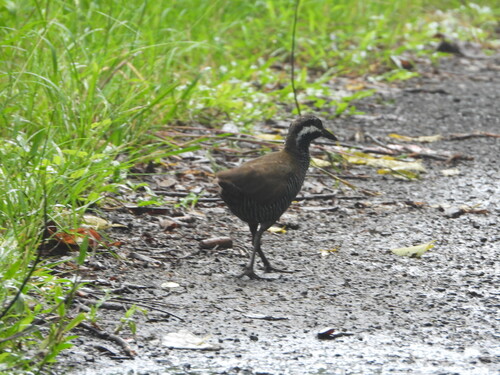 Barred RailGallirallus torquatusThe barred rail is a species of rail found across the Philippines, Sulawesi (Indonesia) and Salawati.
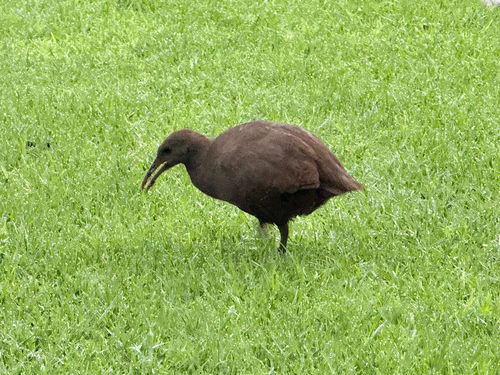 Lord Howe WoodhenGallirallus sylvestrisThe Lord Howe woodhen is a medium-sized olive-brown rail, with a short tail, downcurved bill, red iris, and chestnut wings.
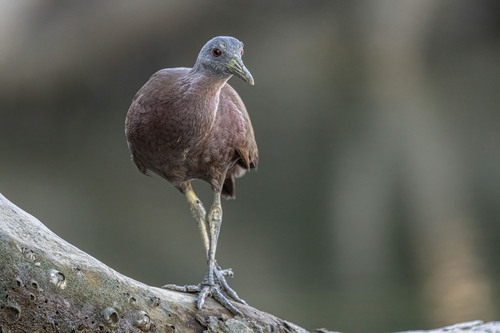 Chestnut RailGallirallus castaneoventrisThe chestnut rail is a species of bird in the family Rallidae.
Side by side: Buff-banded Rail vs Weka · Lord Howe Woodhen vs Weka
Learn the Weka in the BeakBrain App
Photo and call practice. Coming soon to iPhone and Android.
Play today's Daily BirdEvery photo and recording on this page is credited to its author under the licence shown. Spotted a problem with this page, or have a better photo? Contribute.