Learn what every symbol on the card means.Full credits and sources at beakbrain.com/symbols
 RockyCavity nestTiny · 13 g


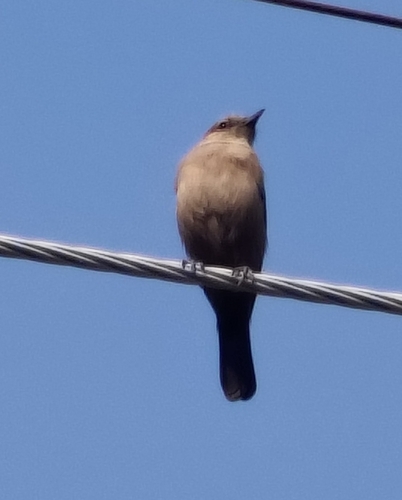
ID tip
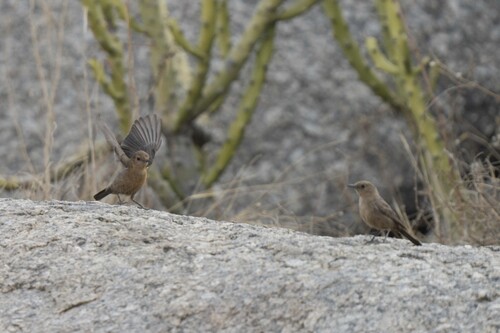
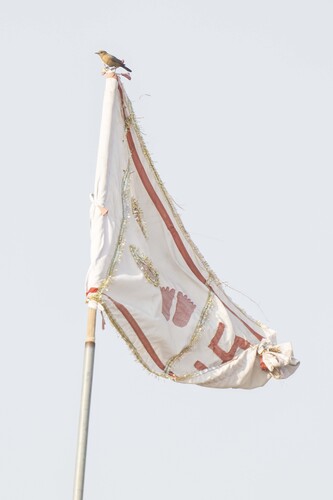
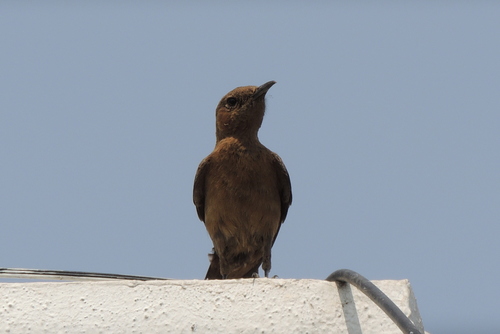
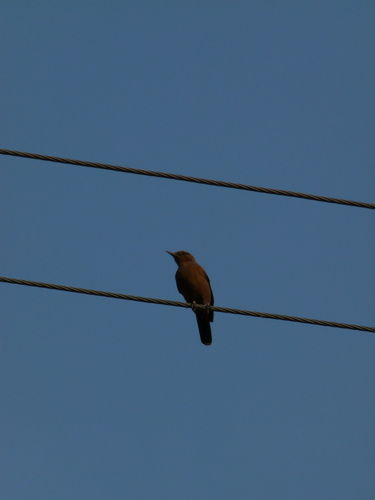
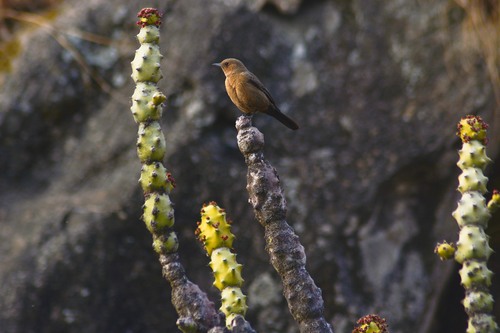
The brown rock chat is about 17 cm long, larger than the somewhat similar-looking Indian robin. It is uniformly rufous brown with the wings and tail of a slightly darker shade. The brown on the undersides grades into a dark grey-brown vent. The beak is slender and is slightly curved at the tip. The second primary is the longest and the tail is rounded. In flight it resembles a female blue rock thrush. The sexes are indistinguishable in the field. Voice: Brown rock chats have a wide repertoire of calls. Nearly eight different kinds of calls have been noted, including territorial calls, begging calls, feeding calls, alarm calls, threat calls, contact calls, distress calls, roosting calls and emergence calls. The most common call is a short whistled chee delivered with a rapid bob and stretch, and the alarm call is a harsh chek-check.
Text from Wikipedia, licensed CC BY-SA 4.0.
When to see the Brown Rock Chat
One bar for each month, and every month is filled: this bird is recorded here in all twelve. The wide bar is February, the month with the most records.
Where to see the Brown Rock Chat
The map shades 3 countries with regular records. Everything unshaded has no records. Countries are listed below the map.
About the Brown Rock Chat
The brown rock chat or Indian chat is a bird species of the family Muscicapidae. It is found mainly in northern and central India. It is often found in old buildings and rocky areas. It resembles a female Indian robin but lacks the reddish vent and differs in posture and behaviour apart from being larger. In flight it bears some resemblance to thrushes and redstarts. It feeds on insects, captured mainly on the ground. It was formerly placed as the sole species in the genus Cercomela but is now included with the wheatears in the genus Oenanthe.
Text adapted from Wikipedia, licensed CC BY-SA 4.0.
Easily confused with
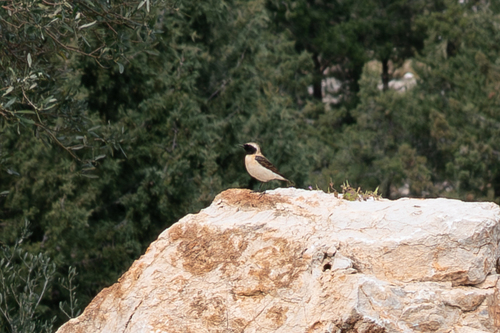 Western Black-eared WheatearOenanthe hispanicaThe breeding male has the forehead and crown white or nearly white, the mantle buff, and the wings blacker than those of the northern wheatear.
 Desert WheatearOenanthe desertiThe head and nape of the adult male desert wheatear are a pale sandy-grey colour with the feathers tipped grey.
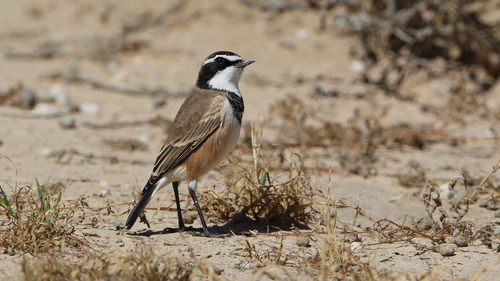 Capped WheatearOenanthe pileataThe capped wheatear is 17–18 cm long and weighs 32 g.
Side by side: Brown Rock Chat vs Familiar Chat · Brown Rock Chat vs Isabelline Wheatear · Brown Rock Chat vs Western Black-eared Wheatear · Brown Rock Chat vs Desert Wheatear · Brown Rock Chat vs Capped Wheatear
Learn the Brown Rock Chat in the BeakBrain App
Photo and call practice. Coming soon to iPhone and Android.
Play today's Daily BirdEvery photo and recording on this page is credited to its author under the licence shown. Spotted a problem with this page, or have a better photo? Contribute.