Learn what every symbol on the card means.Full credits and sources at beakbrain.com/symbols
 ShrublandDomed nestSmall · 16 g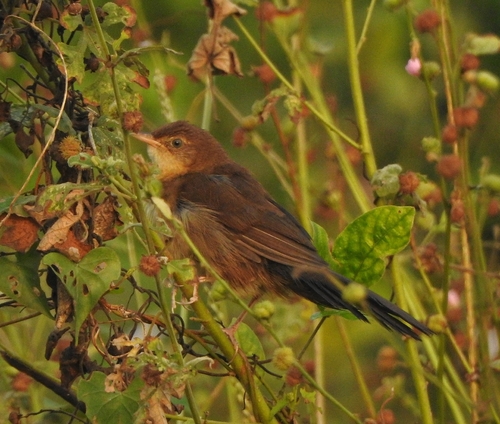


ID tip
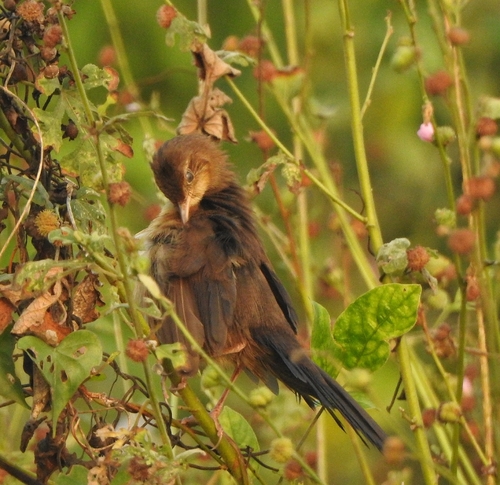
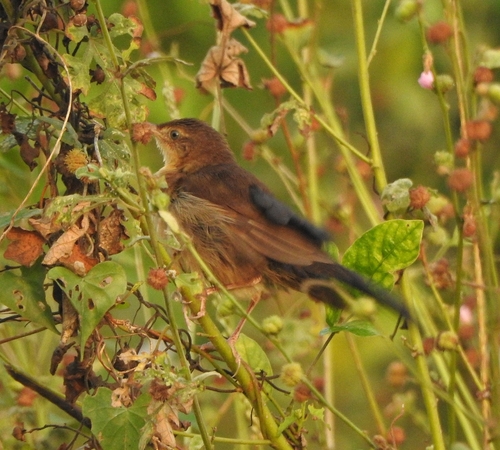
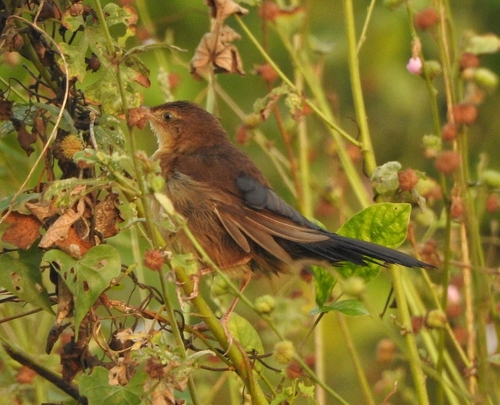
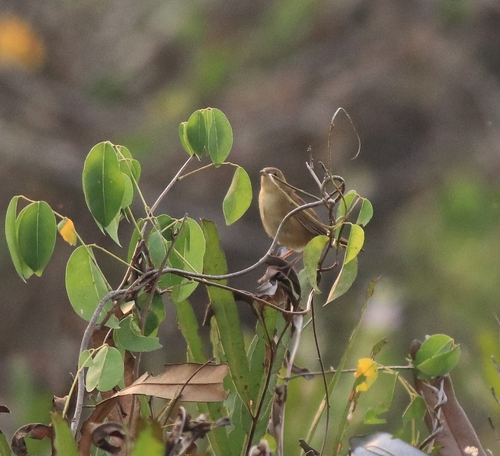
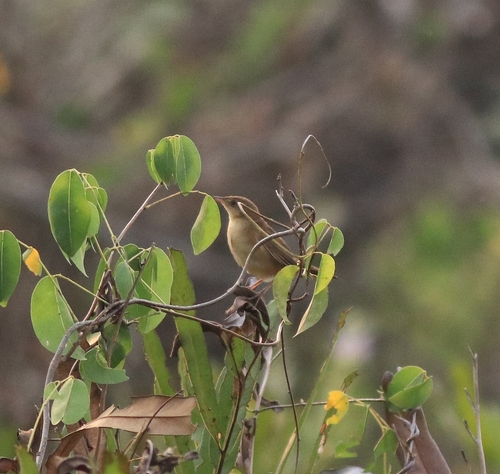
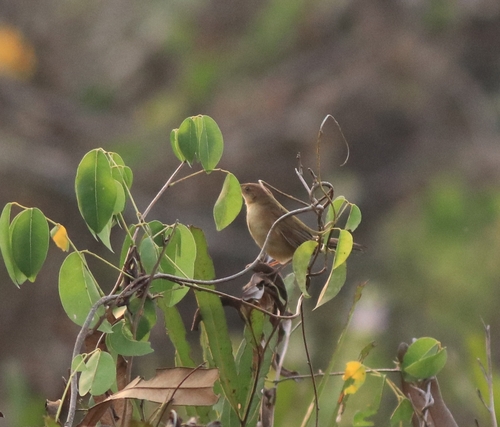
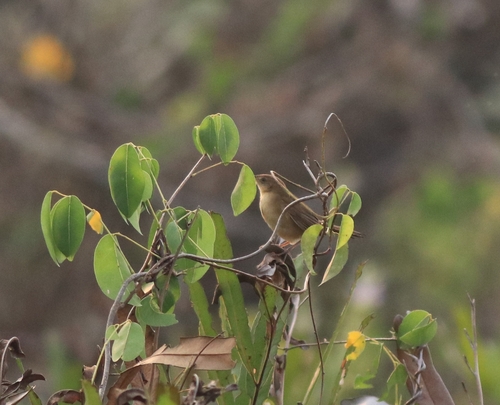
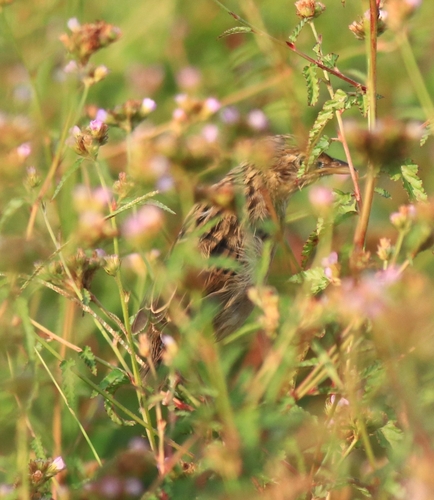
The uniform brown upperparts with a broad, round-tipped and long graduated tail are distinctive features of this bird. The species has a buff supercilium and the brown tail has thin dark bars. The underside of the tail is very dark and the feathers are tipped with white. Males and females are indistinguishable in plumage. The call of the male during breeding is a lark-like and repeated trill that is accompanied by fanned tail and a fluttering flight. Other calls include a chack and a zink note. The gape colour is black and visible in singing males but is brown in females.
Text from Wikipedia, licensed CC BY-SA 4.0.
When to see the Broad-tailed Grassbird
One bar for each month. Filled bars are the 11 months with records; pale bars are months with none. The wide bar is August, the month with the most records.
Where to see the Broad-tailed Grassbird
The map shades 3 countries with regular records. Everything unshaded has no records. Countries are listed below the map.
About the Broad-tailed Grassbird
The broad-tailed grassbird is a species of Old World warbler in the family Locustellidae. It is endemic to the Western Ghats of India with a possibility of occurrence in Sri Lanka. A small, mostly brown bird, it has a broad rounded and graduated tail. It is found only on the higher altitude grassy hills where it usually skulks, except during the breeding season when males fly up into the air to sing in their display. The species is believed to be a resident although it is possible that they make local movements.
Text adapted from Wikipedia, licensed CC BY-SA 4.0.
Easily confused with
Learn the Broad-tailed Grassbird in the BeakBrain App
Photo and call practice. Coming soon to iPhone and Android.
Play today's Daily BirdEvery photo and recording on this page is credited to its author under the licence shown. Spotted a problem with this page, or have a better photo? Contribute.