Learn what every symbol on the card means.Full credits and sources at beakbrain.com/symbols
 Grassland32 g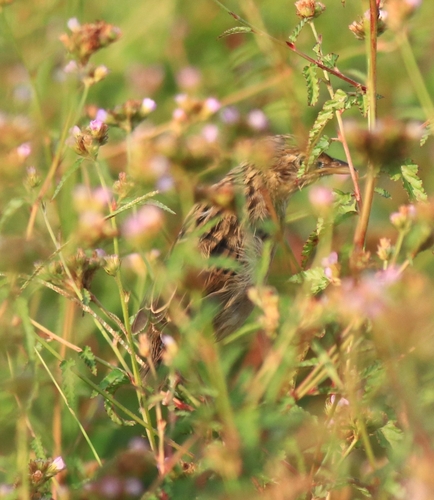
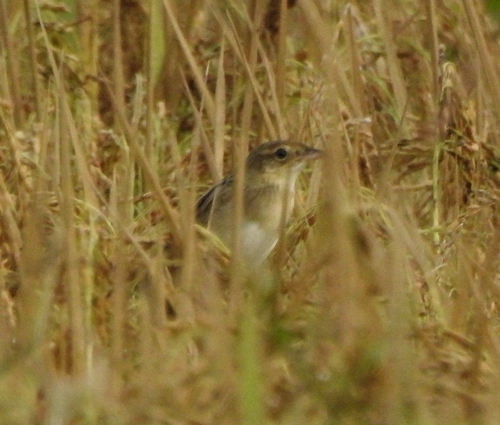
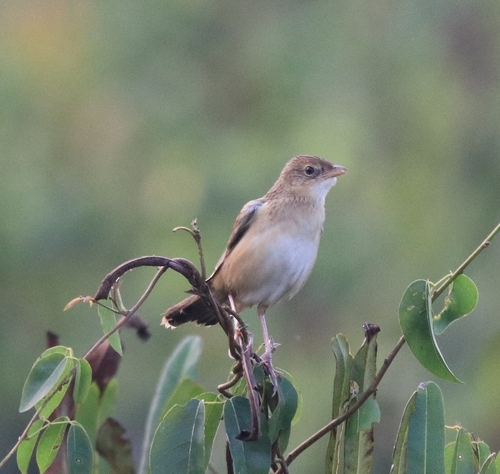
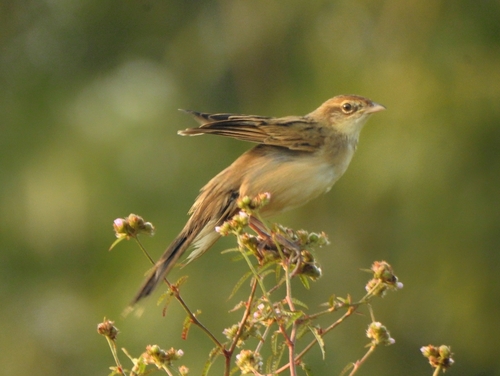
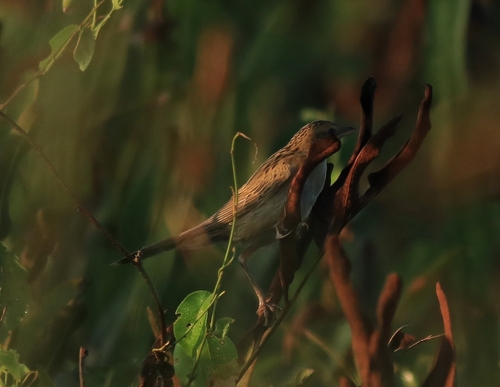
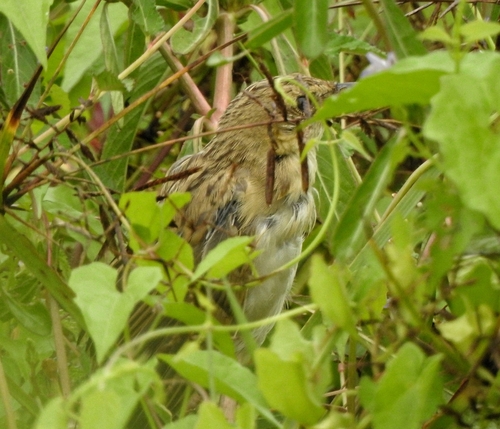
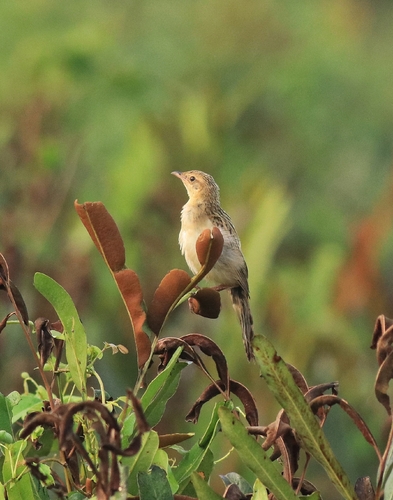
ID tip
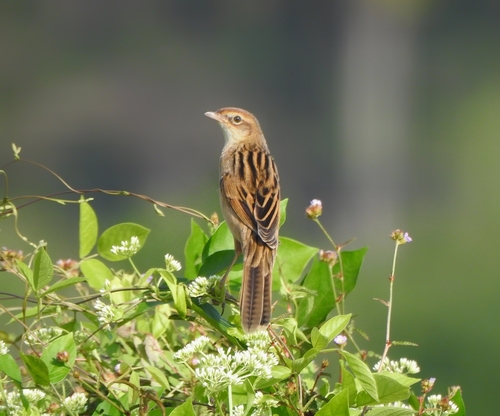
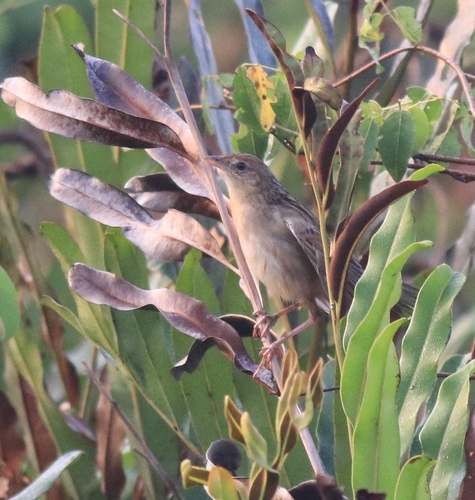
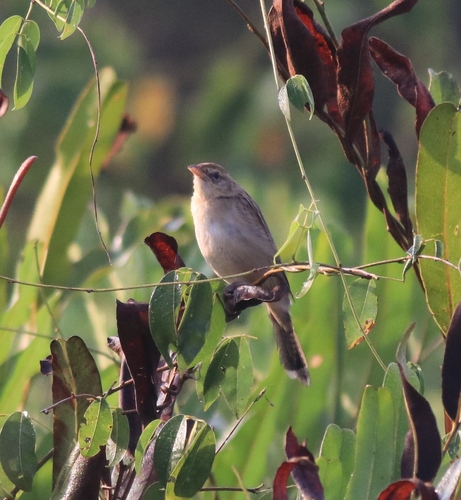
This warbler is large and brownish with broad dark streaks to the feathers of the crown and back and can appear almost babbler-like in appearance (easily mistaken for common babbler). The tail is graduated with white tips to the feathers. The rachis of the tail feathers is dark and there are dark ribs to the feathers. The bill is strong. The tarsus is brown and the bill is black with the lower mandible tipped bluish grey. They have a buff supercilium (brow) and have a pale unmarked underside.
Text from Wikipedia, licensed CC BY-SA 4.0.
When to see the Bristled Grassbird
One bar for each month. Filled bars are the 11 months with records; pale bars are months with none. The wide bar is April, the month with the most records.
Where to see the Bristled Grassbird
The map shades 4 countries with regular records. Everything unshaded has no records. Countries are listed below the map.
About the Bristled Grassbird
The bristled grassbird is a small passerine bird in the genus Schoenicola. Also known as the bristled grass warbler, this species is endemic to the Indian subcontinent, where it is patchily distributed in Bangladesh, India, Nepal and Pakistan. These insectivorous birds skulk in dense and tall grasslands, often in marshy areas, habitats that are threatened by human activities. Formerly considered to be sedentary, the species may be migratory, moving south and east in the Indian peninsula during winter and returning to their breeding grounds in the northern plains south of the Himalayas.
Text adapted from Wikipedia, licensed CC BY-SA 4.0.
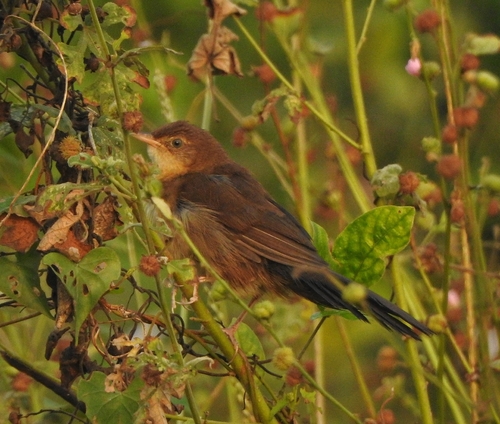
Easily confused with
Learn the Bristled Grassbird in the BeakBrain App
Photo and call practice. Coming soon to iPhone and Android.
Play today's Daily BirdEvery photo and recording on this page is credited to its author under the licence shown. Spotted a problem with this page, or have a better photo? Contribute.