Learn what every symbol on the card means.Full credits and sources at beakbrain.com/symbols
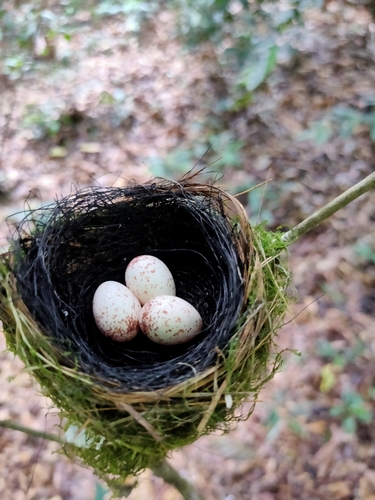
 WoodlandCup nestSmall · 19 g
What the Blyth's Paradise Flycatcher sounds like

ID tip
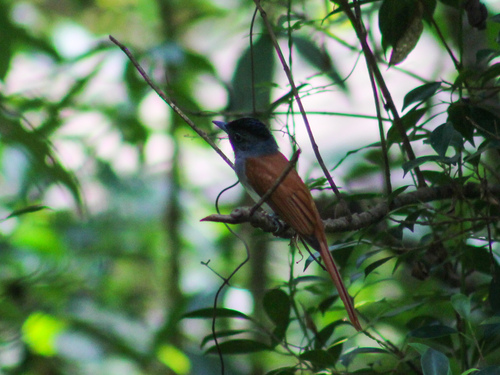
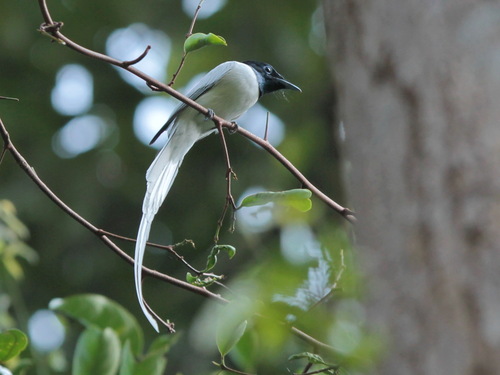
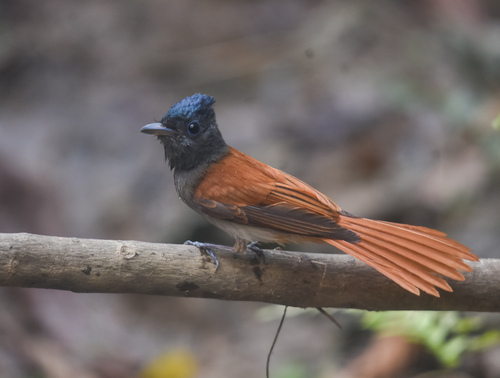
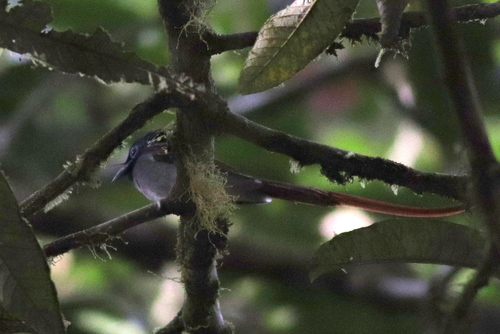
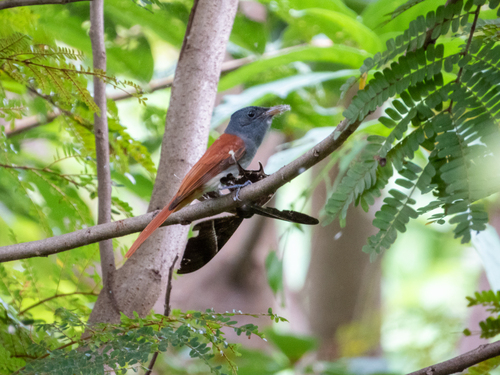
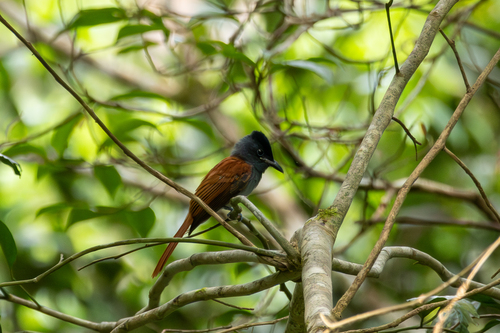
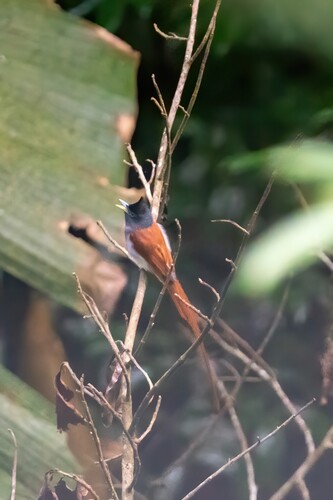
Blyth's paradise flycatcher is a typical paradise flycatcher, with a striking plumage. It is characterized by a dimorphic male, exhibiting both rufous and white plumage variations. Both morphs share a dark head, a small, triangular crest, and a blue eye-ring. The breeding male is distinguished by elongated central tail streamers, nearly twice the length of its body. Females bear resemblance to non-breeding rufous males, but usually show a less vibrant blue eye-ring and a slightly paler head. White morphs display dark wing and central tail feather shaft streaks.
Text from Wikipedia, licensed CC BY-SA 4.0.
When to see the Blyth's Paradise Flycatcher
One bar for each month, and every month is filled: this bird is recorded here in all twelve. The wide bar is March, the month with the most records.
Where to see the Blyth's Paradise Flycatcher
The map shades 13 countries with regular records, and 1 more in a lighter tone where the bird turns up only as a stray. Everything unshaded has no records. Countries are listed below the map.
Recorded as a rare visitor in ZZ.
About the Blyth's Paradise Flycatcher
Blyth's paradise flycatcher, also called the oriental paradise flycatcher, is a species of bird in the family Monarchidae. This species occupies evergreen broadleaf forests and forest edges, including secondary growth, gardens, and plantations, typically in lowland and foothill regions. Some populations undertake migratory movements.
Text adapted from Wikipedia, licensed CC BY-SA 4.0.
Easily confused with
 Amur Paradise FlycatcherTerpsiphone inceiMales can come in two forms differing in the colour of their upperparts.
Bedford's Paradise FlycatcherTerpsiphone bedfordiBedford's paradise flycatcher is a species of bird in the family Monarchidae.
Amur Paradise FlycatcherTerpsiphone inceiMales can come in two forms differing in the colour of their upperparts.
Bedford's Paradise FlycatcherTerpsiphone bedfordiBedford's paradise flycatcher is a species of bird in the family Monarchidae.
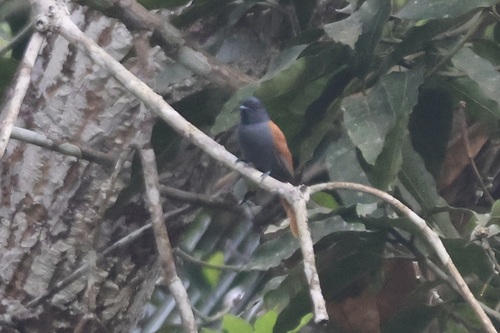 Bates's Paradise FlycatcherTerpsiphone batesiBates's paradise flycatcher is usually 18 centimetres long but males in parts of Cameroon and Angola have elongated central tail-feathers making them 23-28 centimetres long.
Learn the Blyth's Paradise Flycatcher in the BeakBrain App
Photo and call practice. Coming soon to iPhone and Android.
Play today's Daily BirdEvery photo and recording on this page is credited to its author under the licence shown. Spotted a problem with this page, or have a better photo? Contribute.