Learn what every symbol on the card means.Full credits and sources at beakbrain.com/symbols
 WoodlandCup nestSmall · 19 g
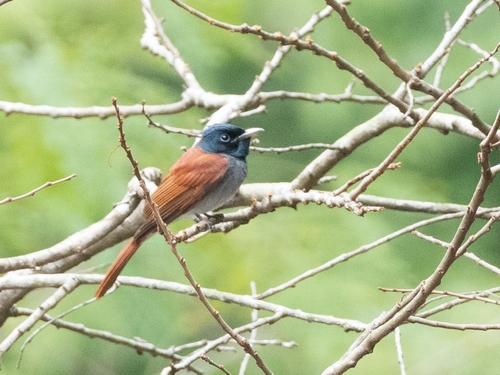
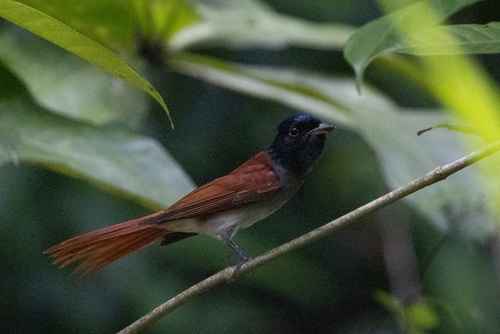
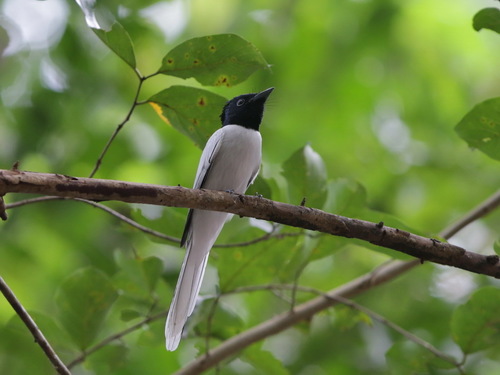
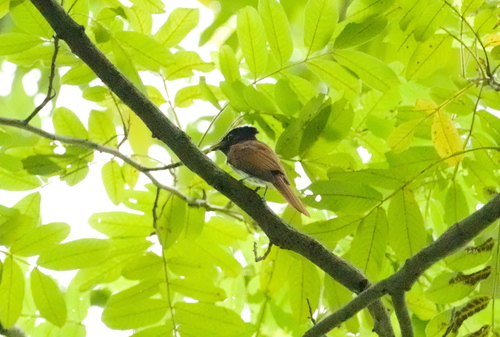
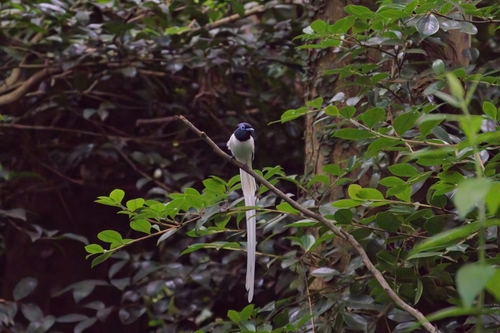
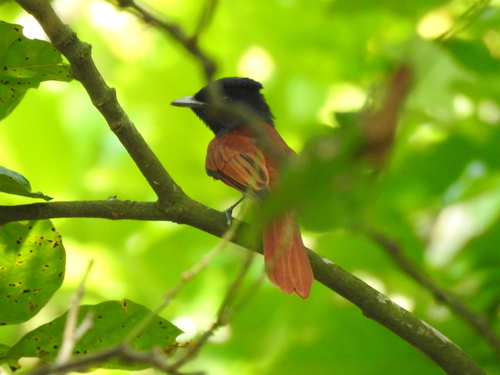
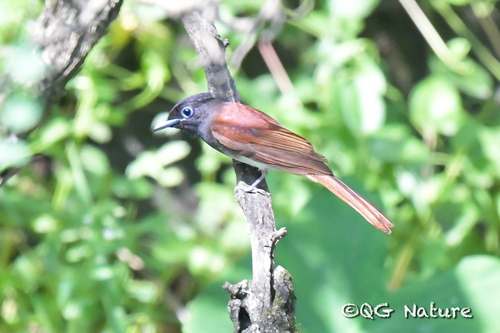
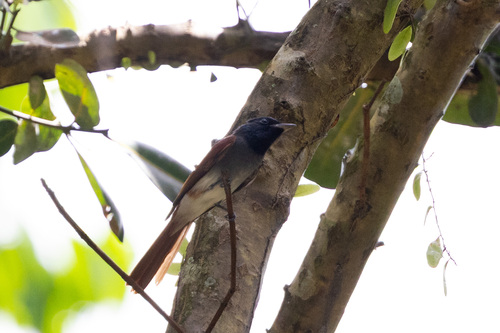
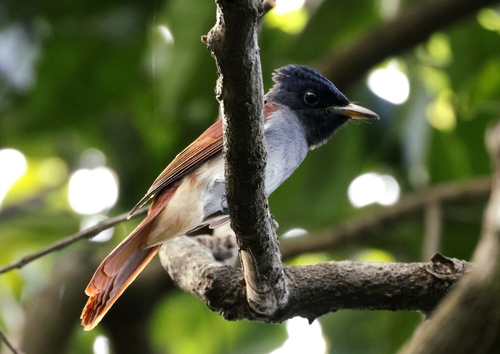
ID tip
Males can come in two forms differing in the colour of their upperparts. Otherwise, all adult males have black hoods, white underparts, small crests, and blue eye rings. While breeding, the males can have tails twice the length of the body.
Text from Wikipedia, licensed CC BY-SA 4.0.
When to see the Amur Paradise Flycatcher
One bar for each month. Filled bars are the 7 months with records; pale bars are months with none. The wide bar is October, the month with the most records.
Where to see the Amur Paradise Flycatcher
The map shades 13 countries with regular records, and 4 more in a lighter tone where the bird turns up only as a stray. Everything unshaded has no records. Countries are listed below the map.
Recorded as a rare visitor in India, South Korea, Bangladesh, Philippines.
About the Amur Paradise Flycatcher
The Amur paradise flycatcher is a bird species in the family Monarchidae. It is native to China and Primorsky Krai in the Russian Far East. It is a winter migrant to Southeast Asia. Until 2015, it was considered as a subspecies of the Asian paradise flycatcher.
Text adapted from Wikipedia, licensed CC BY-SA 4.0.
Easily confused with
 Blyth's Paradise FlycatcherTerpsiphone affinisBlyth's paradise flycatcher is a typical paradise flycatcher, with a striking plumage.
Bedford's Paradise FlycatcherTerpsiphone bedfordiBedford's paradise flycatcher is a species of bird in the family Monarchidae.
Blyth's Paradise FlycatcherTerpsiphone affinisBlyth's paradise flycatcher is a typical paradise flycatcher, with a striking plumage.
Bedford's Paradise FlycatcherTerpsiphone bedfordiBedford's paradise flycatcher is a species of bird in the family Monarchidae.
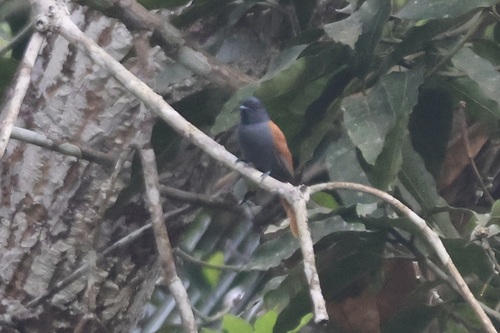 Bates's Paradise FlycatcherTerpsiphone batesiBates's paradise flycatcher is usually 18 centimetres long but males in parts of Cameroon and Angola have elongated central tail-feathers making them 23-28 centimetres long.
Learn the Amur Paradise Flycatcher in the BeakBrain App
Photo and call practice. Coming soon to iPhone and Android.
Play today's Daily BirdEvery photo and recording on this page is credited to its author under the licence shown. Spotted a problem with this page, or have a better photo? Contribute.