Learn what every symbol on the card means.Full credits and sources at beakbrain.com/symbols
 CoastalScrapeMedium · 126 g


ID tip
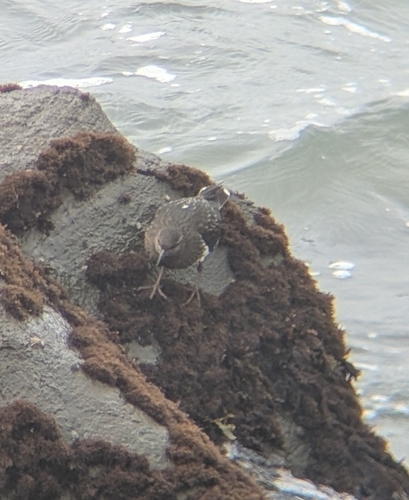
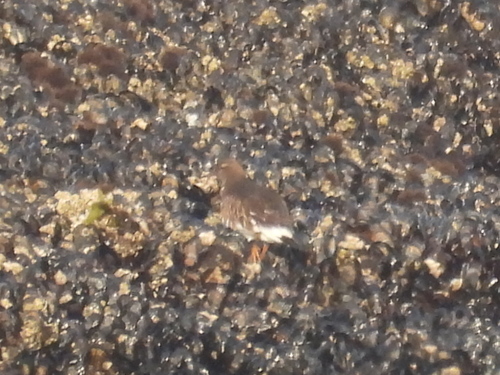
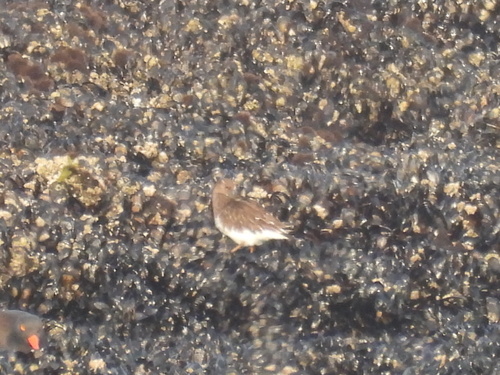
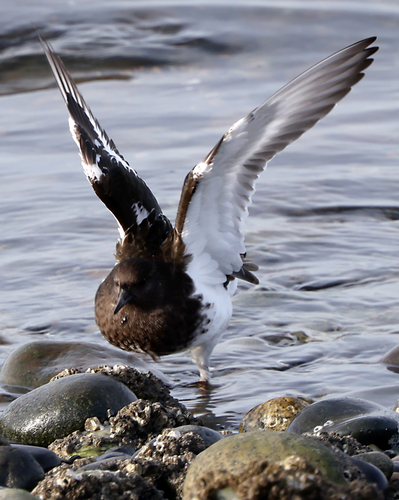
It is 22–25 centimeters (8.7–9.8 in) long and weighs 100–170 grams (3.5–6.0 oz). The black bill is 20–27 millimeters (0.8–1.1 in) long and slightly upturned. The legs and feet are blackish-brown with a reddish tinge. The bird is largely black and white in appearance. Breeding-plumaged adults have a black head and breast apart from a white spot between the eye and bill, a white stripe over the eye and white flecks on the sides of the breast. The upper parts are blackish-brown with pale fringes to the wing-coverts and scapular feathers. The belly and vent are white.
Text from Wikipedia, licensed CC BY-SA 4.0.
When to see the Black Turnstone
One bar for each month. Filled bars are the 10 months with records; pale bars are months with none. The wide bar is September, the month with the most records.
Where to see the Black Turnstone
The map shades 4 countries with regular records. Everything unshaded has no records. Countries are listed below the map.
About the Black Turnstone
The black turnstone is a species of small wading bird. It is one of two species of turnstone in the genus Arenaria, the ruddy turnstone being the other. It is now classified in the sandpiper family, Scolopacidae, but was formerly sometimes placed in the plover family, Charadriidae. It is native to the west coast of North America and breeds only in Alaska.
Text adapted from Wikipedia, licensed CC BY-SA 4.0.
Easily confused with

Side by side: Black Turnstone vs Ruddy Turnstone
Learn the Black Turnstone in the BeakBrain App
Photo and call practice. Coming soon to iPhone and Android.
Play today's Daily BirdEvery photo and recording on this page is credited to its author under the licence shown. Spotted a problem with this page, or have a better photo? Contribute.