Learn what every symbol on the card means.Full credits and sources at beakbrain.com/symbols
 WoodlandCup nestSmall · 36 g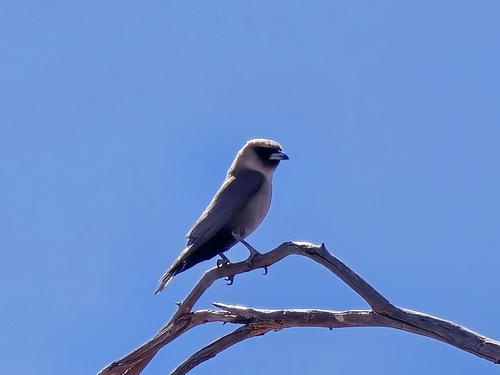


ID tip
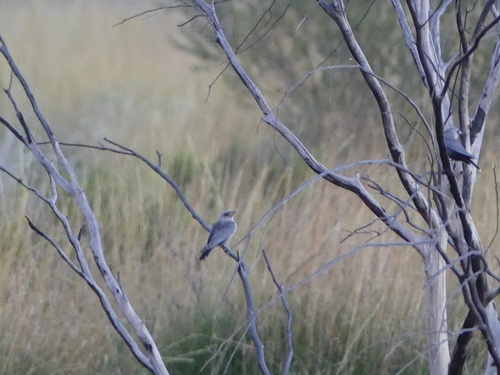
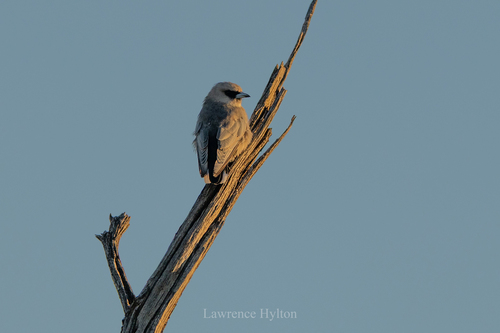
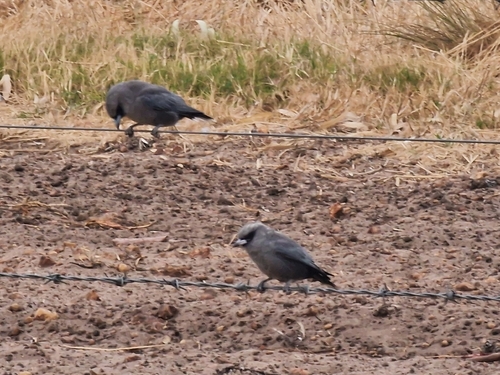
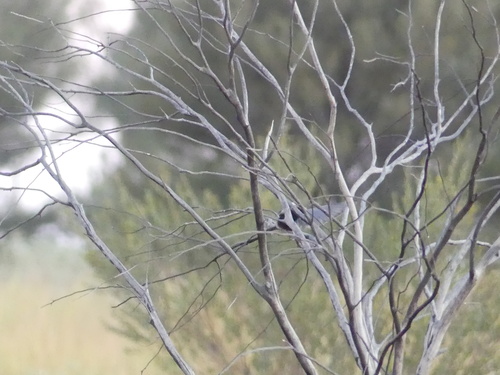
The black-faced woodswallow is 18–19 cm (7.1–7.5 in) in length, and weighs 32–40 g (1.1–1.4 oz). It has a blue-grey beak with a black tip and a black face mask which extends from the base of the bill up to and around the eyes. It has ash grey plumage, which is lighter around the breast with darker wings, and silver underwings. The tail is black with a white tip. The subspecies are differentiated by black or white colouration of their tail vents. The white-vented subspecies A. c. normani and A. c. inkermani are found on the Cape York Peninsula and northern Queensland respectively.
Text from Wikipedia, licensed CC BY-SA 4.0.
When to see the Black-faced Woodswallow
One bar for each month. Filled bars are the 10 months with records; pale bars are months with none. The wide bar is August, the month with the most records.
Where to see the Black-faced Woodswallow
The map shades 3 countries with regular records. Everything unshaded has no records. Countries are listed below the map.
About the Black-faced Woodswallow
The black-faced woodswallow is a woodswallow of the genus Artamus native to Australia, New Guinea, and the Sunda Islands, including Timor. It is 18–19 cm (7.1–7.5 in) long and is the most widespread species in the family Artamidae. Woodswallows have a soft call with chiff, chap and chattering calls which can include vocal mimicry
Text adapted from Wikipedia, licensed CC BY-SA 4.0.
Easily confused with
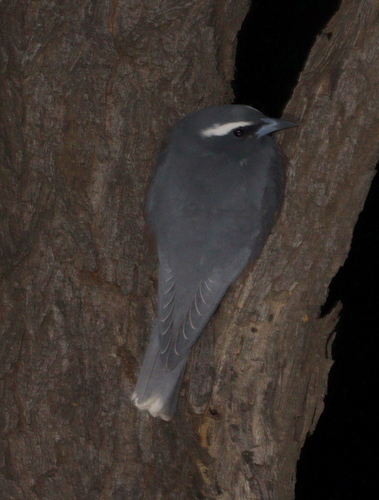 White-browed WoodswallowArtamus superciliosusThe white-browed woodswallow is a medium-sized (~19 cm) passerine bird endemic to Australia.
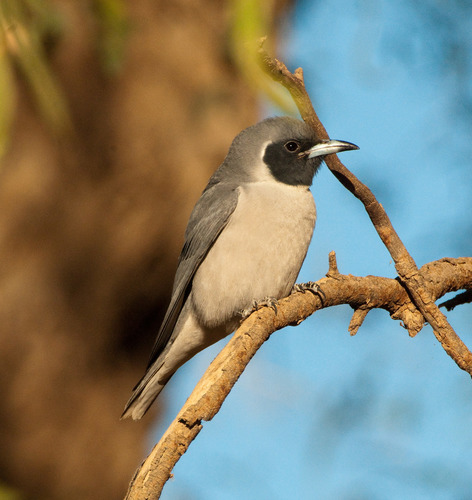 Masked WoodswallowArtamus personatusA.personatus is a common, gregarious and highly nomadic species, appearing in large flocks usually with white-browed woodswallow (Artamus superciliosus).
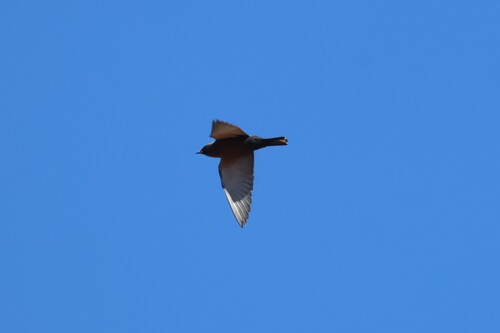 Little WoodswallowArtamus minorThe little woodswallow, is a bird patchily distributed over much of mainland Australia, avoiding only the driest deserts and the area within about 300 kilometres of the southern coastline, and showing a preference for rugged terrain around inland ranges.
Side by side: Black-faced Woodswallow vs White-breasted Woodswallow · Ashy Woodswallow vs Black-faced Woodswallow · Black-faced Woodswallow vs Dusky Woodswallow · Black-faced Woodswallow vs Masked Woodswallow
Learn the Black-faced Woodswallow in the BeakBrain App
Photo and call practice. Coming soon to iPhone and Android.
Play today's Daily BirdEvery photo and recording on this page is credited to its author under the licence shown. Spotted a problem with this page, or have a better photo? Contribute.