Learn what every symbol on the card means.Full credits and sources at beakbrain.com/symbols
 GrasslandDomed nestTiny · 12 g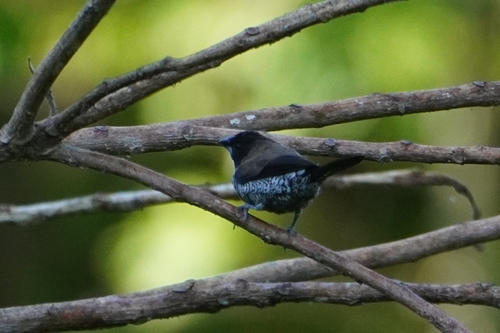
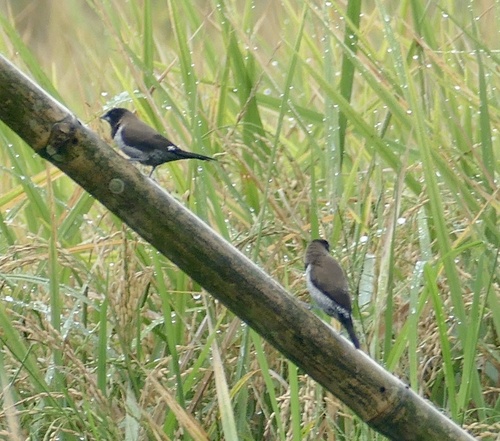
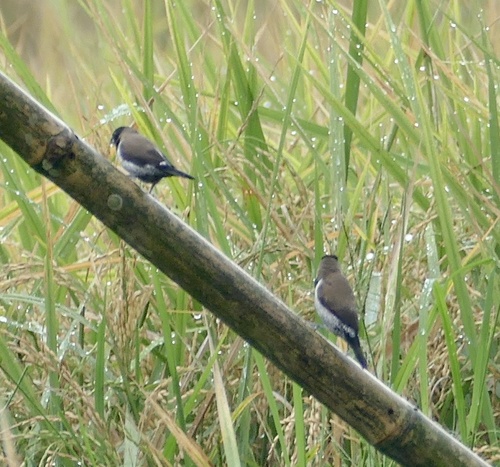
ID tip
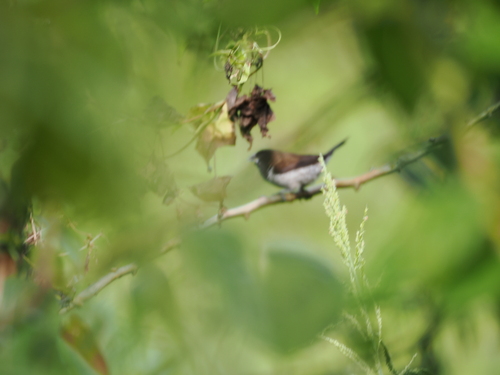
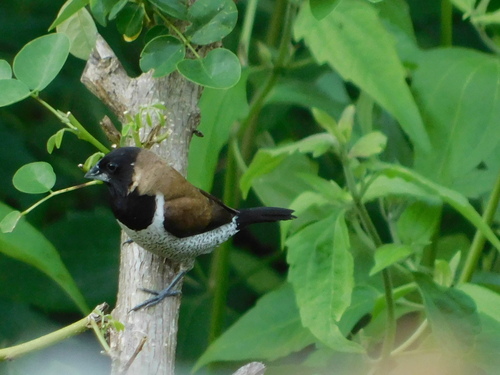
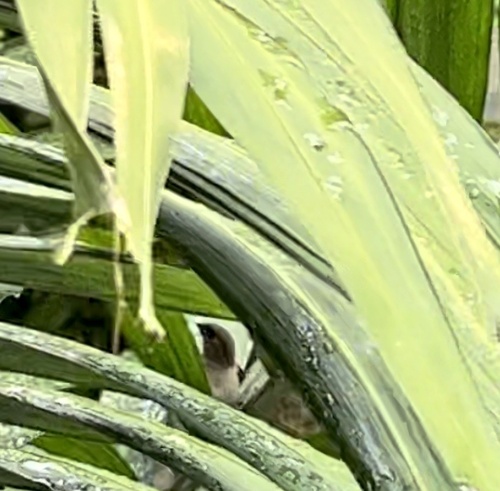
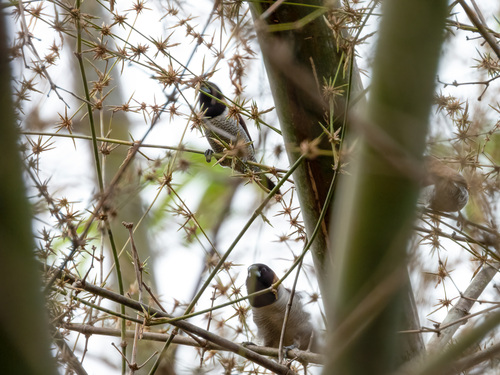
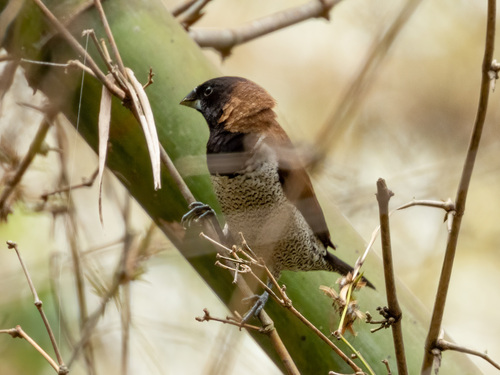
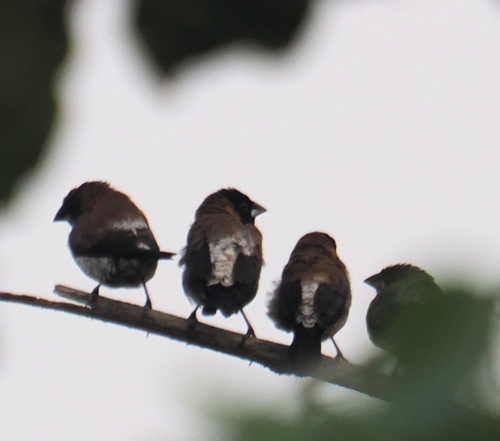
The black-faced munia has a black face, throat, and upper breast. The nape and back are dark brown, and the wings and tail are black. The underparts and rump are white with fine black speckling or barring. The bill is thick and bicoloured, with a dark upper mandible and blue-gray lower mandible, and the legs are dark.
Text from Wikipedia, licensed CC BY-SA 4.0.
When to see the Black-faced Munia
One bar for each month. Filled bars are the 7 months with records; pale bars are months with none. The wide bar is August, the month with the most records.
Where to see the Black-faced Munia
The map shades 2 countries with regular records. Everything unshaded has no records. Countries are listed below the map.
About the Black-faced Munia
The black-faced munia is a species of estrildid finch found in Indonesia and East Timor. It occurs in a wide range of habitats including artificial landscapes, forest, grassland and savannah. It was first described by the Swedish naturalist Carl Linnaeus in the twelfth edition of his Systema Naturae in 1766. The IUCN has evaluated the status of this bird as being of least concern.
Text adapted from Wikipedia, licensed CC BY-SA 4.0.
Easily confused with
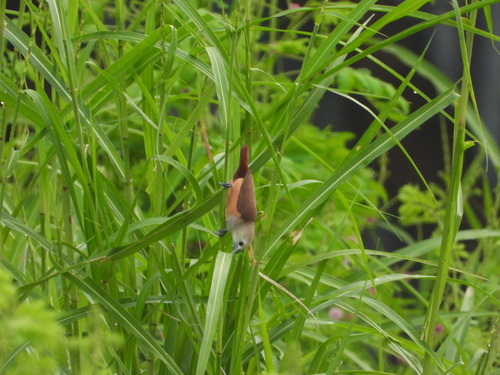 Pale-headed MuniaLonchura pallidaThe pale-headed munia is a small finch measuring approximately 10–11cm in length and weighing around 10–15g, with a striking white or pale buff head contrasting against a dark body.
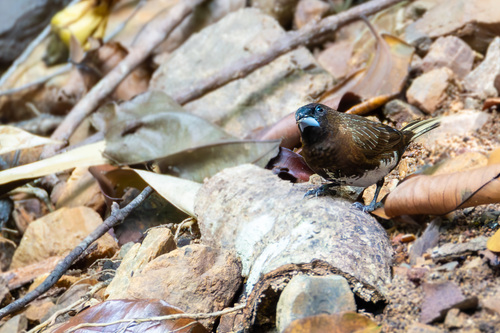 White-bellied MuniaLonchura leucogastraThe white-bellied munia is a species of estrildid finch.
 Hooded MannikinLonchura spectabilisThe hooded mannikin is a small munia.
Learn the Black-faced Munia in the BeakBrain App
Photo and call practice. Coming soon to iPhone and Android.
Play today's Daily BirdEvery photo and recording on this page is credited to its author under the licence shown. Spotted a problem with this page, or have a better photo? Contribute.