Learn what every symbol on the card means.Full credits and sources at beakbrain.com/symbols
 ForestCup nestMedium · 90 g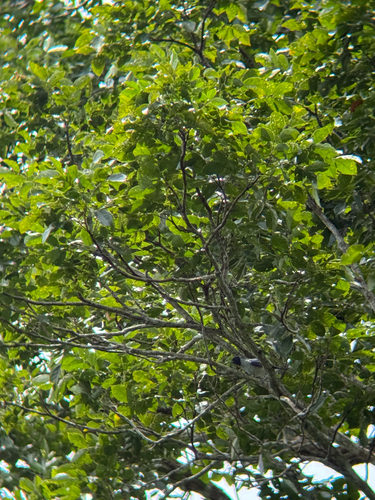
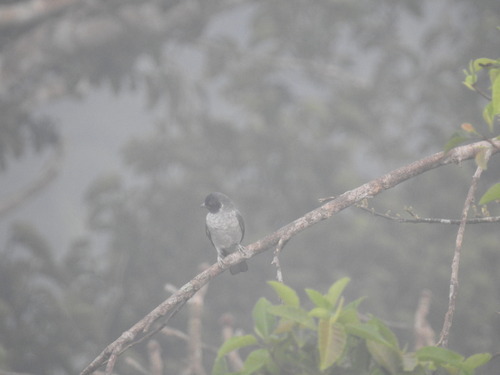
ID tip
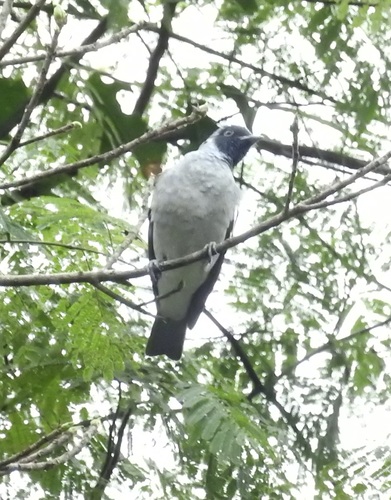
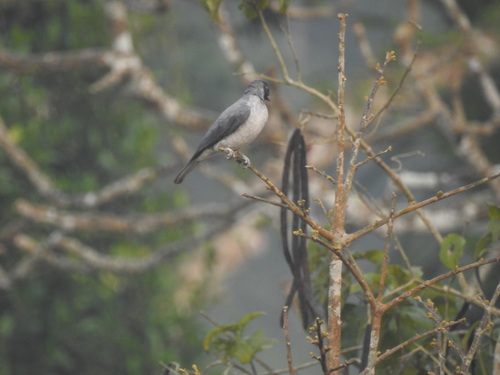
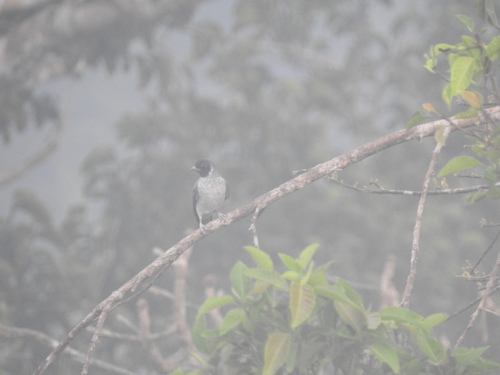
The black-faced cotinga is 23 to 25 cm (9.1 to 9.8 in) long; three individuals weighed 81 to 89 g (2.9 to 3.1 oz). Adult males have a mostly black head and throat with a white crescent behind the ear coverts. Their upperparts are dark gray and their wings and tail an even darker gray. Their breast is a lighter gray that becomes white on the lower belly and undertail coverts. Almost unique among passerine birds, their unfeathered parts havehite powder down and the upper surfaces of their wings and tail were also powdery. Voice: The black-faced cotinga's vocalizations include a "short, barked puh, a quiet, descending coww, and squeaky, rising huuEEE?". The last is also described as a "short, surprised-sounding wuèèèèh, gliding up to three notes higher".
Text from Wikipedia, licensed CC BY-SA 4.0.
When to see the Black-faced Cotinga
One bar for each month. Filled bars are the 10 months with records; pale bars are months with none. The wide bar is September, the month with the most records.
Where to see the Black-faced Cotinga
The map shades 3 countries with regular records. Everything unshaded has no records. Countries are listed below the map.
About the Black-faced Cotinga
The black-faced cotinga is a species of bird in the family Cotingidae. It is found in Bolivia, Brazil, and Peru.
Text adapted from Wikipedia, licensed CC BY-SA 4.0.
Easily confused with
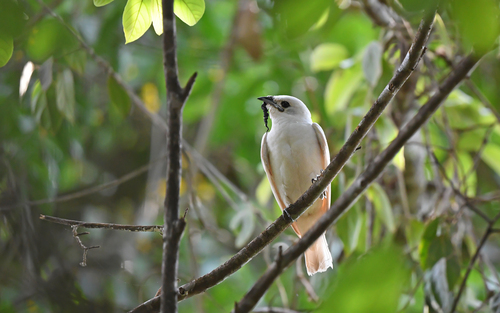 White BellbirdProcnias albusThe white bellbird is about 27 to 29 cm (11 to 11 in) long; males weigh 210 to 222 g (7.4 to 7.8 oz).
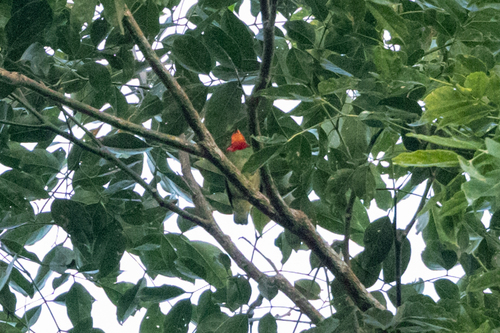 Fiery-throated FruiteaterPipreola chlorolepidotaAt just 12.5 cm (5 in), the fiery-throated fruiteater is the smallest species in the genus.
 Band-tailed FruiteaterPipreola intermediaThe band-tailed fruiteater is 18.5 to 19.5 cm (7.3 to 7.7 in) long and weighs 44 to 59 g (1.6 to 2.1 oz).
Learn the Black-faced Cotinga in the BeakBrain App
Photo and call practice. Coming soon to iPhone and Android.
Play today's Daily BirdEvery photo and recording on this page is credited to its author under the licence shown. Spotted a problem with this page, or have a better photo? Contribute.