Learn what every symbol on the card means.Full credits and sources at beakbrain.com/symbols
 ForestMedium · 79 g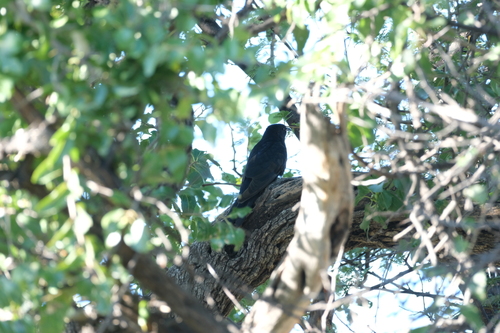
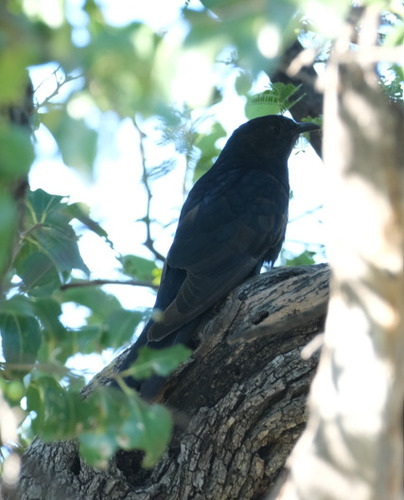


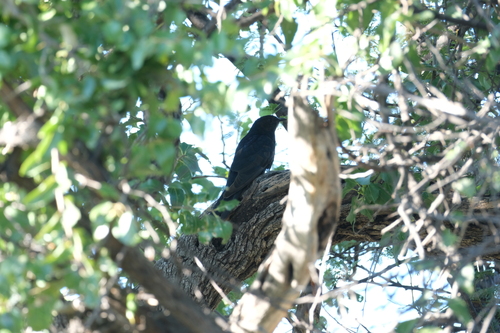
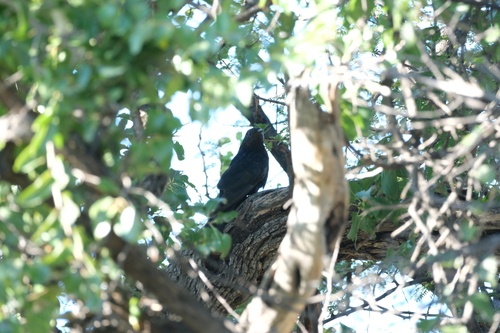
ID tip
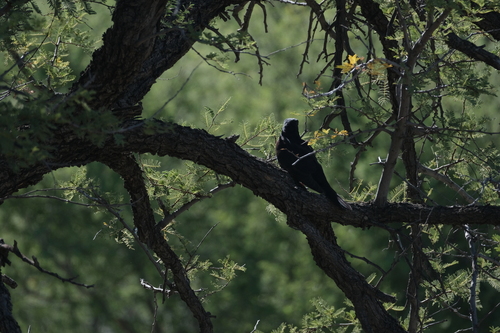
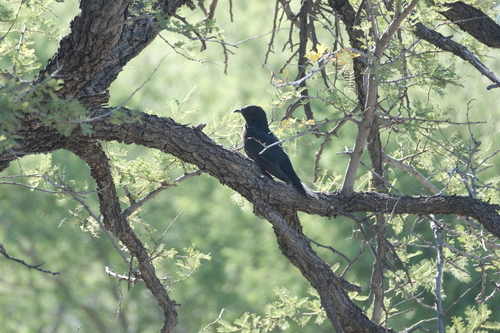
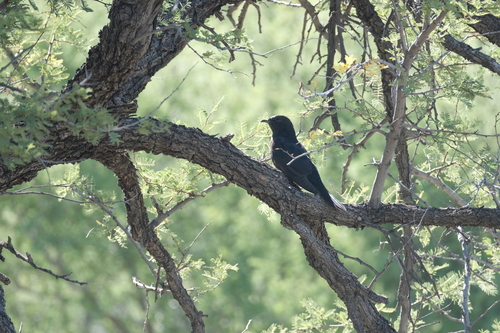
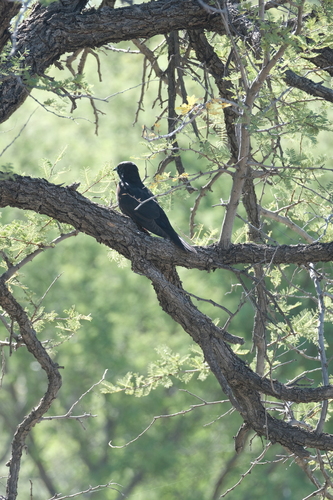
The black cuckoo is a medium-sized cuckoo. The sexes are similar, the plumage varying by subspecies; Cuculus clamosus clamosus has upper parts black glossed with green, slatey-grey wings and black tail tipped with white and sometimes with the outer feathers barred or spotted with white or buff; Cuculus clamosus gabonensis is mostly black with a red throat and black and white barring on the belly.
Text from Wikipedia, licensed CC BY-SA 4.0.
When to see the Black Cuckoo
One bar for each month. Filled bars are the 5 months with records; pale bars are months with none. The wide bar is November, the month with the most records.
Where to see the Black Cuckoo
The map shades 28 countries with regular records, and 4 more in a lighter tone where the bird turns up only as a stray. Everything unshaded has no records. Countries are listed below the map.
Recorded as a rare visitor in Burundi, Lesotho, Mali, Sudan.
About the Black Cuckoo
The black cuckoo is a species of cuckoo in the family Cuculidae. The species is distributed widely across sub-Saharan Africa. There are two subspecies. This cuckoo has a very wide range and is quite common so it is classified as a least-concern species by the International Union for Conservation of Nature.
Text adapted from Wikipedia, licensed CC BY-SA 4.0.
Easily confused with
 Indian CuckooCuculus micropterusThis is a medium-sized cuckoo with both sexes alike.
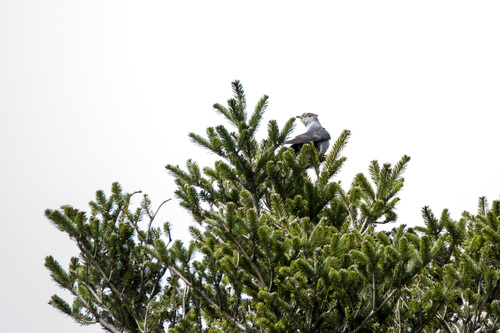 Oriental CuckooCuculus optatusIt is 30–32 centimetres long with a wingspan of 51–57 centimetres and a weight of 73–156 grams.
 Himalayan CuckooCuculus saturatusAdult male Himalayan cuckoos are dark ashy-grey above with a brown, almost black, tail that is whitely spotted and tipped.
Side by side: Black Cuckoo vs Common Cuckoo · Black Cuckoo vs Red-chested Cuckoo · Black Cuckoo vs Indian Cuckoo · Black Cuckoo vs Oriental Cuckoo · Black Cuckoo vs Himalayan Cuckoo
Learn the Black Cuckoo in the BeakBrain App
Photo and call practice. Coming soon to iPhone and Android.
Play today's Daily BirdEvery photo and recording on this page is credited to its author under the licence shown. Spotted a problem with this page, or have a better photo? Contribute.