Learn what every symbol on the card means.Full credits and sources at beakbrain.com/symbols
 ForestCup nestMedium · 103 g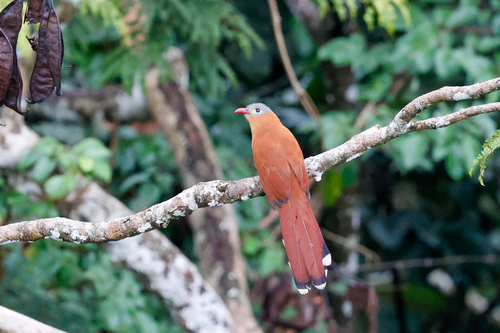
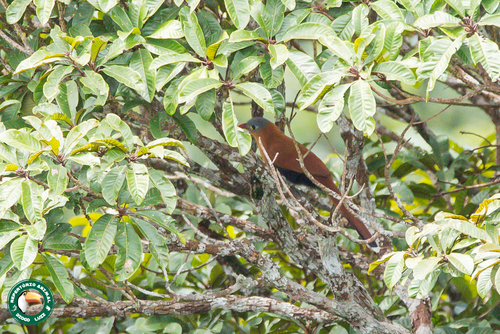
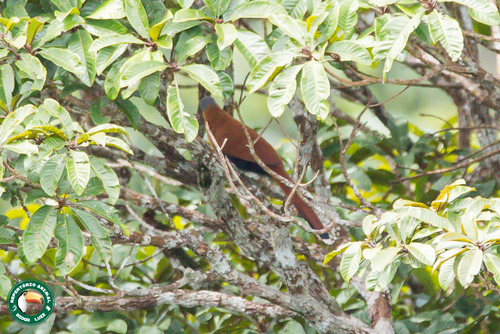
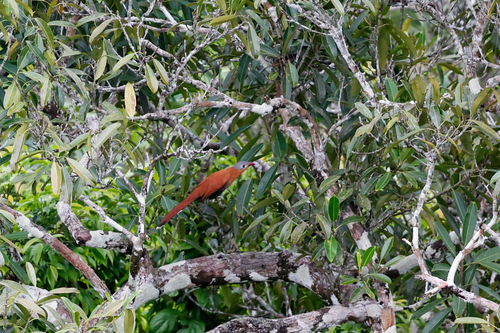
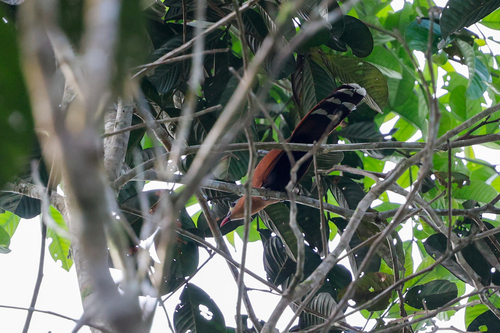
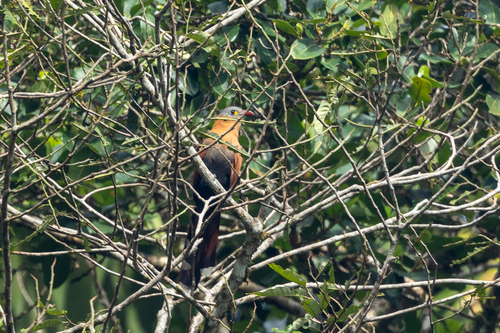
ID tip
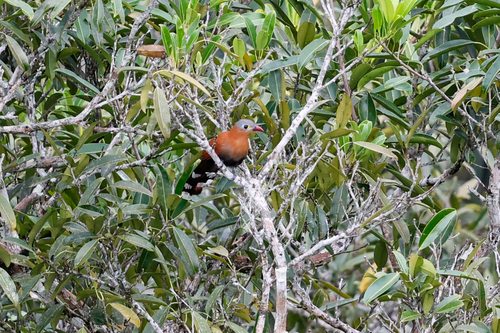
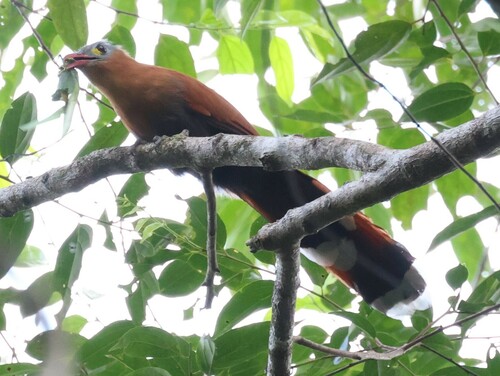
The average length of adults is between 38 and 40.5 cm. The beak is of an intense purple/red color, the iris is dark red with a blue orbital skin and one yellow mole at the anterior side of each eye. The head is grey and contrasts with the ruffled back. The throat and chest are brown-reddish, cinnamon color and the belly and undertail coverts are black. The tail is black with conspicuous white stripes. The juveniles resemble adults. P. melanogaster occurs within the range of the similar squirrel cuckoo (Piaya cayana). Black-bellied cuckoos are distinguished by a dark face and grey crown. Voice: Their characteristic song is "dyerií-dyu, dyerií-dyu, dyerií-dyu…" sometimes repeated for a few minutes. It is often difficult to trace their position as they typically remain motionless in the forest when singing. They also produce faint grunts.
Text from Wikipedia, licensed CC BY-SA 4.0.
When to see the Black-bellied Cuckoo
One bar for each month. Filled bars are the 11 months with records; pale bars are months with none. The wide bar is July, the month with the most records.
Where to see the Black-bellied Cuckoo
The map shades 9 countries with regular records. Everything unshaded has no records. Countries are listed below the map.
About the Black-bellied Cuckoo
The black-bellied cuckoo or black-bellied squirrel cuckoo is a bird of the family Cuculidae found in the Amazon region. Even though this species has a wide distribution, little is known about its ecology and natural history. The word melanogaster means "black belly"; it has Greek roots, melas meaning "black" and gaster meaning "belly".
Text adapted from Wikipedia, licensed CC BY-SA 4.0.
Easily confused with
 Mexican Squirrel CuckooPiaya mexicanaThis large and extremely long-tailed cuckoo is 45.6 cm (18.0 in) long and weighs 103–108 g (3.6–3.8 oz).
 Common Squirrel CuckooPiaya cayanaThis large and extremely long-tailed cuckoo is 40.5–50 cm (15.9–19.7 in) long and weighs 95–120 g (3.4–4.2 oz).
Side by side: Black-bellied Cuckoo vs Common Squirrel Cuckoo · Black-bellied Cuckoo vs Long-tailed Koel
Learn the Black-bellied Cuckoo in the BeakBrain App
Photo and call practice. Coming soon to iPhone and Android.
Play today's Daily BirdEvery photo and recording on this page is credited to its author under the licence shown. Spotted a problem with this page, or have a better photo? Contribute.