Learn what every symbol on the card means.Full credits and sources at beakbrain.com/symbols
 CoastalPlatform nestSmall · 90 g
ID tip
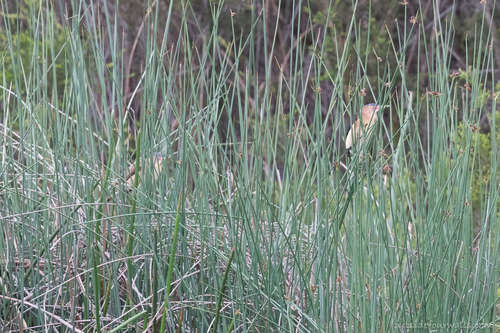
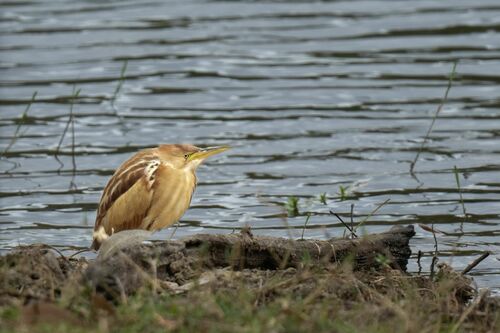
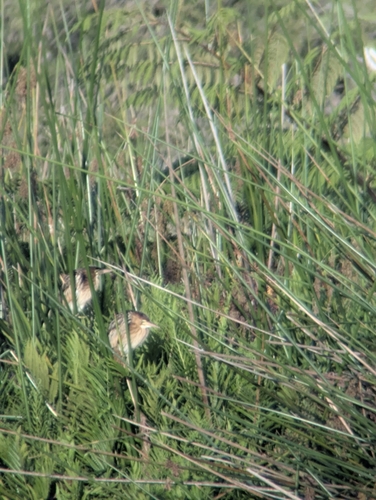
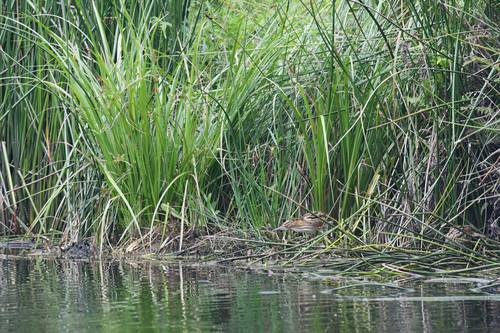
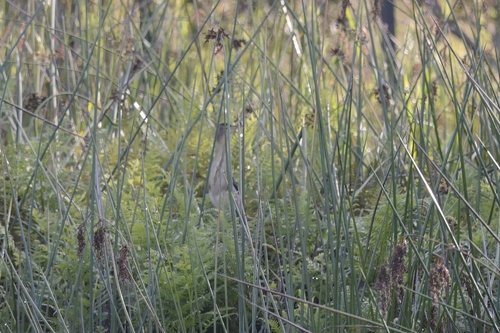
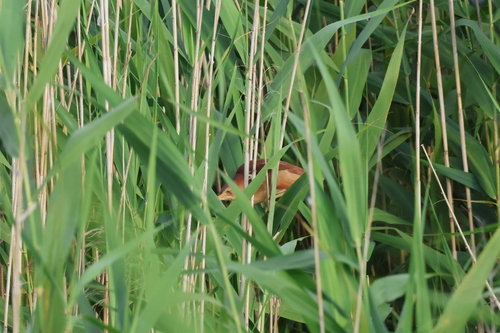
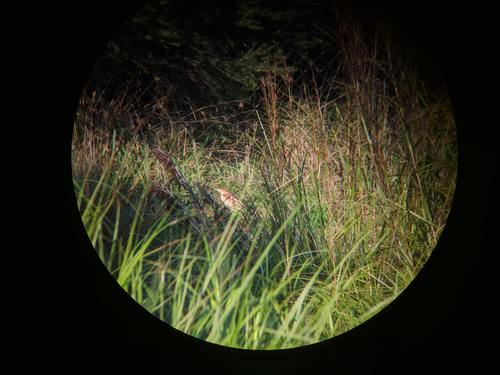
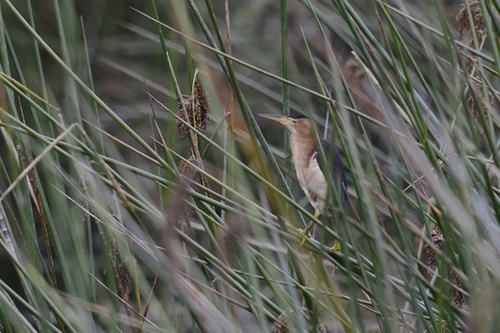
The species measures from 25 to 36 cm (9.8 to 14.2 in), has a total weight of 60–120 g (2.1–4.2 oz), averaging 84 g (3.0 oz). This is a very small bittern and one of the smallest herons in the world. The adult male has largely black upperparts, including a black cap, while the underparts, as well as the neck, breast and the sides of the head, are rich chestnut. There are large buff patches on the shoulders, conspicuous in flight. The female is duller, brown and streaked on back and crown; immature birds are similar. Voice: Vocalisations of the bittern are poorly known. Outside the breeding season the birds are usually silent, though they may utter a small range of low croaking or grunting sounds. During the breeding season the advertising call, a deep, low and monotonous croaking call, repeated at half-second intervals and said to be made only by the males, may be heard.
Text from Wikipedia, licensed CC BY-SA 4.0.
About the Black-backed Bittern
The black-backed bittern, also known as the black-backed least bittern or Australian little bittern, is a little-known species of heron in the family Ardeidae found in Australia and vagrant to southern New Guinea. Formerly lumped with the little bittern, it is one of the smallest herons in the world. This species was formerly placed in the genus Ixobrychus.
Text adapted from Wikipedia, licensed CC BY-SA 4.0.
Easily confused with
 Stripe-backed BitternBotaurus involucrisStripe-backed bitterns are very small, averaging from 28 to 35 cm in length.
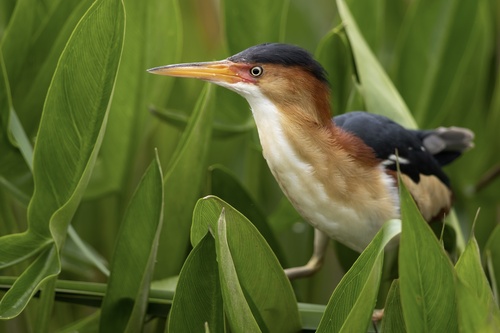 Least BitternBotaurus exilisThe least bittern is one of the smallest herons in the world, with perhaps only the dwarf bittern and the black-backed bittern averaging smaller in length.
 Black BitternBotaurus flavicollisIt is a medium sized bittern at 54–66 cm (21–26 in) in length.
Learn the Black-backed Bittern in the BeakBrain App
Photo and call practice. Coming soon to iPhone and Android.
Play today's Daily BirdEvery photo and recording on this page is credited to its author under the licence shown. Spotted a problem with this page, or have a better photo? Contribute.